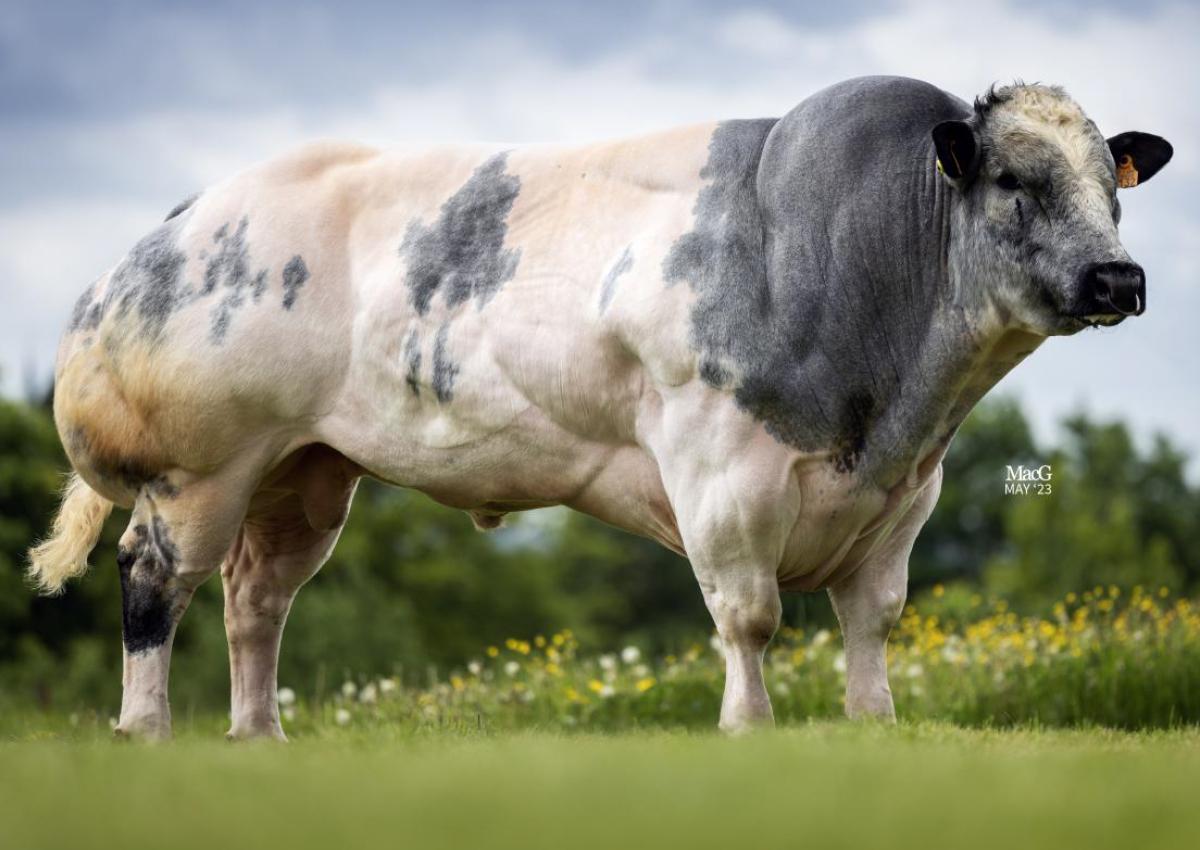
The Belgian Blue looks dramatically different from many other large cattle breeds. Its most famous characteristic is its extraordinary muscular development.
The breed is associated with the “double-muscling” phenotype, a condition linked to changes affecting the myostatin pathway. This can produce unusually large muscles and a very high muscle-to-bone ratio. Belgian Blue is one of the breeds commonly associated with this trait.
Adult Belgian Blue bulls typically weigh around 1,100–1,250 kilograms, although animals exceeding 1,300 kilograms are not unusual.
Instead of appearing exceptionally tall like the Chianina, a Belgian Blue often looks extremely broad and thick. Its shoulders, back, hindquarters, and thighs can appear almost sculpted.
This makes the Belgian Blue one of the most visually recognizable cattle breeds in the world.
Image alt text: Powerful Belgian Blue bull displaying its heavily muscled body.
10 Amazing Types of Ants: Tiny Insects With Extraordinary Superpowers
Updated for 2026 | Original Wildlife Article
7
Ants are among the most successful social insects on Earth. They can be found in tropical rainforests, deserts, grasslands, mountains, gardens and even cities. Although an individual ant may be tiny, a colony can become a remarkably organized society containing thousands or even millions of workers.
What makes ants particularly fascinating is the enormous variety of lifestyles found within the family Formicidae. Some ants cultivate underground fungus gardens, others build nests from living leaves, some launch coordinated raids across the forest floor, and a few have developed extraordinary weapons for catching prey or defending their colonies.
In this original 2026 wildlife article, we explore 10 fascinating types of ants, their habitats, unusual abilities, feeding strategies and the remarkable ways they cooperate.
1. Leafcutter Ants — The Tiny Farmers of the Forest
6
Leafcutter ants are among the most impressive insects in tropical America. Species belonging to the genera Atta and Acromyrmex can create enormous underground societies.
Their name comes from one of their most obvious behaviors: workers cut pieces from leaves and carry them back to the colony. But there is an important detail—the ants do not primarily eat the leaves themselves.
Instead, the plant material is processed and used to cultivate a specialized fungus. The fungus becomes the colony’s principal food source. Smithsonian research describes this relationship as one of the most sophisticated examples of agriculture outside humans.
Different workers have different jobs. Some cut vegetation, others transport it, while smaller workers process plant material and maintain the fungus garden.
Recent Smithsonian research has revealed another fascinating challenge. Some leafcutter ants can carry loads weighing several times their own body mass. Large pieces can interfere with their ability to sense the trail, creating something researchers compared to a “blind spot” in a vehicle.
A single colony can contain millions of individuals, making leafcutters one of nature’s most impressive examples of cooperative organization.
Image alt text:Leafcutter ants carrying pieces of green leaves through a tropical rainforest
2. Bullet Ant — A Powerful Defender of the Rainforest
7
The bullet ant (Paraponera clavata) is a large tropical ant found in parts of Central and South America.
It has earned its intimidating common name because of its exceptionally painful sting.
Bullet ants are generally dark reddish or black and can reach roughly 18–30 millimeters in length. They inhabit tropical forests and feed on resources including nectar and small arthropods.
Their size is impressive for an ant, but their defensive behavior is even more remarkable.
Rather than relying only on large numbers, bullet ants can use their sting to discourage predators and defend themselves.
In the rainforest, where countless insects compete for food and nesting space, having a powerful chemical defense can make a major difference.
Despite their fearsome reputation, bullet ants are also important members of tropical ecosystems. Like other ants, they participate in food webs and contribute to the movement and breakdown of organic material.
Their sting is a reminder that size does not necessarily determine defensive power.
Image alt text:Bullet ant resting on a green leaf in a tropical rainforest
3. Weaver Ants — Architects That Sew Living Leaves
7
Weaver ants are among the world’s most remarkable insect architects.
Species such as the Asian weaver ant (Oecophylla smaragdina) build nests by pulling living leaves together and fastening them with silk.
But there is a surprising part to this process: adult worker ants cannot produce the silk in the same way that silkworms do.
Instead, workers use their larvae as living silk-producing tools. Several ants pull leaves together while others carry larvae between the leaf edges, allowing the larvae to release silk that joins the leaves.
The result is a leafy shelter suspended in the canopy.
Weaver ants are active predators and can help control other insects in tropical environments. Their colonies may occupy numerous nests across several trees.
Their cooperative construction behavior demonstrates the remarkable power of collective action.
One ant cannot build a large leaf nest. Hundreds or thousands working together can transform a cluster of leaves into a protected home.
Image alt text:Red weaver ants constructing a nest by joining tropical green leaves together
4. Army Ants — The Moving Predators
7
Few ant behaviors are as dramatic as the raids of army ants.
Species such as Eciton burchellii live in tropical regions of the Americas and move through forests in large groups searching for prey.
Instead of remaining in one permanent nest like many ants, army ants can organize massive foraging raids.
The moving swarm may overwhelm insects and other small animals that cannot escape quickly enough.
Smithsonian information notes that army ant colonies in the American tropics can contain hundreds of thousands to around a million individuals and may attack prey in coordinated swarm raids.
Their success depends on communication.
Individual ants release chemical signals and respond to signals left by their nestmates. This allows thousands of animals to coordinate their movements without a central commander giving instructions.
The result resembles a living wave moving across the forest floor.
For smaller rainforest creatures, encountering an army ant column can be a major ecological event.
Image alt text:Army ants moving together across the rainforest floor during a coordinated raid
5. Trap-Jaw Ants — Masters of the Lightning Strike
Trap-jaw ants are famous for one of the fastest mechanical movements found in the animal world.
Species in genera such as Odontomachus possess enormous mandibles that can snap shut extremely rapidly.
The jaws are held open under tension. When the ant triggers the mechanism, the mandibles slam together to capture prey or defend the colony.
This is very different from simply biting with ordinary jaws.
The trap-jaw mechanism stores energy and releases it extremely quickly.
Some species can also use the powerful movement for escape. By striking their jaws against a surface, they can propel themselves away from danger.
AntWeb records numerous trap-jaw species and highlights the distinctive anatomy of this group.
Their hunting strategy shows how evolution can transform a basic body structure—the mandible—into a highly specialized biological machine.
Image alt text:Trap-jaw ant using its powerful mandibles to capture prey on the forest floor
6. Honeypot Ants — Colonies With Living Food Storage
6
Honeypot ants have one of the strangest food-storage systems found among insects.
In species such as Myrmecocystus mexicanus, certain workers become specialized living storage containers.
During periods when food is abundant, these ants consume large quantities of liquid food. Their abdomens expand dramatically, turning the workers into living reservoirs.
When food becomes scarce, other colony members can obtain stored nourishment from them.
This strategy is particularly useful in dry environments where food availability may change dramatically between seasons.
Instead of storing food in a separate chamber, the colony effectively stores part of its food supply inside specialized members.
The swollen workers remain inside the nest, protected from environmental extremes.
Their unusual bodies demonstrate how social insects can divide not only labor but also physical roles within the colony.
Image alt text:Honeypot ants with swollen abdomens storing food inside an underground nest
7. Fire Ants — Small Ants With a Powerful Defense
6
Fire ants are known for their aggressive defense and painful stings.
Several species belong to the genus Solenopsis, including the red imported fire ant.
They construct nests in soil and can rapidly mobilize workers when their colony is disturbed.
Unlike ants that rely primarily on jaws, fire ants combine biting with venom delivery.
Their colonies are highly organized, with workers performing different tasks such as foraging, caring for developing young and defending the nest.
Fire ants have also become successful in many human-modified environments.
Their ability to exploit disturbed habitats has contributed to their spread in regions where they were introduced.
This success comes from a combination of social organization, flexible feeding behavior and effective colony defense.
Although often considered pests in areas where they are invasive, fire ants are still fascinating examples of insect social evolution.
Image alt text:Red fire ants working together around their colony nest
8. Carpenter Ants — The Wood-Dwelling Builders
7
Carpenter ants belong primarily to the large genus Camponotus.
Despite their name, they do not actually eat wood like termites.
Instead, they excavate galleries in wood to create nesting chambers and passageways.
In forests, they may establish colonies in dead or damaged trees, fallen logs and other wooden structures.
Their ability to excavate wood can contribute to decomposition because their nesting activity helps break down already weakened plant material.
Carpenter ants are also highly adaptable.
Some species live in natural forests, while others can become associated with buildings and wooden structures.
Their powerful mandibles allow workers to remove tiny pieces of wood and gradually create complex internal tunnel systems.
A piece of wood that looks solid from the outside may contain an extensive network of ant chambers hidden within.
Image alt text:Carpenter ants excavating tunnels inside natural wood
9. Bullet-Sized Acrobat — Acrobat Ants
6
Acrobat ants, members of the genus Crematogaster, are named for their unusual ability to raise and position their abdomen above the rest of the body.
They can be found in many habitats and often nest in trees, under bark or in other protected locations.
Their flexible abdomen is important for defense and chemical communication.
When threatened, an acrobat ant may raise its abdomen and use defensive chemicals against an attacker.
Some species are also associated with plant relationships.
In certain ecosystems, ants can protect plants from herbivores while receiving food or shelter in return.
Their ability to rapidly change body position gives these small insects a surprisingly expressive appearance.
A colony may appear quiet one moment and become highly coordinated when danger approaches.
Image alt text:Acrobat ants displaying their raised abdomens on a tropical tree
10. Weaver and Harvester Ants — Specialists of Different Environments
7
Harvester ants represent another completely different approach to survival.
Rather than cultivating fungi or hunting primarily for animal prey, many harvester ants collect seeds.
They can create underground storage chambers where seeds remain protected until needed.
This strategy is especially useful in dry landscapes, where seeds may provide a dependable food resource.
Workers travel along established routes, collecting food and returning it to the colony.
Their underground nests also provide protection from extreme temperatures.
Harvester ants show that ants do not need tropical forests to become highly organized societies. Desert and grassland species can be equally sophisticated.
Their ability to locate, transport and store seeds demonstrates how collective behavior can turn scattered resources into a stable food supply.
How Ant Colonies Work Like Superorganisms
One of the most extraordinary characteristics of ants is that a colony can behave almost like a single living system.
An individual ant has limited information about what is happening across the entire colony. Yet thousands of individuals can collectively make complex decisions.
They communicate using chemical signals, touch, vibrations and other forms of interaction.
A worker may discover food and leave a chemical trail. Other workers follow it, strengthening the trail as they travel.
If the food disappears, the trail gradually becomes weaker.
This simple system can allow colonies to discover efficient routes without a central leader.
The Smithsonian notes that ants use chemical messages and pheromones to coordinate colony activities.
This is one reason ants are so successful in environments ranging from rainforests to deserts.
Why Ants Are Important to Ecosystems
Ants do far more than build nests.
They move seeds, aerate soil, recycle dead organic matter, hunt insects and provide food for many other animals.
In tropical forests, leafcutter ants can dramatically influence vegetation and soil processes. Smithsonian research describes their colonies as major ecological forces in Neotropical forests.
Other ants protect plants from herbivores.
Some disperse seeds by carrying them underground, where discarded seeds may eventually germinate.
Ants can also influence populations of other insects by acting as predators.
Their activities create connections between plants, soil, fungi, insects and larger animals.
A forest without ants would be a very different ecosystem.
The Amazing Communication System of Ants
Ants do not communicate like humans, but their chemical communication systems are incredibly sophisticated.
A worker can leave chemical information on a surface. Other ants detect those signals with their antennae.
Ants can use chemical cues to identify nestmates, locate food, warn of danger and organize defensive behavior.
This helps explain how a colony can coordinate thousands of individuals.
Recent Smithsonian research on leafcutter ants even examined how workers use their antennae while carrying large leaves. Scientists found that oversized loads can affect how frequently ants use their antennae to interact with the environment.
The more scientists study ants, the clearer it becomes that their societies are dynamic systems rather than simple groups of insects.
Final Thoughts
Ants may be tiny, but their abilities are enormous.
Leafcutter ants are farmers.
Bullet ants are heavily defended rainforest specialists.
Weaver ants are living architects.
Army ants form moving hunting forces.
Trap-jaw ants possess astonishing mechanical weapons.
Honeypot ants turn their own bodies into food storage containers.
Fire ants combine aggression and venom.
Carpenter ants excavate elaborate wooden homes.
Acrobat ants use flexible bodies and chemical defenses.
And harvester ants specialize in collecting and storing seeds.
Together, these animals demonstrate why ants are among the most fascinating insects on Earth.
Their greatest strength is not necessarily the power of one individual. It is the ability of thousands of individuals to cooperate.
A single ant may be tiny—but an entire colony can transform its environment.
10 Amazing Types of Ants: Tiny Insects With Extraordinary Superpowers
SEO Title
10 Amazing Ant Types and Their Extraordinary Abilities | Wildlife 2026
Focus Keyword
ant types
Secondary Keywords
types of ants
ant species
amazing ants
fascinating ants
ant facts
leafcutter ants
bullet ant
weaver ants
army ants
trap-jaw ants
honeypot ants
fire ants
carpenter ants
acrobat ants
harvester ants
rainforest ants
tropical ants
desert ants
insect facts
social insects
ant colony
ant behavior
wildlife facts 2026
Meta Description
Discover 10 amazing ant types, from leafcutter farmers and army ants to bullet ants, trap-jaw ants, honeypot ants and incredible weaver ants.
Short Description / Excerpt
Explore 10 fascinating ant types and discover their unusual habitats, feeding strategies, defenses, communication systems and extraordinary colony behaviors.
Category
Animals & Wildlife
Subcategory
Insects
Tags
Ants, Ant Types, Ant Species, Amazing Ants, Leafcutter Ants, Bullet Ant, Weaver Ants, Army Ants, Trap Jaw Ants, Honeypot Ants, Fire Ants, Carpenter Ants, Acrobat Ants, Harvester Ants, Insects, Social Insects, Rainforest Animals, Tropical Animals, Animal Facts, Wildlife Facts, Nature 2026
Suggested URL Slug
10-amazing-ant-types-extraordinary-abilities-2026
Featured Image Title
10 Amazing Types of Ants With Extraordinary Abilities
Featured Image Alt Text
Ten amazing ant types including leafcutter, bullet, weaver, army, trap-jaw, honeypot, fire, carpenter, acrobat and harvester ants
Featured Image Caption
From rainforest farmers to desert seed collectors, these remarkable ants show how powerful cooperation can be.
Recommended Schema
Article
Author
World Animals TV
Update Year
2026
Suggested Internal Links
Amazing Insects
Rainforest Animals
Strange Animals
Animal Adaptations
Amazon Rainforest Wildlife
World’s Most Unique Animals
Wildlife Facts
Incredible Small Animals
Social Media Description
Tiny bodies, giant abilities! Discover 10 amazing types of ants, including leafcutter farmers, powerful bullet ants, army ants, trap-jaw ants and incredible weaver ants.
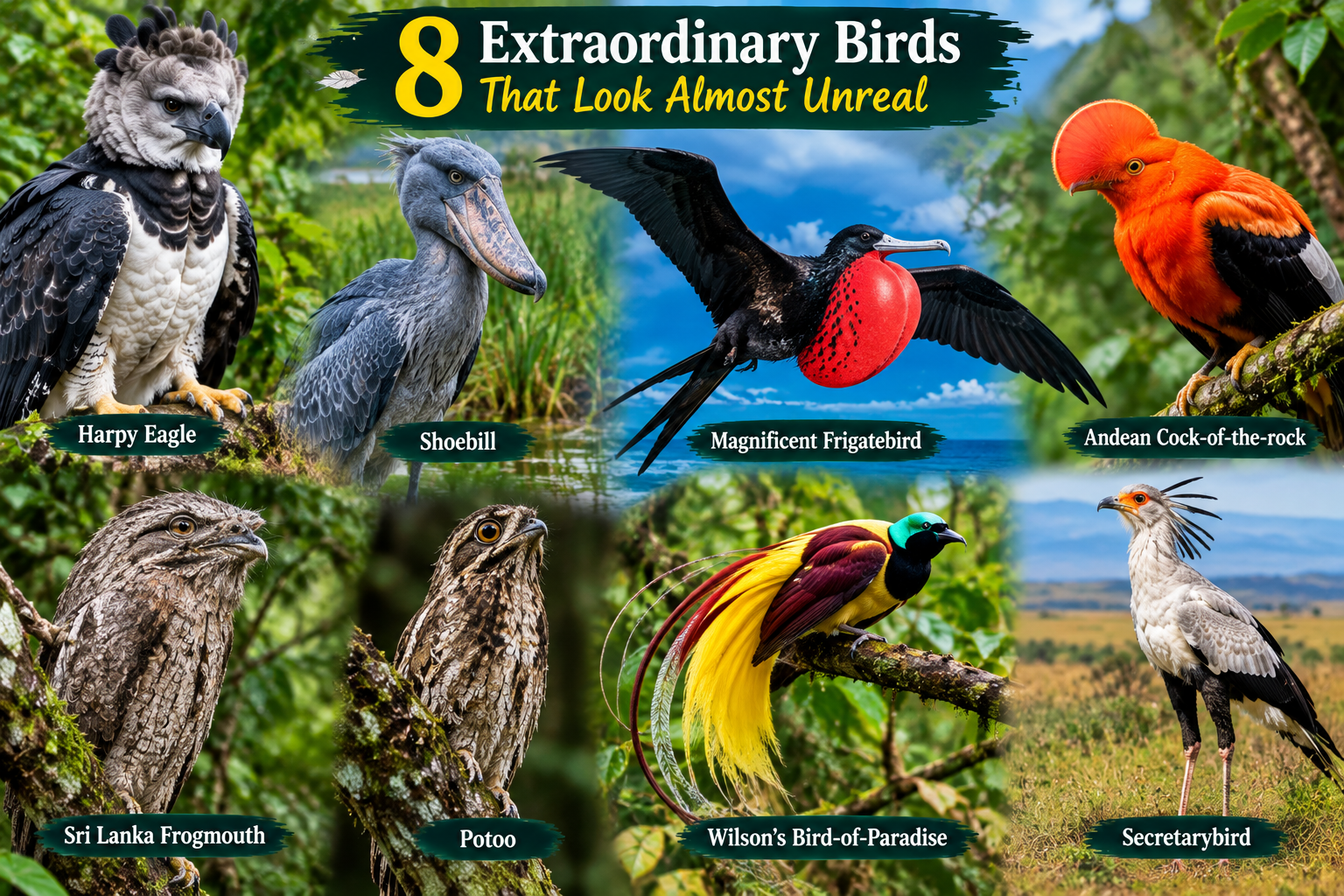
Birds come in an astonishing variety of shapes, sizes and colors. Some are familiar visitors to gardens and parks, while others spend their lives in remote rainforests, mountain cloud forests, wetlands, islands and African grasslands.
The eight birds featured in this article are particularly remarkable. The Harpy Eagle looks like a powerful rainforest guardian. The Shoebill appears almost prehistoric. The Magnificent Frigatebird can spend hours soaring above tropical oceans, while the Andean Cock-of-the-rock seems to have been painted in brilliant orange.
Then there are birds with completely different strategies. The Sri Lanka Frogmouth relies on camouflage, the Potoo can almost disappear against a tree branch, and the spectacular Wilson’s Bird-of-Paradise uses color and courtship displays to attract a mate. Finally, the Secretarybird has transformed its long legs into specialized hunting tools.
These birds show that evolution does not produce one standard design. Instead, it creates solutions suited to particular environments.
1. Harpy Eagle — The Powerful Hunter of the Rainforest
7
Few rainforest birds are as impressive as the Harpy Eagle (Harpia harpyja).
Found across parts of Central and South America, this enormous raptor is adapted to hunting in tropical forests. Unlike eagles that spend much of their time soaring over open landscapes, Harpy Eagles frequently hunt within the forest canopy and understory.
Their relatively broad wings allow them to maneuver between trees, while their long tails help with control when moving through complicated vegetation.
San Diego Zoo reports that Harpy Eagles can have wingspans reaching about 6.5 feet (2 meters), and they often nest high in large rainforest trees. Their nests can be enormous structures built from sticks and reused by pairs over many years.
The species is especially well equipped for capturing arboreal prey. Sloths and monkeys can form important parts of the diet, and the larger female generally takes larger prey than the smaller male.
One fascinating feature is the bird’s huge talons.
The feet are not simply for gripping branches. They are powerful hunting weapons capable of holding substantial prey.
The Harpy Eagle’s survival is closely tied to mature rainforest. Losing large trees means losing nesting sites, while forest fragmentation can reduce the prey and territory available to these specialized predators.
Image Alt Text:Harpy Eagle perched in a tropical rainforest canopy
2. Shoebill — The Ancient-Looking Wetland Hunter
6
The Shoebill (Balaeniceps rex) is one of Africa’s most unforgettable birds.
Its enormous bill, tall body and almost motionless hunting posture give it an appearance unlike most modern birds.
The species lives mainly in wetlands and swamps of Central and East Africa. San Diego Zoo describes the Shoebill as a large, solitary bird associated with papyrus swamps and slow-moving water.
Its giant bill is the key to its hunting strategy.
A Shoebill may stand almost completely still while watching the water. When it detects a fish, it suddenly lunges forward, using the large bill to engulf its prey.
Its diet includes lungfish, catfish and tilapia, along with other aquatic animals.
This hunting technique explains another unusual characteristic: patience.
The Shoebill does not need to chase its prey through the water. Instead, it waits for the right opportunity and then attacks with extraordinary speed.
Its bill also has another surprising function.
Parents can carry water in it and use that water to cool their eggs and young during hot conditions.
The species is classified as Vulnerable, with wetland destruction, disturbance and other human pressures contributing to its decline.
Protecting swamps is therefore essential for protecting this extraordinary bird.
Image Alt Text:Shoebill standing in an African papyrus wetland
3. Magnificent Frigatebird — The Ocean’s Master of Flight
6
The Magnificent Frigatebird (Fregata magnificens) looks almost too delicate to be a large seabird.
Its enormous wings, deeply forked tail and slender body are designed for life in the air.
Cornell Lab of Ornithology reports a wingspan of roughly 217–224 centimeters. The bird can soar for long periods while using very little wing movement.
This is especially useful because frigatebirds spend much of their lives over tropical and subtropical oceans.
But there is a catch.
Unlike many seabirds, frigatebirds do not have fully waterproof feathers. They therefore avoid landing on the water whenever possible.
Instead, they catch food from the surface.
Their diet can include flying fish and squid, and they are also famous for stealing meals from other seabirds.
A frigatebird may pursue another bird until it drops or regurgitates its food, then snatch the meal from the air.
This behavior has earned frigatebirds a reputation as pirates of the sky.
The males have another spectacular feature: an inflatable red throat pouch used during courtship.
When a male displays, the bright pouch becomes highly visible against his dark feathers.
The species demonstrates how an animal can become extraordinarily specialized for aerial life.
Image Alt Text:Magnificent Frigatebird soaring over a tropical ocean
4. Andean Cock-of-the-rock — A Flash of Orange in the Cloud Forest
6
Deep in the mountain forests of the Andes lives a bird that seems almost impossible to overlook.
The Andean Cock-of-the-rock (Rupicola peruvianus) is famous for its vivid orange coloration and enormous semicircular crest.
San Diego Zoo notes that the species occurs in tropical Andean forests from Venezuela to Bolivia and can live at elevations reaching approximately 2,400 meters.
The males are dramatically brighter than the females.
This difference is connected to one of the most fascinating behaviors in the species: courtship.
Males gather at traditional display areas known as leks, where they compete for the attention of females.
Their bright feathers, large crests and energetic displays create a remarkable spectacle.
But there is an evolutionary trade-off.
Bright colors and elaborate displays can make a male easier for predators to notice.
Why would evolution favor such conspicuous behavior?
Because females choose mates.
Over generations, female preferences can influence the development of increasingly elaborate male characteristics.
The result is one of the most visually spectacular birds of the tropical Andes.
The species also eats fruit and other foods, making it part of the ecological network responsible for moving seeds through mountain forests.
Image Alt Text:Male Andean Cock-of-the-rock displaying its bright orange plumage in cloud forest
5. Sri Lanka Frogmouth — The Bird That Pretends to Be Part of the Forest
7
The Sri Lanka Frogmouth (Batrachostomus moniliger) is a master of disguise.
This unusual nocturnal bird occurs in Sri Lanka and parts of southern India, particularly forest habitats.
Its mottled brown, gray and pale plumage can resemble bark, dead leaves and shadows.
During daylight, the bird can remain extremely still.
This behavior is critical because camouflage works best when the animal does not reveal itself through movement.
The frogmouth’s wide head and broad bill contribute to its unusual appearance.
After darkness arrives, it becomes active and searches for insects and other small prey.
Its large eyes are adapted to low-light conditions, allowing it to hunt when many daytime birds have become inactive.
The species illustrates an important principle of survival:
sometimes the best defense is simply not being noticed.
Instead of escaping rapidly or confronting predators, the Sri Lanka Frogmouth uses its appearance and behavior to become part of the background.
For wildlife observers, this makes it an exciting challenge.
A bird may be sitting only a few meters away while looking almost exactly like a broken branch.
Image Alt Text:Sri Lanka Frogmouth camouflaged on a forest branch
6. Potoo — The Night Bird With an Extraordinary Disguise
6
The Potoo is another bird that seems to have mastered invisibility.
Potoos are nocturnal birds of Central and South America and the Caribbean. Their gray, brown and mottled feathers help them blend into tree trunks and broken branches.
Their camouflage becomes especially effective when they adopt a stiff upright posture.
Instead of flying away at the first sign of danger, a potoo may remain motionless and rely on its cryptic appearance.
The eyes are also fascinating.
Potoos can close their eyelids while still leaving small openings that help them monitor their surroundings.
At night, these birds leave their daytime perches to hunt flying insects.
Their large mouths are useful for catching insects in the air.
This creates an interesting contrast.
During the day, the potoo behaves like a piece of wood.
At night, it becomes an active aerial predator.
The strategy allows the bird to divide its lifestyle into two very different phases:
camouflage by day, hunting by night.
That combination makes potoos some of the most intriguing nocturnal birds in the Americas.
Image Alt Text:Potoo bird blending into a tree branch in a tropical forest
7. Wilson’s Bird-of-Paradise — A Living Display of Color
6
The Wilson’s Bird-of-Paradise (Cicinnurus respublica) may be one of the most colorful birds on Earth.
It is found on islands in Indonesia’s western New Guinea region, including Waigeo.
The male has an extraordinary combination of colors, including a vivid blue crown of bare skin, brilliant red and yellow feathers, and curled tail feathers.
The Cornell Lab’s Birds-of-Paradise project explains that the blue coloration on the male’s head is produced by the structure of the skin rather than ordinary feather pigment.
This is a remarkable example of how animals can produce color in different ways.
The male doesn’t simply possess beautiful feathers.
He uses them.
Birds-of-paradise are famous for elaborate courtship displays, in which males arrange their bodies, feathers and movements to attract females.
The female’s preferences play a major role in this evolutionary story.
National Geographic notes that birds-of-paradise have developed extraordinary plumage and courtship behaviors through sexual selection, while their relatively isolated forest habitats have also encouraged diversification.
Wilson’s Bird-of-Paradise therefore represents more than colorful wildlife.
It is an example of evolution turning courtship into an elaborate visual performance.
Image Alt Text:Male Wilson's Bird-of-Paradise displaying colorful feathers in New Guinea forest
8. Secretarybird — The Long-Legged Snake Hunter
6
The Secretarybird (Sagittarius serpentarius) looks like a cross between a raptor and a long-legged ground bird.
Unlike most eagles and hawks, it spends much of its time walking across the ground.
It is native to sub-Saharan Africa, where it prefers open grasslands and savannas with scattered trees.
San Diego Zoo reports that secretarybirds can travel more than 20 miles (32 kilometers) in a day while hunting.
Their legs are the key.
Instead of relying primarily on talons to capture prey, secretarybirds use their feet and powerful kicks.
Snakes are an important part of the diet, along with rodents, lizards and other small animals.
The long legs also keep the bird’s body farther from a striking snake.
National Geographic describes the species as a ground-hunting raptor that can use its feet to stomp prey and notes that its lower legs have scales that provide some protection from bites.
Secretarybirds also have an unusual appearance, with long feathers forming a crest at the back of the head.
At night, they return to trees to roost.
Their lifestyle shows that being a raptor does not necessarily mean spending most of the day in the sky.
For the secretarybird, the ground is the hunting ground.
Image Alt Text:Secretarybird walking through African grassland while hunting
The Survival Secrets Behind These Extraordinary Birds
Although these eight birds look completely different, their lives reveal several common themes.
Camouflage
The Sri Lanka Frogmouth and Potoo demonstrate how powerful camouflage can be. Instead of escaping predators through speed, they make themselves difficult to detect.
Specialized Hunting
The Harpy Eagle uses enormous talons to capture prey in trees. The Shoebill waits motionless before striking fish, while the Secretarybird uses powerful feet to attack prey on land.
Flight Efficiency
The Magnificent Frigatebird is built for soaring over tropical oceans. Its huge wings allow it to remain airborne for long periods without constant flapping.
Sexual Selection
The Andean Cock-of-the-rock and Wilson’s Bird-of-Paradise demonstrate how courtship can shape appearance and behavior.
Bright colors, unusual feathers and elaborate displays may look extravagant to humans, but they can have a very practical biological purpose: attracting a mate.
Habitat Specialization
Each species depends on particular environments.
The Harpy Eagle needs extensive tropical forest.
The Shoebill needs wetlands.
The Magnificent Frigatebird depends on tropical and subtropical ocean environments.
The Andean Cock-of-the-rock relies on mountain forests.
The Secretarybird needs open landscapes.
When these habitats are damaged, the birds lose more than scenery. They lose food, nesting locations and opportunities to reproduce.
Why Protecting These Birds Matters
Extraordinary birds are not merely beautiful subjects for photography.
They are part of functioning ecosystems.
Predatory birds help regulate populations of other animals. Fruit-eating species can move seeds through forests. Wetland birds connect aquatic and terrestrial food webs. Even species that appear specialized for one particular environment can contribute to the overall balance of their habitats.
The Shoebill’s conservation situation illustrates the problem clearly. San Diego Zoo identifies habitat degradation and human disturbance among the major pressures affecting the species.
Harpy Eagles face another challenge because they depend on mature forest and large nesting trees.
The Secretarybird has also experienced pressure from the conversion and degradation of grassland habitat.
Protecting birds therefore means protecting the landscapes in which they evolved.
Final Thoughts
From the dense rainforests of South America to the wetlands of Africa and the tropical islands of New Guinea, these eight birds demonstrate just how creative nature can be.
The Harpy Eagle rules portions of the rainforest canopy.
The Shoebill waits patiently in African wetlands before launching a lightning-fast attack.
The Magnificent Frigatebird turns the tropical sky into its hunting ground.
The Andean Cock-of-the-rock transforms courtship into a brilliant orange spectacle.
The Sri Lanka Frogmouth survives by disappearing into the forest around it.
The Potoo combines nocturnal hunting with extraordinary daytime camouflage.
The Wilson’s Bird-of-Paradise uses color and elaborate displays to compete for a mate.
And the Secretarybird has evolved into a walking predator capable of hunting snakes on the African plains.
Their differences are what make them fascinating.
Together, they tell a larger story about evolution: animals do not need to look or behave the same way to succeed.
Every strange bill, powerful talon, colorful feather, unusual posture or specialized hunting technique represents a solution to the challenges of survival.
And that is what makes the world’s birds so extraordinary.
📸 Image SEO Information for WordPress
Image 1 — Featured Image: All 8 Birds Together
Alt text:Eight extraordinary birds including Harpy Eagle, Shoebill, Magnificent Frigatebird, Andean Cock-of-the-rock, Sri Lanka Frogmouth, Potoo, Wilson's Bird-of-Paradise and Secretarybird
Image title:8 Extraordinary Birds From Around the World
Filename:8-extraordinary-birds-wildlife-2026.jpg
Image 2 — Harpy Eagle
Alt text:Harpy Eagle perched in a tropical rainforest canopy
Filename:harpy-eagle-rainforest-2026.jpg
Image 3 — Shoebill
Alt text:Shoebill standing in an African papyrus wetland
Filename:shoebill-african-wetland-2026.jpg
Image 4 — Magnificent Frigatebird
Alt text:Magnificent Frigatebird soaring over a tropical ocean
Filename:magnificent-frigatebird-2026.jpg
Image 5 — Andean Cock-of-the-rock
Alt text:Male Andean Cock-of-the-rock displaying bright orange plumage in cloud forest
Filename:andean-cock-of-the-rock-2026.jpg
Image 6 — Sri Lanka Frogmouth and Potoo
Alt text:Sri Lanka Frogmouth and Potoo showing remarkable forest camouflage
Filename:frogmouth-potoo-camouflage-2026.jpg
Image 7 — Wilson’s Bird-of-Paradise and Secretarybird
Alt text:Wilson's Bird-of-Paradise and Secretarybird representing unusual birds from different habitats
8 Amazing Birds With Incredible Colors, Hunting Skills and Survival Tricks
Focus Keyword: extraordinary birds
Secondary Keywords:
unusual birds
amazing birds 2026
rare birds
exotic birds
strange birds in the world
incredible bird adaptations
unusual bird species
Harpy Eagle facts
Shoebill facts
Magnificent Frigatebird
Andean Cock-of-the-rock
Sri Lanka Frogmouth
Potoo bird
Wilson’s Bird-of-Paradise
Secretarybird
beautiful wildlife
bird facts
exotic wildlife
amazing animals 2026
Meta Description: Discover 8 extraordinary birds, from the powerful Harpy Eagle and prehistoric-looking Shoebill to the colorful Wilson's Bird-of-Paradise and unusual Secretarybird.
Short Description / Excerpt: Meet eight extraordinary birds from rainforests, wetlands, oceans, mountains and African grasslands, and discover the remarkable adaptations that help them survive.
Featured Image Alt Text: Eight extraordinary birds including Harpy Eagle, Shoebill, Magnificent Frigatebird, Andean Cock-of-the-rock, Sri Lanka Frogmouth, Potoo, Wilson's Bird-of-Paradise and Secretarybird
Featured Image Caption: Eight extraordinary birds showing the incredible diversity of avian life around the world.
Image Size: 1200 × 675 px
Recommended Schema: Article
Author: World Animals TV
Publication/Update Year: 2026
SEO Excerpt: Explore eight extraordinary birds and the unusual adaptations that help them hunt, hide, fly, communicate and survive in some of Earth's most challenging habitats.
6 Extraordinary Animals That Look Like They Belong on Another Planet
Nature has produced animals in almost every imaginable shape and size. Some are built for speed, others for camouflage, and some have developed such unusual characteristics that they seem almost impossible.
A giant lizard stalks dry islands in Indonesia. A flightless parrot walks through the forests of New Zealand at night. A primate spends much of its life grazing on grass in the Ethiopian highlands. On the volcanic Galápagos Islands, a lizard dives into the ocean to eat algae. New Zealand’s mysterious kiwi searches through leaf litter after dark, while a brilliant golden frog carries one of the most powerful natural toxins known in the animal kingdom.
These animals may live thousands of kilometers apart, but they share something important: each has evolved extraordinary solutions to the challenges of survival.
This 2026 wildlife guide explores six of the world’s most fascinating animals and the behaviors that make them so unusual.
1. Komodo Dragon — The Giant Lizard That Hunts With Patience
7
The Komodo dragon (Varanus komodoensis) is one of the most intimidating reptiles alive today. It is the largest living lizard and can reach around 3 meters in length and more than 130 kilograms. Wild Komodo dragons are found on several Indonesian islands, including Komodo, Rinca and parts of Flores.
Despite its enormous size, the Komodo dragon does not need to chase everything it eats.
Patience is one of its greatest weapons.
The dragon can wait among vegetation for an opportunity to attack. When suitable prey comes close, it can move rapidly, using powerful legs, claws and sharp, serrated teeth.
Its hunting system is particularly remarkable. Komodo dragons possess venom glands, and their bites can combine tissue damage with toxins that promote blood loss and shock. They can also use their exceptional sense of smell to locate carrion or follow wounded prey.
This combination makes the Komodo dragon an efficient predator and scavenger.
A surprising survival strategy
Young Komodo dragons face a completely different world from adults. They are vulnerable to larger dragons, so juveniles spend considerable time in trees, where their smaller bodies allow them to climb more easily.
As they grow, their lifestyle changes.
Eventually, the young lizard becomes a huge ground-dwelling predator.
Habitat
Komodo dragons live in tropical forests, savannas and other habitats across Indonesia’s Lesser Sunda Islands. Their environment can become extremely dry during parts of the year, making water and food valuable resources.
Image Alt Text:Wild Komodo dragon walking through dry forest in Indonesia
2. Kākāpō — The Parrot That Cannot Fly
6
Few birds are as unusual as the kākāpō (Strigops habroptilus).
It is a large, green, flightless parrot with an owl-like face, strong legs and a distinctive waddling walk. It is also nocturnal.
And there is remarkable news about the species in 2026.
On September 1, 2026, New Zealand’s Department of Conservation announced that the official kākāpō population had reached 325 birds, including 90 chicks from the 2026 breeding season. This was described as a recovery-era high and the first time the population had exceeded 300 in roughly 75 years.
That makes 2026 an especially significant year for this extraordinary bird.
Why did the kākāpō become flightless?
New Zealand’s wildlife evolved for millions of years in an environment with relatively few land predators.
The kākāpō evolved toward a ground-based lifestyle.
Instead of flying away from danger, it relies on camouflage, hiding and its ability to move through dense vegetation.
Its green feathers blend remarkably well with forest plants.
A bird that comes alive at night
During daylight hours, kākāpō generally rest in ground or treetop roosts. At night, they become active.
They walk through forests searching for plant material, fruit, seeds and other food.
Males also have one of the strangest courtship behaviors among birds.
They gather at traditional display areas and produce deep booming calls to attract females.
The kākāpō is also the world’s only known lek-breeding parrot.
Conservation success
Kākāpō recovery depends on predator-free islands and carefully managed sanctuaries because introduced mammals such as rats, cats and stoats historically devastated the species.
Modern conservation teams monitor birds with transmitters, manage nests and provide supplementary food when necessary. In 2026, scientists have also been using high-resolution aerial imagery and deep-learning technology to identify important tree species in kākāpō habitat.
The species’ progress shows what long-term conservation can accomplish.
Image Alt Text:Kākāpō flightless green parrot resting in New Zealand forest
3. Gelada — The Grass-Eating Primate With a Dramatic Chest
7
The gelada (Theropithecus gelada) is sometimes casually called a “gelada baboon,” although it is a distinct primate.
It lives in the highlands of Ethiopia, where steep cliffs and open grasslands create a very different environment from the tropical forests where many other primates live.
One of its most unusual characteristics is its diet.
A primate that prefers grass
Most people picture monkeys and baboons eating fruits, insects or other varied foods.
Geladas are specialists.
They spend much of their day feeding on grasses and other vegetation, using their hands to pull food toward their mouths. Smithsonian describes them as unusual among primates because they graze primarily on grass.
Their bodies and behavior are closely connected to this lifestyle.
Instead of spending most of their time high in trees, they spend hours on the ground.
The red chest
Another unforgettable feature is the bare patch of skin on the chest.
In males and females, the coloration can communicate information about social and reproductive condition. Males may have particularly vivid red coloration.
The markings give the animal a striking appearance and are one reason the species is sometimes nicknamed the “bleeding-heart” baboon.
A highly social animal
Geladas live in complex social groups.
Large gatherings can contain hundreds of animals, while smaller social units form the core of their relationships.
Communication is extremely important.
Geladas use many different calls, facial expressions and body signals to maintain social relationships, warn others and manage conflicts.
At night, the animals retreat toward steep cliffs.
These rocky sleeping sites provide protection from predators and make it difficult for large predators to approach them.
Their survival strategy is therefore based on both social cooperation and geography.
Image Alt Text:Gelada primate with red chest in Ethiopian highlands
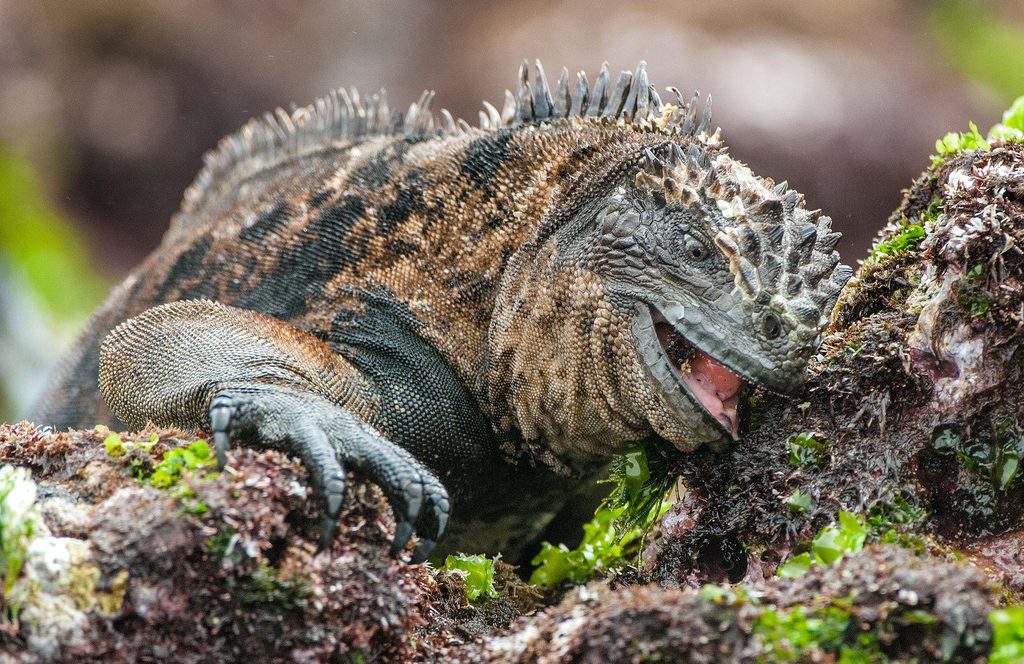
4. Marine Iguana — The Lizard That Goes Underwater
7
Imagine seeing a lizard walk toward the ocean and disappear beneath the waves.
That is exactly what the marine iguana does.
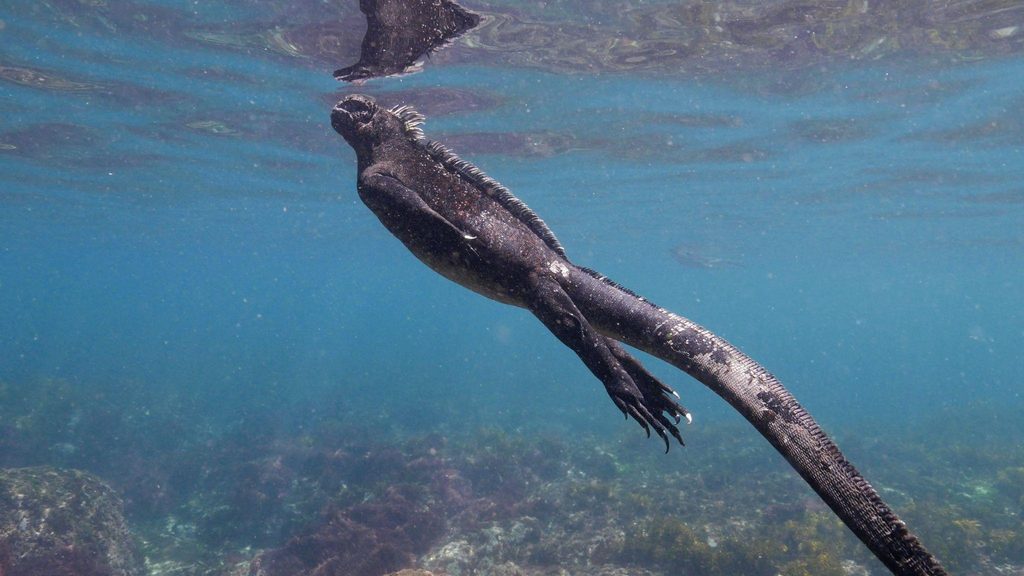
The marine iguana (Amblyrhynchus cristatus) is found only in the Galápagos Islands and is the only lizard in the world adapted to feed in the sea.
This makes it one of the clearest examples of evolution adapting an animal to an extraordinary food source.
Diving for dinner
Marine iguanas feed primarily on marine algae.
They can dive into cold seawater and scrape algae from rocks.
Their flattened tails act like paddles, helping them move through the water, while their claws allow them to grip rocks.
But the ocean presents another problem:
cold temperatures.
After feeding, marine iguanas return to land and bask in the sun to restore their body temperature.
The salt problem
Eating marine algae means swallowing salt.
Marine iguanas have special salt glands associated with their nostrils that help remove excess salt from their bodies.
You may sometimes see one sneeze or forcefully expel salty material near the nose.
It isn’t simply a strange behavior.
It is part of the animal’s adaptation to marine life.
An extraordinary response to El Niño
Food availability can change dramatically during powerful El Niño events.
Marine iguanas can suffer severe food shortages when ocean conditions reduce the growth of algae.
Researchers have documented an extraordinary response: some adults can actually shrink in length during severe shortages and later grow again when food becomes abundant.
That makes the marine iguana one of the most unusual vertebrates when it comes to coping with environmental changes.
Image Alt Text:Marine iguana resting on volcanic rocks beside Galapagos ocean
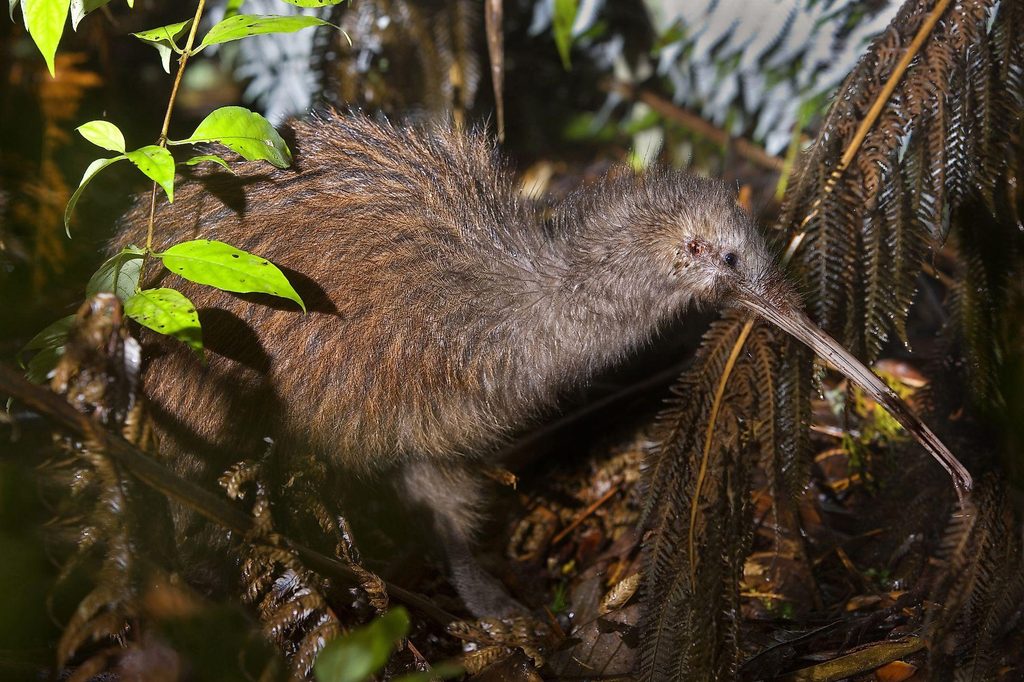
5. Kiwi — New Zealand’s Nocturnal Bird With Nostrils at the End of Its Bill
6
The kiwi is one of New Zealand’s most recognizable animals.
It is also one of the strangest birds alive.
Kiwi cannot fly. Their feathers are loose and hair-like, their wings are extremely reduced and they have strong legs.
But their most unusual feature may be their bill.
Unlike most birds, kiwi have nostrils located near the tip of the bill.
This gives them an exceptional ability to investigate scents in the soil.
A bird that hunts like a mammal
Kiwi are generally active at night.
They walk through forest floors and use their bills to probe leaf litter and soil while searching for insects, worms and other small organisms.
Their strong legs help them move through dense vegetation.
Instead of flying from tree to tree, the kiwi has become a ground specialist.
A huge egg
For its body size, the kiwi produces an unusually large egg.
The chick that emerges is already feathered and relatively independent compared with many other birds.
New Zealand’s Department of Conservation reports that kiwi chicks leave the nest to feed at about five days old and are not fed by their parents.
Why kiwi need protection
Introduced predators are a major threat.
Stoats are especially dangerous to chicks, while dogs can kill adult kiwi.
New Zealand’s conservation programs use predator control, fenced sanctuaries, offshore islands and community-led projects to protect populations.
The kiwi is therefore much more than a cute national symbol.
It represents an entire conservation effort to protect New Zealand’s unique wildlife.
Image Alt Text:Brown kiwi searching through forest leaf litter in New Zealand
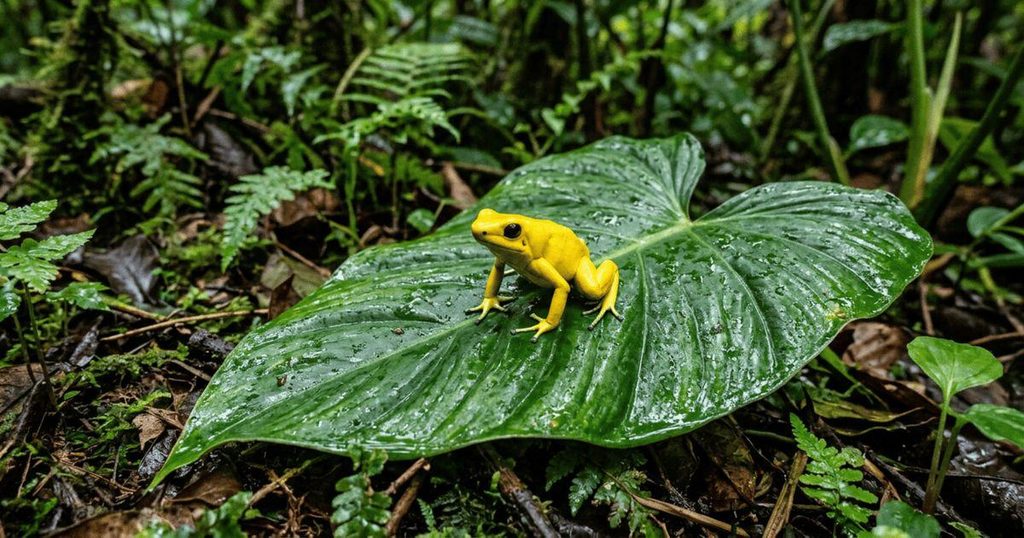
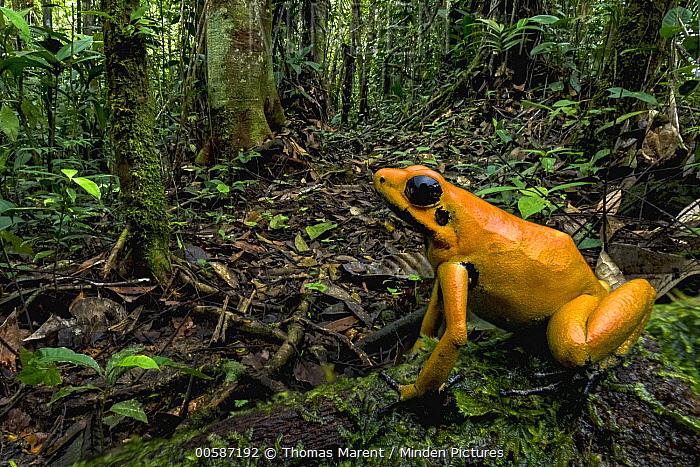
6. Golden Poison Frog — A Tiny Animal With a Powerful Defense
6
The golden poison frog (Phyllobates terribilis) may look harmless because of its tiny size.
It is not.
This brilliantly colored frog is native to humid rainforest environments in Colombia and is regarded as one of the most toxic frogs known.
Its bright yellow coloration is an example of warning coloration, signaling potential predators that attacking it could be dangerous.
Smithsonian’s National Zoo explains that the golden frog is the most toxic of the documented poison-arrow frog species and produces the alkaloid toxin batrachotoxin.
Where does the poison come from?
An especially interesting mystery surrounds its toxicity.
Golden poison frogs acquire their toxins through their natural diet.
In human care, frogs fed a different diet do not develop the same toxic skin chemistry.
This suggests that the frog’s extraordinary chemical defense is closely connected to what it eats in the wild.
A bright warning
The frog doesn’t need to hide.
Instead, its bright coloration can advertise its toxicity.
This is called aposematic coloration.
Predators that learn to associate the bright colors with an unpleasant or dangerous experience may avoid similar-looking frogs in the future.
Why tiny doesn’t mean defenseless
The golden poison frog demonstrates one of nature’s most interesting principles:
survival doesn’t always depend on size.
A tiny animal can discourage predators through chemistry rather than strength.
That is an extraordinary evolutionary solution.
Image Alt Text:Golden poison frog Phyllobates terribilis in Colombian rainforest
🌎 Six Animals, Six Extraordinary Survival Strategies
These six animals demonstrate how different environments can produce radically different solutions to survival.
Animal
Environment
Extraordinary Adaptation
Komodo dragon
Indonesian islands
Venom, powerful bite and patient ambush hunting
Kākāpō
New Zealand forests
Flightlessness, nocturnal lifestyle and camouflage
Gelada
Ethiopian highlands
Grass-based diet and complex social behavior
Marine iguana
Galápagos Islands
Diving into the ocean to feed on algae
Kiwi
New Zealand forests
Nocturnal ground foraging and highly sensitive bill
Golden poison frog
Colombian rainforest
Powerful chemical defense and warning coloration
What makes these animals so fascinating is that none of them is simply “weird” by accident.
Their unusual characteristics have practical purposes.
The Komodo dragon’s powerful hunting system helps it exploit large prey.
The kākāpō’s ground-based lifestyle developed in an environment where flying was less important.
The gelada’s teeth, hands and social behavior suit its grassland existence.
The marine iguana transformed a terrestrial lizard body into an animal capable of exploiting marine algae.
The kiwi became a nocturnal ground forager.
And the golden poison frog developed an extraordinary chemical defense.
🔬 What These Animals Teach Us About Evolution
Evolution doesn’t have a single design plan.
Instead, animals respond to the pressures of their individual environments over countless generations.
An island without many mammalian predators can produce a flightless parrot.
A volcanic island surrounded by nutrient-rich ocean water can produce a swimming lizard.
A highland landscape covered in grass can favor a primate that spends hours grazing.
A rainforest full of predators can favor an animal that advertises its toxicity with brilliant colors.
This is why isolated ecosystems are so scientifically important.
When populations become separated by mountains, oceans, islands or changing habitats, they can follow different evolutionary paths.
Eventually, those differences can produce animals that seem completely unlike their relatives.
🛡️ Why Conservation Matters in 2026
Several of the animals in this article face serious conservation challenges.
The kākāpō is classified as critically threatened in New Zealand, but its recovery provides one of the most encouraging wildlife stories of 2026. The population reached 325 birds on September 1, 2026, after 90 chicks from the year’s breeding season were added to the official count.
Kiwi also remain vulnerable to introduced predators, while marine iguanas face environmental pressures including invasive species, pollution and climate-related changes.
The golden poison frog illustrates another conservation challenge.
Amphibians around the world are vulnerable to habitat loss and disease. Related golden frog conservation programs demonstrate how scientists are increasingly using captive breeding, disease research and carefully managed reintroduction efforts to protect endangered amphibians.
Protecting unusual animals means protecting the environments that made their unusual adaptations possible.
🌿 Final Thoughts
The natural world is full of animals that challenge our expectations.
The Komodo dragon looks like a survivor from the age of dinosaurs.
The kākāpō is a parrot that gave up flight and became a nocturnal forest wanderer.
The gelada is a primate that spends much of its life eating grass.
The marine iguana is a lizard that dives into the ocean.
The kiwi is a bird that searches for food on the ground at night.
And the golden poison frog carries an extraordinary chemical defense inside a body smaller than many people’s palms.
Their differences are exactly what make them valuable.
Every strange body shape, unusual behavior and specialized survival technique tells a story about the environment in which an animal evolved.
And in 2026, the story of wildlife conservation is still being written.
The recovery of the kākāpō shows that determined conservation can make a measurable difference. At the same time, the threats facing many other unusual species remind us that protection cannot stop.
The strangest animals on Earth are not mistakes of nature. They are masterpieces of adaptation—and each one is worth protecting.
📸 IMAGE SEO PACKAGE
1. Komodo Dragon
Alt Text:Wild Komodo dragon walking through dry forest in Indonesia Image Title:Komodo Dragon Wildlife 2026 Filename:komodo-dragon-wildlife-2026.jpg
2. Kākāpō
Alt Text:Kākāpō flightless green parrot resting in New Zealand forest Image Title:Kakapo New Zealand Wildlife 2026 Filename:kakapo-new-zealand-2026.jpg
3. Gelada
Alt Text:Gelada primate with red chest in Ethiopian highlands Image Title:Gelada Ethiopian Highlands Wildlife Filename:gelada-ethiopia-wildlife-2026.jpg
4. Marine Iguana
Alt Text:Marine iguana resting on volcanic rocks beside Galapagos ocean Image Title:Marine Iguana Galapagos Wildlife Filename:marine-iguana-galapagos-2026.jpg
5. Kiwi
Alt Text:Brown kiwi searching through forest leaf litter in New Zealand Image Title:Kiwi Bird New Zealand Wildlife 2026 Filename:kiwi-bird-new-zealand-2026.jpg
6. Golden Poison Frog
Alt Text:Golden poison frog Phyllobates terribilis in Colombian rainforest Image Title:Golden Poison Frog Colombia Wildlife Filename:golden-poison-frog-colombia-2026.jpg
Featured Image
Alt Text:Six extraordinary animals including Komodo dragon, kakapo, gelada, marine iguana, kiwi and golden poison frog Filename:six-extraordinary-animals-2026.jpg
Image licensing note: The image-search results above are examples of real wildlife photographs, but many are copyrighted. Before downloading and uploading any photograph to your website, check its license and attribution requirements. For a commercial website, use properly licensed images.
6 Extraordinary Animals That Look Like They Belong on Another Planet | 2026
Meta Description: Discover six extraordinary animals from around the world: Komodo dragon, kākāpō, gelada, marine iguana, kiwi and golden poison frog, with their unique habitats, behaviors and survival adaptations.
The Rhinoceros Hornbill: The Incredible Bird That Seals Itself Inside a Tree
Deep within the tropical forests of Southeast Asia lives a bird that has developed one of the most unusual nesting strategies in the natural world.
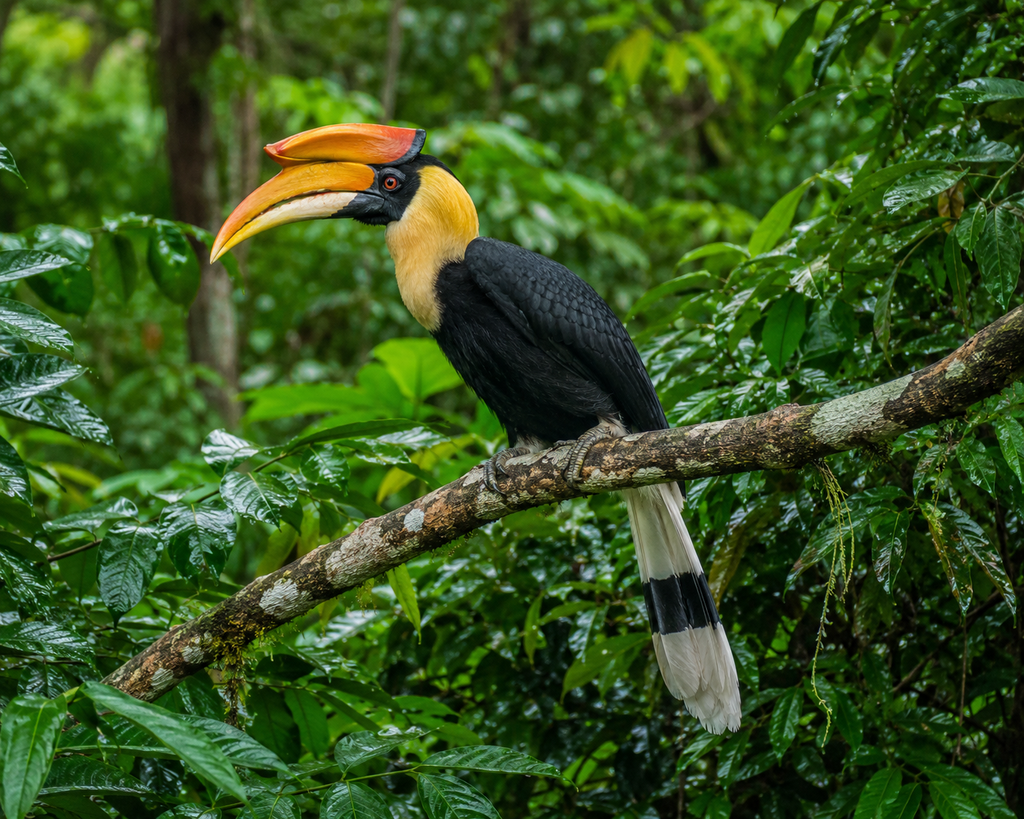
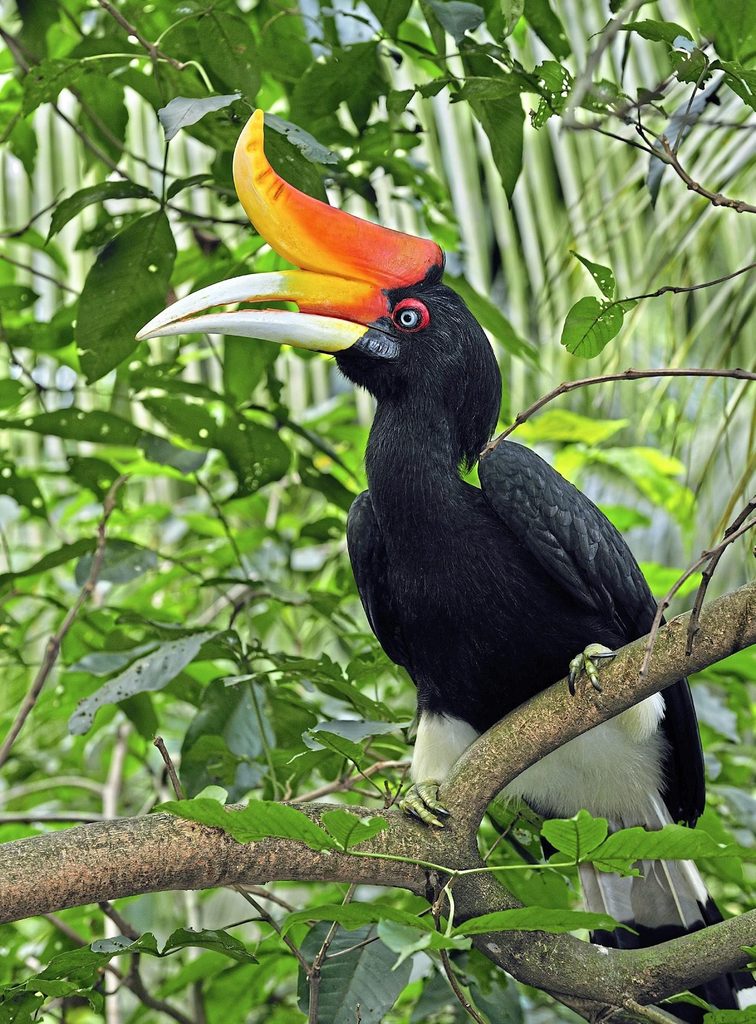
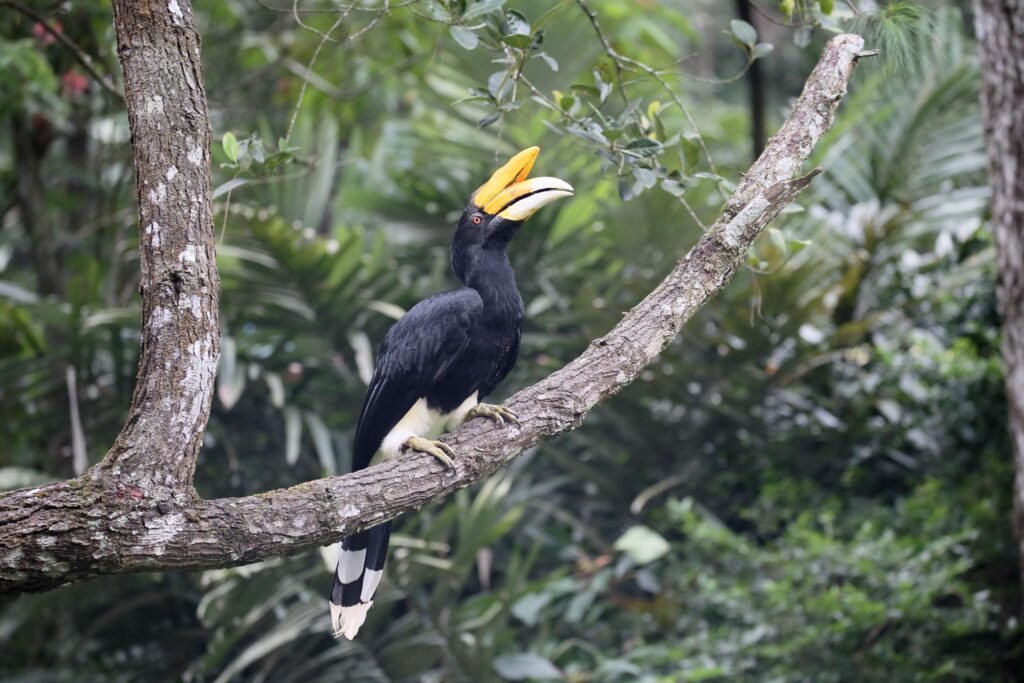
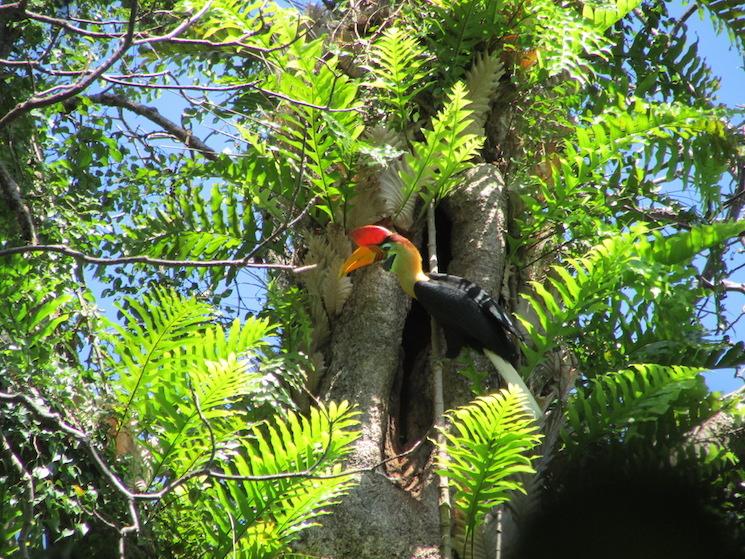
The Rhinoceros Hornbill is a large, powerful forest bird with a huge curved bill, striking black-and-white plumage and a remarkable yellow-orange casque above its bill.
But its appearance is not the most surprising thing about it.
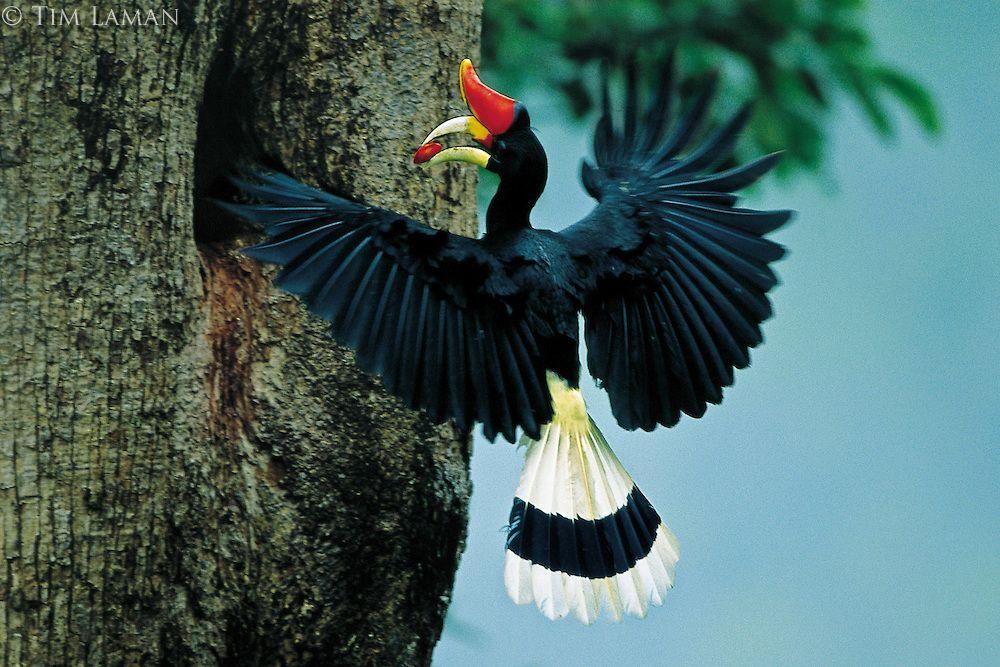
During the breeding season, the female enters a natural cavity in a large tree and seals herself inside.
Only a small opening remains.
Through this narrow gap, the male brings food to his mate and, later, to the chicks.
For weeks, the female remains inside the tree while the male becomes the family’s primary food provider.
It sounds almost impossible.
Yet this extraordinary behavior is well documented in Rhinoceros Hornbills. Animal Diversity Web reports that the female seals herself into a tree cavity using materials including mud, feces and fruit peels, leaving a small slit through which the male can deliver food.
This unusual system provides protection for the mother and young—but it also creates enormous responsibilities for the male.
A Giant Bird of Southeast Asian Rainforests
6
The Rhinoceros Hornbill is found in parts of Southeast Asia, including Borneo, Sumatra and the Malay Peninsula.
Its habitat includes tropical forests where large mature trees provide suitable nesting cavities.
This is an important distinction for readers interested in Amazon wildlife:
Rhinoceros Hornbills are not Amazon rainforest birds.
The Amazon has many spectacular birds—including toucans, macaws, parrots, curassows and hoatzins—but true hornbills belong to the Old World.
The Rhinoceros Hornbill is therefore best described as a Southeast Asian rainforest bird.
It is strongly dependent on forest environments containing large trees.
And that dependence becomes particularly important during breeding season.
An Extraordinary Appearance
The Rhinoceros Hornbill is difficult to confuse with an ordinary forest bird.
It can grow to approximately a meter in length, including its tail, and has a powerful, oversized bill.
Above the bill is a large structure known as a casque.
The casque is one of the most recognizable features of hornbills.
Its yellow-orange color contrasts dramatically with the bird’s black plumage and white tail markings.
When the bird flies through the rainforest, its broad wings and long tail create an impressive silhouette.
But the enormous bill and casque aren’t simply decorative features.
The bill is an important tool for handling food, while the casque is associated with communication and display.
The bird’s impressive appearance may also help pairs recognize one another and communicate during social interactions.
The Nest Begins With a Tree Cavity
6
Unlike woodpeckers, Rhinoceros Hornbills generally do not excavate their own nest cavities.
Instead, they depend on naturally occurring holes in large trees.
Finding the right cavity can therefore be extremely important.
The entrance needs to be suitable for the female, and the cavity must provide enough space for her and the future chicks.
Hornbills may face competition for these valuable cavities from other birds and animals.
Once a suitable cavity has been selected, the female enters.
Then something remarkable happens.
She begins sealing the entrance.
Why Does the Female Seal Herself Inside?
The sealed nest is essentially a natural fortress.
A narrow entrance makes it much harder for predators to reach the eggs and chicks.
According to Animal Diversity Web, Rhinoceros Hornbill females seal themselves into cavities using materials such as mud, feces and fruit peels. A narrow slit remains open so the male can feed the female and eventually the chicks.
From the outside, it may look as though the bird has disappeared.
The tree appears almost empty.
But inside the cavity, an entire family is developing.
The sealed entrance provides physical protection while reducing access for predators such as climbing snakes and monitor lizards.
The strategy comes with a major cost, however.
The female cannot simply fly away whenever she wants.
She depends heavily on her mate.
The Male Becomes the Family’s Food Provider
6
Once the female is sealed inside, the male’s responsibilities become enormous.
He must search the rainforest for food.
He must return to the nest.
He must pass food through the narrow opening.
And he must continue doing this while protecting the nesting area.
Animal Diversity Web reports that a male Rhinoceros Hornbill may bring food to the nest up to 13 times in a single day.
That is an extraordinary workload.
The male has to find enough food for himself and his mate, and eventually for the growing chicks.
This creates a remarkable partnership.
The female provides protection and incubation from inside the cavity.
The male provides food from outside.
Neither parent can easily complete the nesting process alone.
What Does the Rhinoceros Hornbill Eat?
The Rhinoceros Hornbill is primarily a fruit eater.
Fruits, especially those produced by tropical forest trees, form a major part of its diet.
Figs can be particularly important.
But the bird isn’t strictly vegetarian.
It can also consume animal foods such as insects, reptiles, small mammals and other small prey when available.
This flexible diet is useful during the breeding season.
The male needs to find nutritious foods efficiently while making repeated trips back to the nest.
Because tropical forests contain many fruiting trees, the bird can travel through the canopy searching for resources.
The Hidden Female and Her Eggs
Inside the cavity, the female lays her eggs and incubates them.
Rhinoceros Hornbills typically produce a very small clutch, usually one or two eggs.
Their incubation period is approximately 37–46 days, according to Animal Diversity Web.
A small clutch makes every surviving chick particularly important.
There is no large group of offspring to compensate if one chick fails to survive.
The female therefore invests heavily in protecting and caring for the young.
And because she is sealed inside, the male’s role becomes even more important.
What Happens When the Eggs Hatch?
4
Hatching does not immediately end the female’s confinement.
In fact, she remains inside the nest cavity for several more weeks.
Sources report that the female can remain sealed inside for approximately five to seven weeks after hatching.
During this period, the male continues supplying food.
The chicks grow rapidly.
Their demands increase.
The male therefore has an increasingly difficult job.
Eventually, the female leaves the cavity.
But the nesting strategy still isn’t finished.
The young remain protected within the tree cavity while the parents continue bringing them food.
This extended parental investment helps give the young time to develop before they finally leave the nest.
A Built-In Defense Against Predators
The sealed cavity is one of the most effective parts of the hornbill’s breeding strategy.
Rainforest nests are vulnerable places.
Snakes can climb trees.
Monitor lizards can search cavities.
Other predators may investigate exposed nests.
A completely open tree hole would give predators relatively easy access.
By narrowing the entrance to a small slit, the hornbills create a barrier.
The female and chicks remain inside while the male controls access to food.
BirdLife International explains that hornbill females sealing themselves into nest cavities is an important part of their breeding strategy and that the system makes them especially dependent on their mates during this period.
This strategy has evolved because the benefits of protection can outweigh the enormous cost of confinement.
The Dangerous Side of the Strategy
The nesting system is brilliant—but it also creates a vulnerability.
If the male disappears, becomes injured or cannot find enough food, the female and chicks may be placed in serious danger.
They cannot simply leave the nest and search for food themselves.
This is one reason habitat loss and hunting can be particularly serious for hornbills.
BirdLife International has highlighted the vulnerability created by this reproductive system, noting that when a male is lost, an entire brood may be affected because the female is dependent on him for food while confined.
The family’s survival is therefore closely linked.
One bird’s disappearance can affect several others.
Why Old-Growth Forest Trees Matter
7
Protecting Rhinoceros Hornbills means protecting the forest structures they need.
A young plantation may contain plenty of vegetation but still lack suitable nesting cavities.
Large old trees are particularly valuable because natural holes can take many years to develop.
When mature trees disappear, hornbills may lose potential nesting sites even if some forest remains.
This is why conservationists often focus not only on the total amount of forest, but also on its quality and age structure.
A forest filled with mature trees can provide nesting cavities, fruit resources and safe travel routes.
A heavily degraded forest may provide much less.
Hornbills Are Important Seed Dispersers
The Rhinoceros Hornbill’s love of fruit gives it another important ecological role.
When it eats fruit, it can transport seeds from one location to another.
Seeds may pass through the digestive system and eventually reach the forest floor away from the parent tree.
This helps plants spread through the forest.
Hornbills are therefore sometimes described as important seed dispersers or “gardeners of the rainforest.”
BirdLife International highlights the ecological importance of hornbills and their relationships with forest trees.
Protecting a hornbill can therefore help protect the wider forest ecosystem.
The relationship works both ways.
The bird needs the forest for food and nesting cavities.
The forest can benefit from the bird’s movement of seeds.
Why This Bird Is So Special
The Rhinoceros Hornbill’s nesting behavior combines several extraordinary adaptations.
A natural tree cavity provides the basic nest.
A sealed entrance protects the female and young.
A tiny feeding opening allows the male to deliver food.
The male’s foraging behavior keeps the family alive.
The female’s confinement protects her while she incubates and raises the young.
The small clutch encourages enormous parental investment.
Together, these behaviors create one of the most unusual family systems in the bird world.
Is the Rhinoceros Hornbill Endangered?
The conservation status of a species can change as new assessments are made, so website articles should use current authoritative sources when describing status.
More importantly, the species faces conservation pressures associated with forest loss, hunting and the loss of large nesting trees.
The dependence on mature forest makes habitat protection particularly important.
Protecting rainforest isn’t simply about keeping green areas on a map.
It is about maintaining the specific trees, food sources and ecological connections that wildlife needs.
A Lesson From the Hornbill Family
The Rhinoceros Hornbill teaches us something extraordinary about cooperation.
The female takes on one role.
The male takes on another.
For weeks, the female remains hidden inside a tree.
The male works outside.
Neither role is easy.
The female must incubate and protect the developing young.
The male must repeatedly travel through the forest searching for enough food.
Together, they create a highly specialized survival system.
This is one of the reasons hornbills are so fascinating to scientists and wildlife enthusiasts.
Final Thoughts
The Rhinoceros Hornbill may look like a bird from a fantasy story, but its nesting behavior is completely real.
The female enters a natural tree cavity.
She seals herself inside.
A small opening remains.
The male brings food through that opening.
The eggs hatch inside the protected cavity.
The mother continues caring for the young before eventually emerging.
The strategy is strange, risky and remarkably effective.
It also shows why rainforest conservation must protect more than individual animals.
Without mature trees, there may be no suitable nest cavities. Without healthy forests, there may not be enough fruit. Without the male, the sealed female may have no reliable food supply.
Everything is connected.
And although the Rhinoceros Hornbill does not live in the Amazon, its story provides a powerful lesson for rainforest conservation everywhere—from Southeast Asia to the Amazon basin.
The world’s tropical forests contain countless unusual breeding strategies.
Some are easy to see.
Others are hidden inside tree trunks.
For the Rhinoceros Hornbill, one of nature’s greatest secrets is happening behind a tiny sealed doorway high above the forest floor.
Inside that tree, a family is growing—and outside, one devoted parent is working tirelessly to keep them alive.
The Rhinoceros Hornbill: The Incredible Bird That Seals Itself Inside a Tree
Alternative Titles:
Why This Amazing Hornbill Seals the Female Inside a Tree
Rhinoceros Hornbill: The Rainforest Bird With a Secret Nesting Strategy
Inside the Hidden World of the Rhinoceros Hornbill
Meta Description: Discover the remarkable Rhinoceros Hornbill and learn how the female seals herself inside a tree cavity while her mate provides food during nesting.
Short Description: The Rhinoceros Hornbill has one of the most extraordinary nesting strategies in the bird world. Discover how a female seals herself inside a tree cavity and raises her young with help from her mate.
The Amazon rainforest has always been a place of surprises, but 2026 has provided another reminder that scientists still have much to learn about the animals living beneath its enormous canopy.
Deep inside the rainforest, some creatures are difficult to find, difficult to identify and sometimes even mistaken for other species for decades. Their unusual colors, secretive behavior and highly specialized habitats make them especially fascinating.
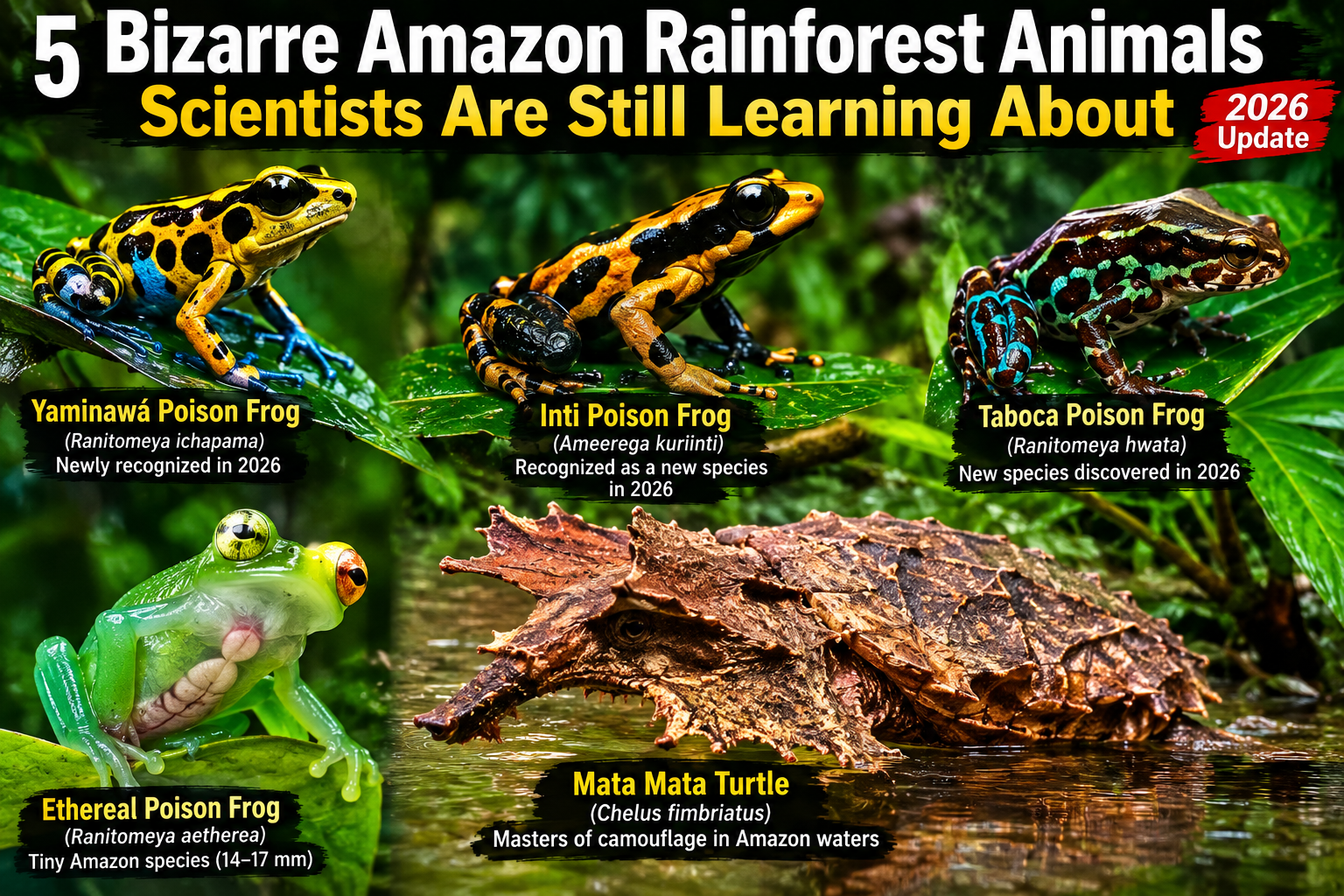
This year, researchers announced or formally recognized several remarkable poison frogs from Amazonian forests. Three species—the Yaminawá Poison Frog, Inti Poison Frog and Taboca Poison Frog—were described as new species in 2026. The discoveries came from rainforest areas of Peru and Brazil and demonstrate how much biodiversity can remain hidden even after years of scientific investigation.
In this new World Animals TV article, we’ll look at five unusual Amazon animals and explain what makes them so special.
🐸 1. Yaminawá Poison Frog — A Tiny Frog That Took Decades to Understand
One of the most fascinating Amazon discoveries of 2026 is the Yaminawá Poison Frog (Ranitomeya ichapama).
Scientists had known about this tiny frog for many years, but identifying it as a separate species proved surprisingly difficult.
The frog is extremely elusive. Researchers had collected only a small number of specimens during biodiversity surveys, making it difficult to determine whether it represented a genuinely separate species or simply an unusual form of another known frog.
Eventually, genetic research provided the evidence scientists needed.
The species is currently known from western Acre in Brazil and neighboring areas of southeastern Peru. The American Museum of Natural History’s Amphibian Species of the World database lists six known localities across those countries.
What makes it bizarre?
The Yaminawá Poison Frog has a distinctive yellow pattern.
One particularly unusual feature is a thin yellow stripe running along the middle of its back. Near the nose, that stripe divides into an oval-like marking.
Researchers also found that its genetic signature is distinct from closely related frogs.
The name ichapama comes from the Yaminawá language and means “rare” or “few,” reflecting how difficult this animal has been to find.
Habitat
It lives in lowland rainforest in western Brazil and southeastern Peru.
Its limited known distribution makes the species especially interesting from a conservation perspective.
Image Alt Text: Yaminawá Poison Frog Ranitomeya ichapama in Amazon rainforest
Suggested filename: yaminawa-poison-frog-2026.jpg
🐸 2. Inti Poison Frog — The Frog Scientists Mistook for Another Species
The Inti Poison Frog (Ameerega kuriinti) has another unusual story.
For roughly half a century, scientists treated this frog as a form—or color variation—of another species called Ameerega bassleri.
That classification has now changed.
Research published in 2026 showed that the frog represents its own distinct species. Researchers examined its physical characteristics, genetics and mating calls to establish its separate identity.
The American Museum of Natural History records Ameerega kuriinti as an endemic species of Peru. Its known distribution includes northern San Martín and the Cordillera Escalera, with populations occurring at elevations of approximately 316 to 1,278 meters.
A unique voice
One of the most interesting features of the Inti Poison Frog is its call.
Male frogs produce calls to attract females, and researchers found that the acoustic characteristics of the Inti frog are statistically distinct.
That means its identity isn’t based only on appearance.
Its DNA, body characteristics and voice all provide evidence that it is a separate species.
Why this discovery matters
The story demonstrates why biodiversity research is so important.
An animal can be sitting in a museum collection—or even appearing in the wildlife trade—and still be scientifically misunderstood.
The Inti frog had a name, but scientists had not yet fully understood its identity.
Now it has its own place in the scientific record.
Image Alt Text: Inti Poison Frog Ameerega kuriinti from the Peruvian Amazon rainforest
🐸 3. Taboca Poison Frog — The Tiny Frog That Uses Bamboo
The third 2026 discovery is the Taboca Poison Frog (Ranitomeya hwata).
This species has a particularly interesting relationship with bamboo.
Researchers discovered that the frogs use Guadua bamboo as part of their reproductive habitat. The hollow stems can hold rainwater, creating tiny natural pools that the frogs can use for reproduction.
The species is found across much of Acre, Brazil, and its distribution extends into parts of southeastern Peru and northern Bolivia. The American Museum of Natural History records populations at roughly 190–356 meters elevation.
Look closely at the throat
One feature that helps distinguish the Taboca Poison Frog is its black throat band.
Its genetics also reveal a separate evolutionary history extending back millions of years.
The frog’s scientific name honors Indigenous knowledge. Researchers explained that “hwata” comes from the language of the Manxineru people and is a general word for bamboo. The common name “Taboca” also refers to the type of bamboo associated with the animal.
A remarkable miniature ecosystem
Think about how small this habitat is.
A giant rainforest may contain thousands of trees, but this tiny frog can depend on a small amount of water trapped inside a bamboo stem.
For a human, the hollow bamboo may look insignificant.
For the frog, it can be a nursery.
Image Alt Text: Taboca Poison Frog Ranitomeya hwata living in Amazon bamboo forest
Suggested filename: taboca-poison-frog-bamboo.jpg
🐸 4. Ethereal Poison Frog — A New Species Smaller Than a Paperclip
Another extraordinary frog recently brought into the spotlight is Ranitomeya aetherea, sometimes described as the ethereal poison dart frog.
Researchers found it in the Juruá River Basin of the western Amazon, where it was first encountered among leaves of wild banana plants during an expedition in 2023. The species was formally described in research published afterward and featured in a 2026 wildlife report.
This frog is extremely small.
Adults measure only about 14–17 millimeters—roughly the length of a small paperclip.
Yet its colors are anything but tiny.
It has reddish-brown and blue coloration above, a bright blue underside with black spots and copper-colored legs.
A frog that uses plants as nurseries
The species has so far been found at one site.
Females lay eggs in tiny pools of water collected inside plant leaves. This is an excellent example of how an animal can use a very specific microhabitat within the rainforest.
The surrounding forest at the known location remains largely intact, which currently provides some protection from deforestation and wildfire. However, researchers have noted that climate change and illegal collection or trade could still present risks.
Why “ethereal”?
The name refers to the almost otherworldly appearance of the tiny animal.
Its vivid colors, tiny body and secretive habitat make it seem almost unreal.
But this is a real Amazon rainforest species—and another reminder that some of the rainforest’s most remarkable animals can be smaller than a human fingernail.
Image Alt Text: Ranitomeya aetherea tiny ethereal poison frog from the western Amazon
🌎 Why Are Scientists Still Finding Strange Animals in the Amazon?
The Amazon is enormous.
It contains forests, rivers, wetlands, bamboo stands, mountains, floodplains and countless tiny habitats that can be difficult to access.
A species may live only in a particular valley, along one river system or within a particular type of forest.
That makes some animals extremely difficult to study.
The 2026 discovery of the Yaminawá Poison Frog is a perfect example.
Researchers had encountered the frog before, but it took additional genetic and morphological research to establish that it was genuinely a separate species.
The Inti Poison Frog tells a similar story.
Scientists had known about the animal for decades, but it was classified as another species until detailed research revealed its distinct identity.
This means that biodiversity discoveries aren’t always about walking into the jungle and finding an animal nobody has ever seen.
Sometimes scientists discover something even more interesting:
an animal that humans have seen before but didn’t yet understand.
🔬 2026 Is an Important Year for Amazon Frog Research
The three newly described poison frogs—Yaminawá, Inti and Taboca—were formally recognized through scientific publications in 2026.
The American Museum of Natural History’s Amphibian Species of the World database now lists Ranitomeya ichapama as a species described in 2026.
This work also highlights the importance of Indigenous knowledge.
The names of several newly recognized frogs were chosen to honor Indigenous peoples and languages connected to the regions where these animals occur.
That is an important reminder that scientific discovery does not happen in isolation.
Researchers often work in landscapes where local and Indigenous communities already possess generations of knowledge about plants, animals and the forest.
🌿 What Makes These Animals So Unusual?
Although the five animals in this article are very different, they share one important characteristic:
each has a highly specialized relationship with its environment.
The Yaminawá Poison Frog survives in lowland western Amazon forests.
The Inti Poison Frog occupies forest environments in Peru’s Cordillera Escalera.
The Taboca Poison Frog has a remarkable connection with bamboo.
The ethereal poison frog uses tiny pools of water held by plants for reproduction.
The mata mata uses camouflage to become almost invisible in freshwater.
Their bodies and behaviors demonstrate how evolution can create extraordinary solutions to the challenges of rainforest life.
⚠️ Why Discovering a Species Is Only the Beginning
Giving an animal a scientific name is an important milestone, but researchers still need to learn much more.
For newly recognized species, scientists may need to determine:
How large the population is
Where exactly the animal occurs
What it eats
How it reproduces
Whether its habitat is shrinking
What predators affect it
Whether it is threatened
How climate change may affect it
The Yaminawá Poison Frog illustrates this challenge particularly well.
Researchers have described the species, but questions about its population and long-term status remain.
This is why rainforest exploration and biodiversity surveys remain so important.
Scientists cannot protect a species effectively if they don’t know that it exists.
🐾 Why Amazon Biodiversity Matters
Every animal in the Amazon is part of a larger ecological network.
Frogs consume insects and other small organisms.
Predators feed on frogs.
Plants provide food and shelter.
Rivers connect distant habitats.
Bamboo provides miniature pools for some amphibians.
Even a tiny frog measuring less than two centimeters can therefore be connected to a much larger ecosystem.
Protecting Amazon wildlife isn’t simply about saving famous animals such as jaguars and macaws.
It also means protecting the tiny, secretive species that may spend their entire lives in a few hectares of forest.
🌳 The Future of Amazon Wildlife Discovery
The discoveries of 2026 suggest that the Amazon still has many surprises.
Three poison frogs were formally recognized as new species this year, while other recently described Amazonian frogs demonstrate how quickly modern genetic research can change our understanding of biodiversity.
Some discoveries will be colorful.
Some will be bizarre.
Some may be extremely small.
And some may already be sitting in a museum collection, waiting for scientists to realize that they are different from anything previously described.
The rainforest still has secrets.
🐸 Final Thoughts
The Amazon rainforest is often imagined as a world of giant snakes, powerful jaguars and colorful birds.
But the most fascinating animals can be much smaller.
The Yaminawá Poison Frog remained scientifically mysterious for years.
The Inti Poison Frog spent decades under another species’ name.
The Taboca Poison Frog has a remarkable relationship with bamboo.
The tiny Ranitomeya aetherea lives in miniature pools formed by plants.
And the bizarre mata mata turtle uses its strange appearance as an underwater disguise.
Together, these animals tell an important story about the Amazon.
The rainforest isn’t fully understood—not even close.
Every new species provides another piece of the enormous biological puzzle.
As scientists continue exploring Amazonian forests in 2026 and beyond, the next bizarre animal discovery could be hiding somewhere incredibly small, incredibly remote or simply overlooked for decades.
The strangest creatures in the Amazon aren’t monsters from a fantasy story. They are real—and scientists are still discovering their stories.
🌿 NEW 2026 ARTICLE: 5 Bizarre Amazon Rainforest Animals Scientists Are Still Learning About
Updated: September 2026 Website: World Animals TV Article Type: Wildlife / Nature / Science Length: Approximately 1,500 words
SEO Title: 5 Bizarre Amazon Animals Making Headlines in 2026
Meta Description: Discover five of the Amazon rainforest’s strangest animals, including newly described poison frogs and unusual rainforest creatures with incredible adaptations.
SEO Title: 5 Bizarre Amazon Animals Making Headlines in 2026
Meta Description: Meet five bizarre Amazon rainforest animals in this 2026 update, including three newly recognized poison frogs and the strange mata mata turtle.
Slug: bizarre-amazon-rainforest-animals-2026
Category: Wildlife
Subcategory: Amazon Rainforest
Tags: Amazon rainforest, bizarre animals, unusual animals, Amazon wildlife, wildlife 2026, poison frogs, Yaminawá Poison Frog, Inti Poison Frog, Taboca Poison Frog, Ranitomeya aetherea, mata mata turtle, rainforest animals, South American wildlife, rare animals
Featured Image Title: Bizarre Amazon Rainforest Animals 2026
Featured Image Alt: Five bizarre Amazon rainforest animals together in a realistic rainforest scene
Featured Image Description: A realistic wildlife composition showing five unusual animals associated with Amazon rainforest ecosystems, highlighting the remarkable biodiversity discovered and studied in 2026.
Excerpt: From tiny poison frogs newly recognized by scientists to the bizarre mata mata turtle, discover five of the Amazon rainforest's strangest animals and the remarkable adaptations that help them survive.
Open Graph Title: 5 Bizarre Amazon Rainforest Animals Making Headlines in 2026
Open Graph Description: Discover five unusual Amazon animals and the remarkable scientific discoveries helping researchers understand them in 2026.
Pinterest Title: 5 Bizarre Amazon Rainforest Animals You Need to See
Pinterest Description: Discover five strange and fascinating Amazon animals, including newly recognized poison frogs and the incredible mata mata turtle.
2026 News Angle: The strongest current hook is the scientific recognition of three new Amazon poison-frog species in 2026: Ranitomeya ichapama, Ameerega kuriinti and Ranitomeya hwata.