
Updated: September 2026
Recommended website: World Animals TV
Article type: Original Wildlife Feature

6
A Journey Through the World’s Forests
Forests may look similar from a distance, but they are actually some of the most diverse habitats on Earth. A cool North American woodland supports bears and elk, tropical South American forests echo with the calls of howler monkeys, and African rainforests shelter gorillas, cobras and enormous millipedes. In Asia, clouded leopards move almost invisibly through dense vegetation, while Australia’s rainforests are home to the remarkable Lumholtz’s tree-kangaroo.
What makes these animals especially fascinating is not simply their appearance. Each has developed behaviors, body structures or senses that help it survive where it lives.
Some are powerful predators. Others survive by camouflage, cooperation or patience. Some spend their lives high in the canopy, while others rarely leave the forest floor.
Here are 12 remarkable forest animals and the adaptations that make their lives extraordinary.
1. American Black Bear — The Forest Generalist


7
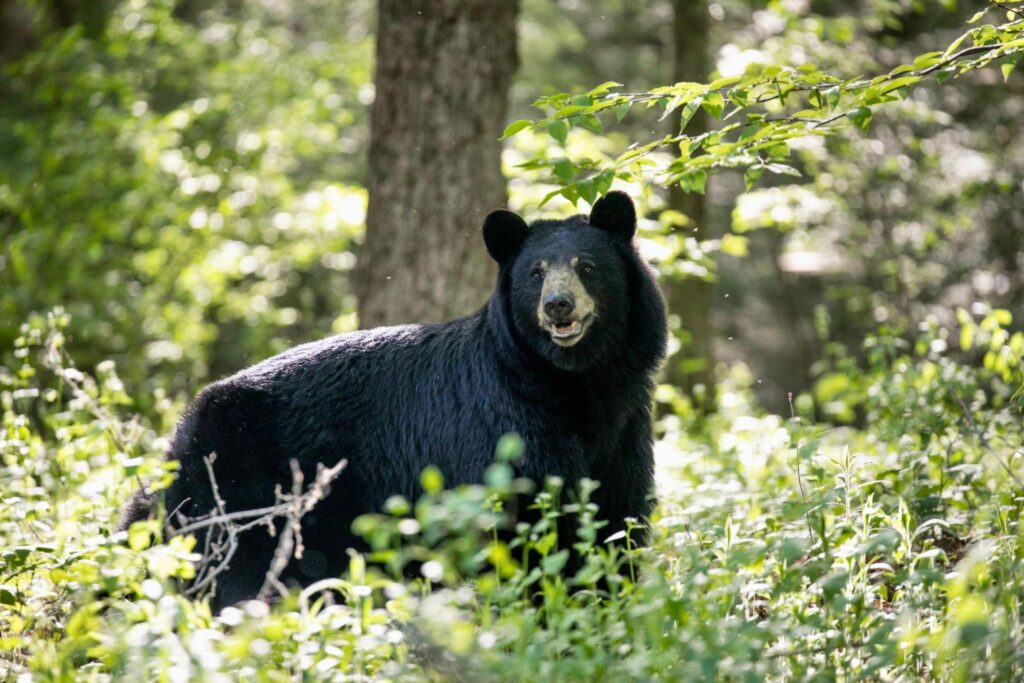
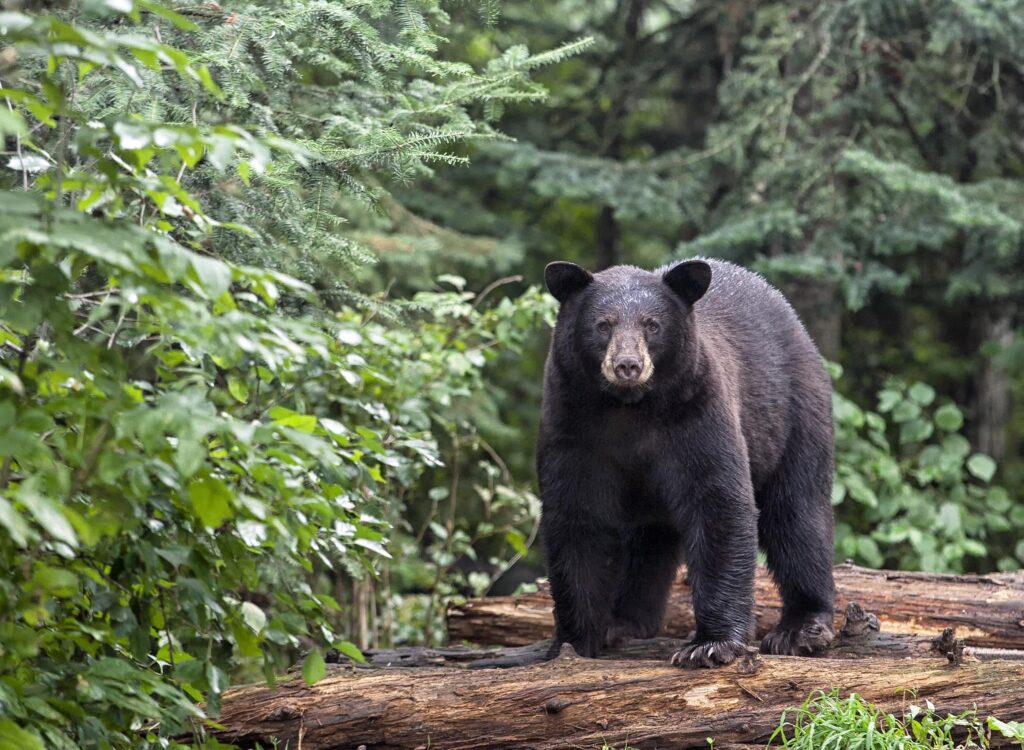
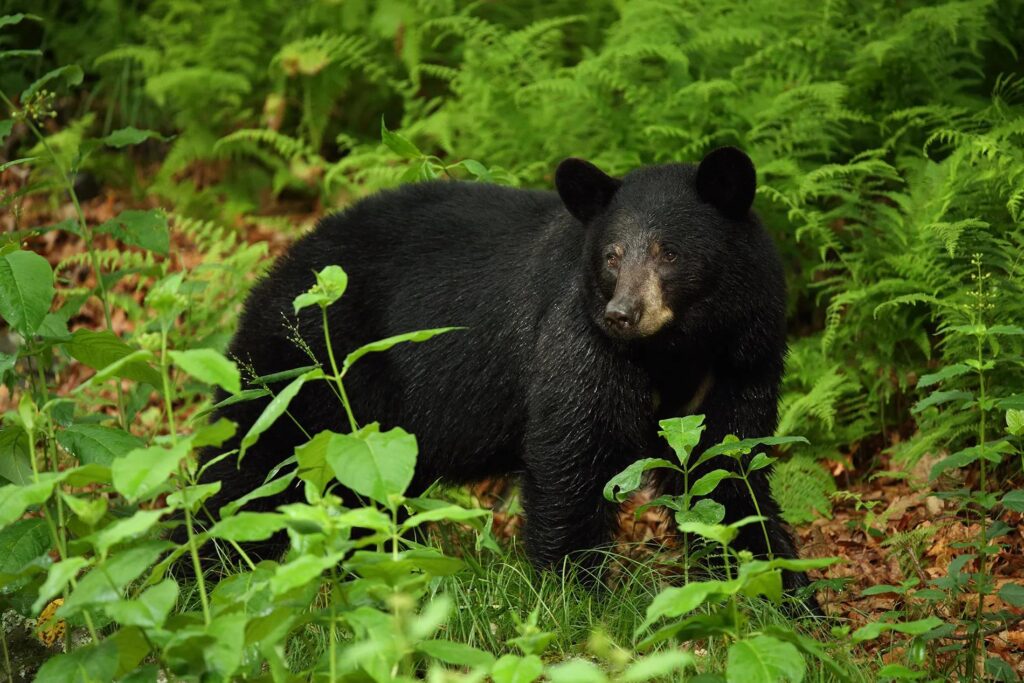
The American black bear (Ursus americanus) is one of North America’s most adaptable large mammals. Despite its name, individual black bears can be black, brown, cinnamon, blonde or other shades. The U.S. National Park Service describes them as the most common and widely distributed bear species in North America.
Black bears are omnivores and take advantage of whatever food is available. Their menu can include berries, grasses, insects, fish, nuts, carrion and other foods.
Their exceptional sense of smell is particularly important. Instead of depending entirely on eyesight, a bear can investigate scents from considerable distances and change its movements according to where food is available.
They are also surprisingly good climbers. Short, curved claws help them climb trees, an ability that can provide access to food and refuge.
During autumn, bears enter a period of intense feeding called hyperphagia, building energy reserves before winter denning.
The black bear’s greatest strength may therefore be adaptability. It can live in different forest environments because it isn’t dependent on one particular food source.
2. Black Howler Monkey — The Voice of the Rainforest


7
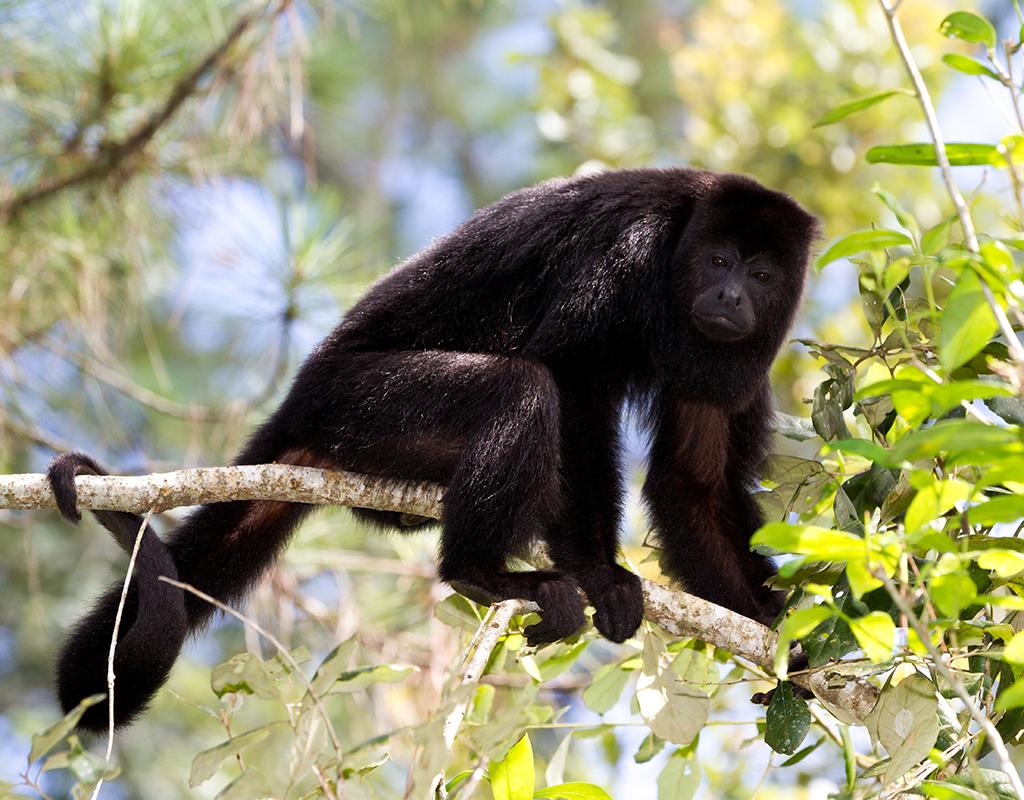
The black howler monkey (Alouatta caraya) may be easier to hear than see.
It is famous for its extraordinarily powerful call, which can travel long distances through forest vegetation. Smithsonian’s National Zoo describes black howlers as among the loudest terrestrial animals in the Western Hemisphere.
The species also displays a striking difference between males and females. Adult males have black fur, while females remain blond.
Their loud calls serve an important purpose. Howler groups do not necessarily need to constantly fight over territory. By announcing their presence, males can communicate with neighboring groups and help maintain spacing between troops.
This is an excellent example of energy-efficient communication.
The monkeys mainly eat leaves, flowers and fruit. Because leaves provide relatively low amounts of usable energy, howlers spend substantial periods resting rather than constantly traveling.
Their prehensile tails are also important. The tail can help them grip branches as they move through the canopy.
In the forest, being loud isn’t always a disadvantage.
For howler monkeys, it can be a way of avoiding unnecessary conflict.


3. Black Woodpecker — The Forest’s Powerful Tree Driller

5
The black woodpecker (Dryocopus martius) is an impressive bird of mature European and Asian forests.
Its almost entirely black plumage is contrasted by a vivid red crown, particularly noticeable in males.
But its most important tool is its bill.
The bird can hammer into tree trunks while searching for insects and their larvae. Powerful neck muscles and a specialized skull help it withstand repeated impacts.
A large woodpecker is not simply eating insects.
It is also changing the forest.
When a woodpecker excavates a cavity, the resulting hole may later become a nesting or shelter site for other birds, mammals and insects.
This makes some woodpeckers important ecosystem engineers.
A mature forest with old trees, dead wood and insects provides the structural variety these birds need.
Their survival therefore depends on more than having trees—it depends on having the right kinds of trees.


4. Brown-Throated Sloth — Master of the Slow Life


7
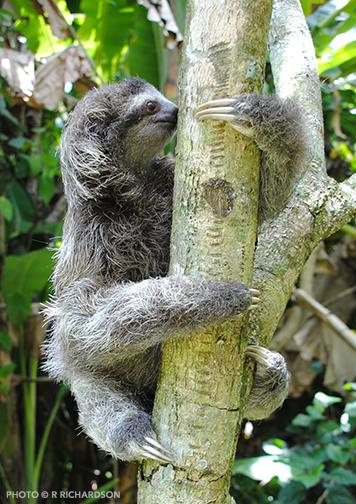
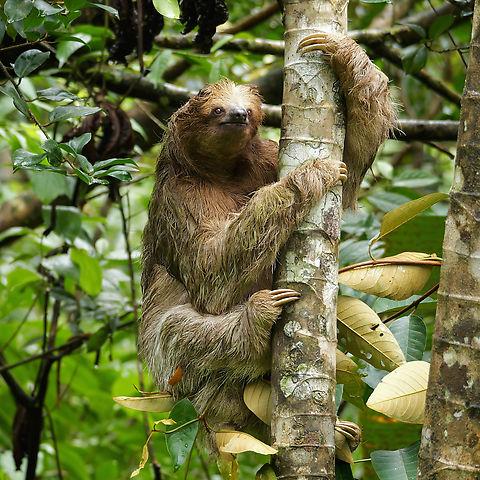
The brown-throated sloth (Bradypus variegatus) has built its entire lifestyle around conserving energy.
Instead of racing through the forest, it moves slowly among branches and spends much of its life suspended above the ground.
Its diet is dominated by leaves, which are abundant but relatively difficult to digest and low in energy.
Slow movement therefore makes sense.
Sloths also have long claws that function like natural hooks, allowing them to grip branches while hanging beneath the canopy.
Their fur can host algae and microorganisms, giving the coat a greenish appearance that may improve camouflage among leaves.
This relationship between sloth and forest is remarkably close.
From below, a resting sloth can be extremely difficult to spot.
The animal’s strategy is simple but effective:
move slowly, conserve energy and stay hidden.
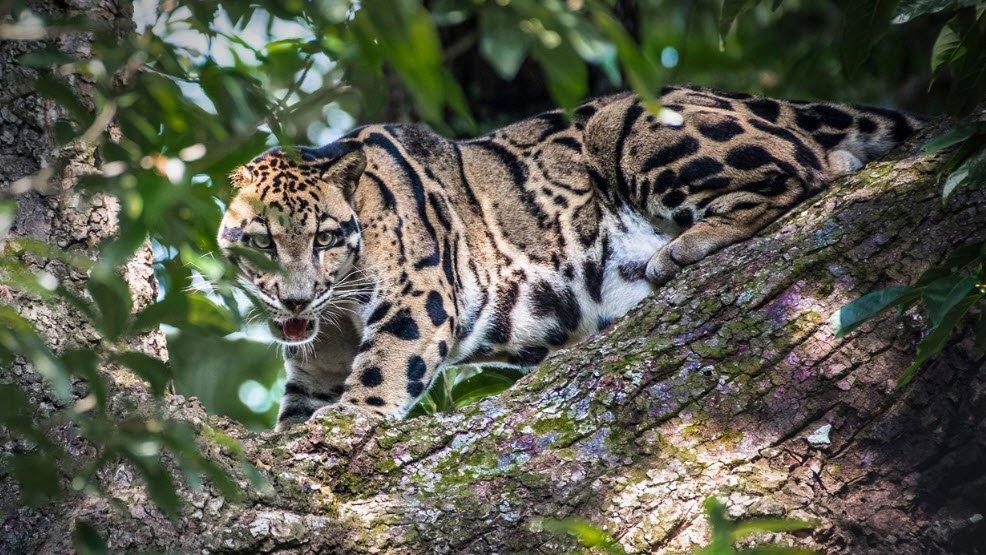
5. Clouded Leopard — The Forest’s Acrobat


7
The clouded leopard (Neofelis nebulosa) is one of Asia’s most spectacular forest cats.
Its coat is covered with large cloud-shaped markings that break up its outline among leaves and branches.
But camouflage is only part of its extraordinary toolkit.
Clouded leopards are highly capable climbers. Their strong limbs, long tail and flexible ankles allow them to navigate branches and steep surfaces with impressive control.
A forest canopy can therefore become a hunting environment rather than simply a place to rest.
The species occupies forests across parts of South and Southeast Asia, although populations are affected by habitat loss and hunting.
Its survival demonstrates why connected forest habitat is so important.
A large predator needs enough space to find prey, move between territories and reproduce.
Protecting a clouded leopard means protecting much more than one beautiful cat.
It means protecting the forest ecosystem around it.


6. Elk — A Giant Shaped by Seasonal Forests


7
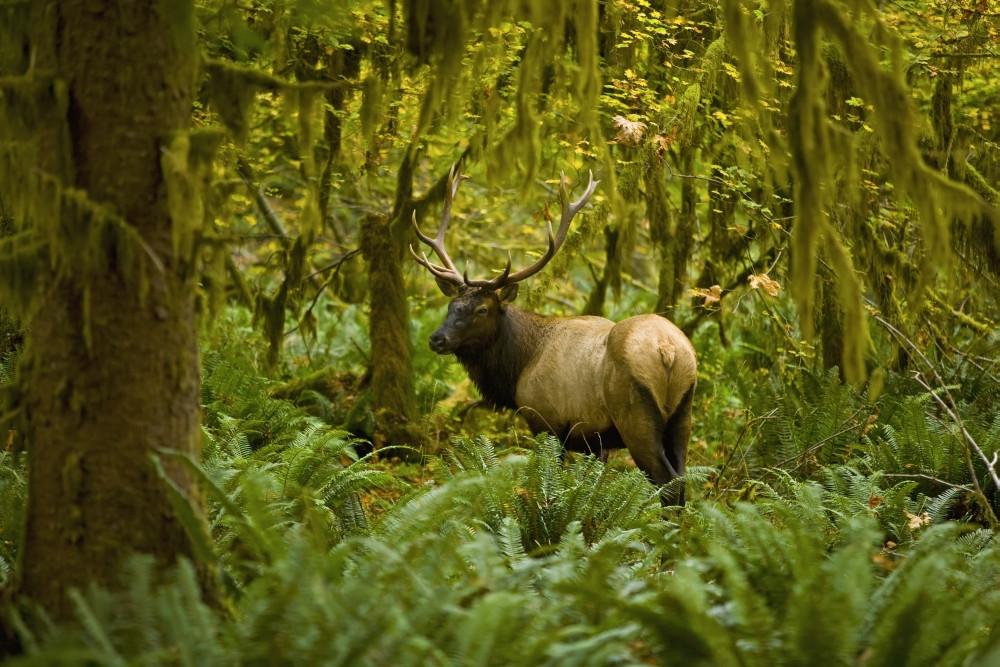
The elk is one of North America’s most recognizable large herbivores.
Adult males, known as bulls, develop enormous antlers each year. During the breeding season, bulls use vocalizations, posture and antler displays to compete for access to females.
But elk survival isn’t only about reproduction.
Their movements change with the seasons.
They may use forests for shelter while taking advantage of open areas and productive vegetation for feeding.
In mountain regions, snow can push elk toward lower elevations during winter, while spring and summer provide new vegetation at higher elevations.
This seasonal movement connects different habitats.
Elk also influence forests by grazing on vegetation and serving as prey for large carnivores.
A healthy elk population is therefore part of a much larger ecological network.

7. Forest Cobra — A Snake Comfortable in Several Worlds


6
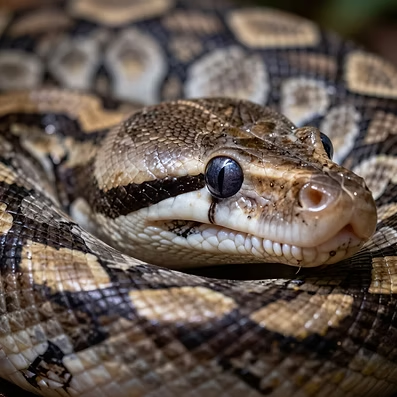
The forest cobra (Naja melanoleuca) is a large venomous snake found across parts of sub-Saharan Africa.
Animal Diversity Web describes it as a highly adaptable species associated with forests, woodland, savanna and areas near rivers or streams. It can also climb and swim.
That versatility gives the snake access to a variety of habitats and prey.
When threatened, the cobra can raise the front of its body and spread its neck into the familiar cobra hood.
The display makes the snake appear larger and warns a potential attacker.
Forest cobras also have highly developed chemical senses. Like other snakes, they use their forked tongue to collect scent particles and transfer them to the Jacobson’s organ.
This helps them investigate their surroundings even when visibility is limited.
Their behavior illustrates how a snake can combine several sensory systems—vision, smell and vibration—to understand its environment.
8. Giant African Millipede — The Forest Floor’s Recycling Specialist


5
The giant African millipede (Archispirostreptus gigas) may look intimidating because of its hundreds of legs, but it is actually a gentle decomposer.
San Diego Zoo notes that large individuals can have hundreds of legs, although despite the name “millipede,” they do not normally have 1,000.
These animals feed primarily on dead and decaying plant material.
That makes them extremely useful to the forest.
Leaves and fallen wood contain nutrients that would otherwise remain locked inside organic material. Millipedes help break that material down, returning nutrients to the soil.
When threatened, a giant African millipede can curl into a protective coil. Its hard outer plates shield much of the body, while it can also release an unpleasant defensive fluid.
It is mainly nocturnal, emerging when temperatures are cooler and the forest floor is darker.
The millipede may not be a glamorous animal, but it performs one of the forest’s essential jobs:
recycling the forest’s dead material into new nutrients.
9. Gorilla — A Forest Engineer With a Strong Social Life


6
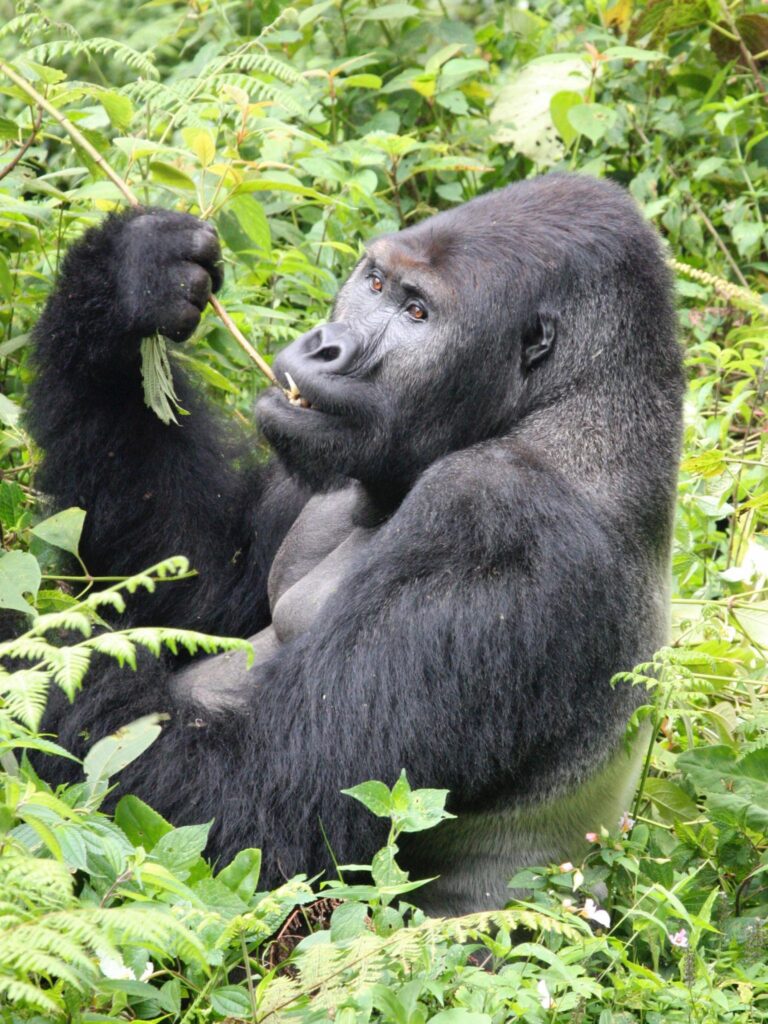
Gorillas are the largest living primates and inhabit equatorial forests in central and eastern Africa.
They are highly social animals, generally living in family groups led by a dominant adult male known as a silverback. WWF reports that gorilla groups can range from a few individuals to more than 50.
Their diet is mainly vegetarian, including stems, herbs, bark and fruit, although they may also consume insects such as termites.
Gorillas are important to forest ecosystems because they move seeds through their digestive systems and can create small openings in vegetation as they feed and travel.
This makes them more than forest residents.
They are also participants in shaping their habitat.
Their social behavior is equally fascinating. Family members maintain close relationships through grooming, communication and coordinated movement.
Gorilla conservation is especially important because habitat destruction, disease and poaching continue to threaten populations. At the same time, mountain gorilla recovery demonstrates that long-term conservation can produce meaningful results.

10. Great Hornbill — The Forest’s Flying Fruit Carrier


6
The great hornbill is one of Asia’s most spectacular forest birds.
Its enormous yellow-and-black bill and large casque make it instantly recognizable.
Despite the impressive appearance, the bird’s ecological role may be even more interesting.
Great hornbills eat fruit as well as other foods, and their movements can carry seeds away from the parent tree.
That makes them important seed dispersers in tropical forests.
Their nesting behavior is also unusual.
The female seals herself inside a tree cavity during incubation, leaving only a narrow opening through which the male can pass food.
The arrangement provides protection for the female and developing chick.
The great hornbill demonstrates that even reproduction can become closely linked to the architecture of a forest.
Old trees with suitable cavities are not simply scenery.
They can be essential breeding habitat.
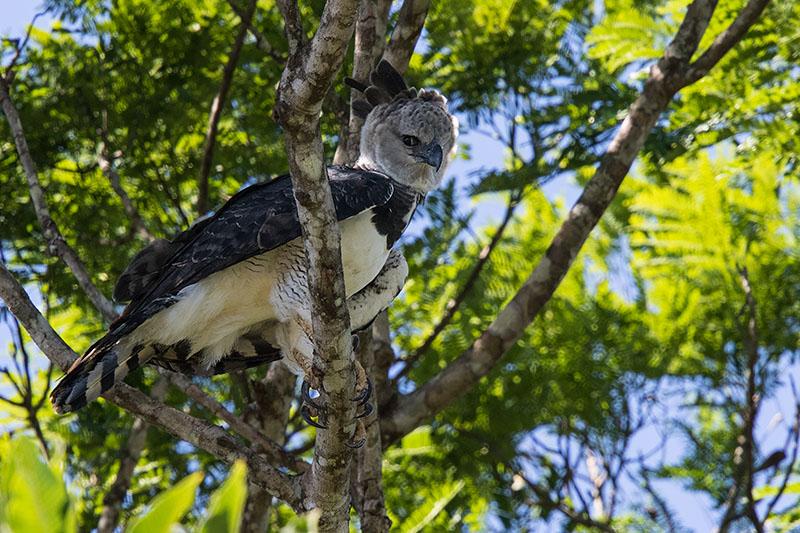
11. Harpy Eagle — A Powerful Predator of the Canopy


7
The harpy eagle (Harpia harpyja) is among the world’s largest and most powerful eagles.
It is a specialized predator of tropical forests, where it can hunt animals living in the canopy.
The Peregrine Fund notes that harpy eagles have exceptionally large rear talons, roughly comparable in size to the claws of a grizzly bear.
Unlike soaring eagles that depend on wide open spaces, harpy eagles are adapted to maneuver through forest.
Their relatively short wings and long tails help them steer between trees.
They can hunt from high perches and descend through vegetation after detecting prey.
Their enormous nests can also become impressive structures, built from large branches high in mature trees.
This creates an important conservation requirement.
A harpy eagle needs both prey and large trees.
Deforestation and shooting have been major threats to the species, particularly in parts of Central America.
Protecting large areas of mature forest is therefore essential to its future.
12. Keel-Billed Toucan and Lumholtz’s Tree-Kangaroo — Two Forest Specialists


6
The keel-billed toucan and Lumholtz’s tree-kangaroo live on opposite sides of the world, yet both demonstrate how forest animals can become highly specialized for life among trees.
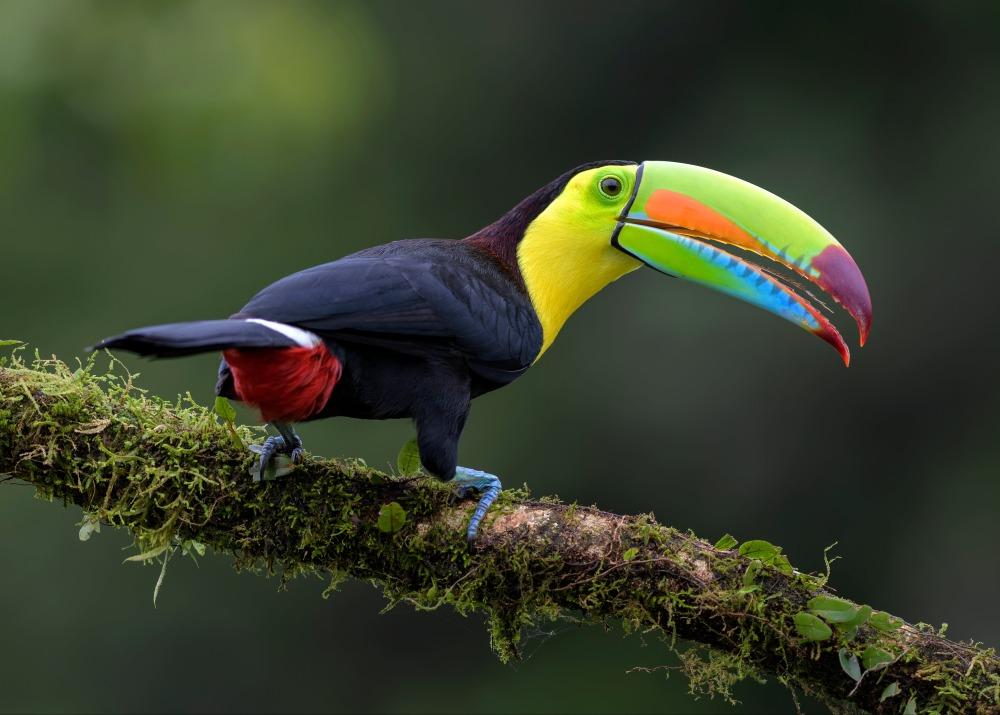
The keel-billed toucan is famous for its enormous, colorful bill.
The bill looks heavy, but its lightweight structure makes it much more practical than its size suggests. Toucans use their bills to reach fruit on branches that might otherwise be difficult to access.
Fruit also makes them valuable seed dispersers.
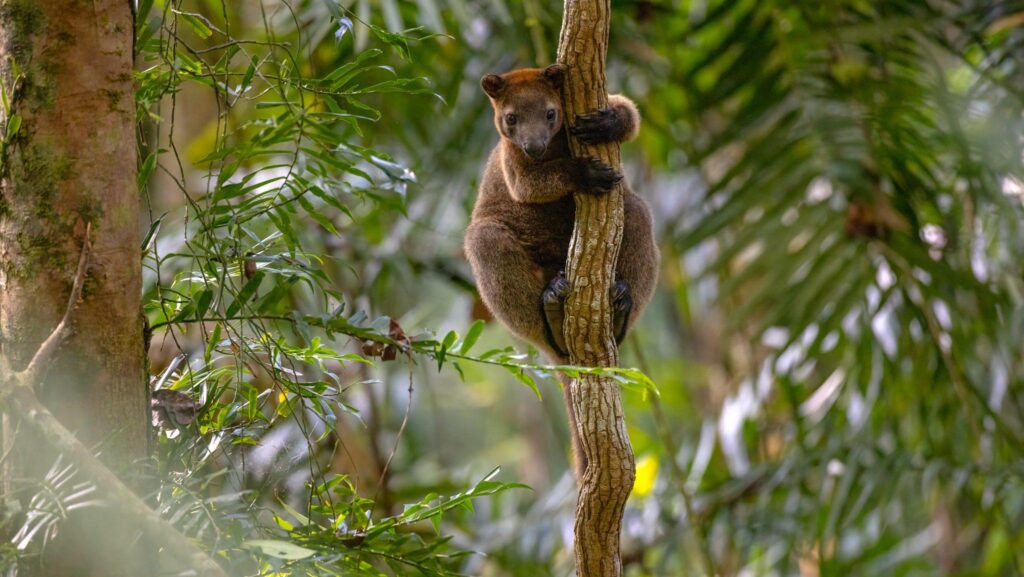
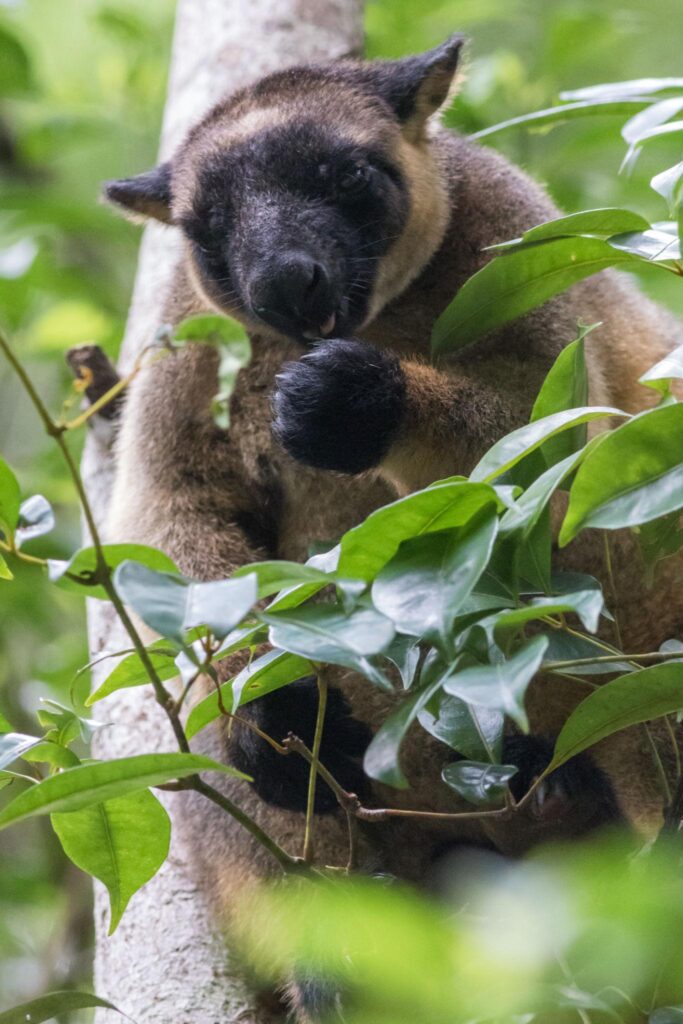
The Lumholtz’s tree-kangaroo, meanwhile, is an unusual Australian marsupial that has adapted to climbing.
Unlike its terrestrial kangaroo relatives, it spends much of its time in rainforest trees.
Its compact body, strong limbs and long tail help it balance in an environment where falling can be dangerous.
The species occurs in tropical rainforest areas of northeastern Queensland.
The two animals demonstrate different versions of the same evolutionary principle:
the forest rewards animals that can make effective use of vertical space.
🌳 What These 12 Animals Have in Common
At first glance, a black bear, gorilla, millipede, eagle and tree-kangaroo appear to have almost nothing in common.
But look more closely and several patterns emerge.
Camouflage
Sloths and clouded leopards can blend into vegetation, making them harder for predators or prey to detect.
Specialized senses
Black bears depend heavily on smell, while snakes combine scent detection with other sensory systems.
Powerful communication
Black howler monkeys use exceptionally loud calls to communicate across the forest.
Energy conservation
Sloths and howler monkeys have diets that encourage economical movement and long periods of rest.
Forest engineering
Woodpeckers create cavities, gorillas influence vegetation and millipedes recycle dead plant material.
Canopy specialization
Harpy eagles, hornbills, toucans and tree-kangaroos all exploit different parts of the forest’s vertical structure.
These strategies show why forests are more than collections of trees.
They are three-dimensional ecosystems containing countless ecological niches.
🛡️ Why Forest Protection Matters
When a forest disappears, animals do not simply lose a place to live.
They can lose nesting trees, food sources, migration routes, breeding areas and relationships with other species.
The effects can spread throughout an ecosystem.
For example, protecting gorilla habitat also protects other plants and animals sharing Congo Basin forests. WWF describes gorillas as an umbrella species because conservation measures designed around them can benefit many other organisms.
Harpy eagles provide another example. They require mature forest and large nesting trees, meaning their protection encourages preservation of an entire forest structure.
Even an animal as small as a millipede has an ecological role. By processing decaying vegetation, it contributes to nutrient cycling on the forest floor.
This is why biodiversity conservation cannot focus only on the most famous animals.
A healthy forest needs all of its parts.


Final Thoughts
From the enormous American black bear to the tiny giant African millipede, forests support animals with an extraordinary range of lifestyles.
The black howler monkey turns sound into a communication network.
The black woodpecker transforms tree trunks into feeding grounds and nesting opportunities.
The brown-throated sloth survives through patience and energy conservation.
The clouded leopard turns the canopy into a hunting landscape.
The elk follows seasonal changes across forests and open country.
The forest cobra combines powerful venom with impressive sensory abilities.
The millipede quietly recycles the forest floor.
Gorillas shape vegetation while living within complex families.
Hornbills and toucans help move seeds through tropical forests.
The harpy eagle rules portions of the canopy.
And the Lumholtz’s tree-kangaroo has taken the familiar kangaroo body plan into the treetops.
These animals remind us that there is no single recipe for surviving in a forest.
Some species need strength.
Others need camouflage.
Some need extraordinary senses.
Others simply need the ability to conserve energy and wait.
Together, they form the living machinery of the world’s forests.
Protecting these habitats means protecting not just individual species, but the intricate relationships that allow entire ecosystems to function.
📸 Image SEO Information
For your WordPress article, I recommend 7 real wildlife photographs rather than trying to place 12 separate images. Each image can represent a group of animals while keeping the page visually clean.
Image 1 — North American Forests
Animals: American black bear + elk
Alt text: American black bear and elk living in North American forest habitat
Filename: black-bear-elk-forest-wildlife.jpg
Image 2 — South American Forest
Animals: Black howler monkey + brown-throated sloth
Alt text: Black howler monkey and brown-throated sloth in tropical rainforest
Filename: howler-monkey-sloth-rainforest.jpg
Image 3 — Asian Forest
Animals: Clouded leopard + great hornbill
Alt text: Clouded leopard and great hornbill in Asian tropical forest
Filename: clouded-leopard-great-hornbill.jpg
Image 4 — African Forest
Animals: Gorilla + forest cobra
Alt text: Gorilla and forest cobra representing African forest wildlife
Filename: gorilla-forest-cobra-africa.jpg
Image 5 — Forest Floor
Animal: Giant African millipede
Alt text: Giant African millipede moving across the rainforest floor
Filename: giant-african-millipede-forest.jpg
Image 6 — Forest Canopy
Animals: Harpy eagle + keel-billed toucan
Alt text: Harpy eagle and colorful toucan in tropical forest canopy
Filename: harpy-eagle-toucan-canopy.jpg
Image 7 — Australian Rainforest
Animal: Lumholtz’s tree-kangaroo
Alt text: Lumholtz's tree-kangaroo in Queensland rainforest
Filename: lumholtz-tree-kangaroo-rainforest.jpg
Important: The image-search results are photographs of real animals, but that does not automatically mean they are free to republish. Check the photographer, agency and license before uploading any image to WordPress. The safest choices are public-domain or appropriately licensed photographs with required attribution.
🔎 WordPress SEO Package
New SEO Title:
12 Remarkable Forest Animals and the Secrets Behind Their Survival
Alternative Title:
12 Amazing Forest Animals With Extraordinary Survival Adaptations
Focus Keyword:forest animals
Secondary Keywords:forest animals 2026amazing forest animalswild forest animalsrare forest animalsunique forest wildlifeforest animal factsrainforest animalsNorth American forest animalsAfrican forest animalsAsian forest animalsAustralian rainforest animals
Meta Description:Discover 12 remarkable forest animals, from black bears and gorillas to clouded leopards, harpy eagles and tree-kangaroos, and learn their amazing survival strategies.
Short Description / Excerpt:Explore 12 remarkable forest animals from around the world and discover how camouflage, powerful senses, social behavior and specialized adaptations help them survive.
Category:
Wildlife
Subcategory:
Forest Animals
Tags:Forest Animals, Wildlife, Forest Wildlife, Rainforest Animals, American Black Bear, Black Howler Monkey, Black Woodpecker, Brown-Throated Sloth, Clouded Leopard, Elk, Forest Cobra, Giant African Millipede, Gorilla, Great Hornbill, Harpy Eagle, Keel-Billed Toucan, Lumholtz's Tree-Kangaroo, Animal Facts, Rare Animals, Unique Animals, Wildlife 2026
Suggested URL Slug:12-remarkable-forest-animals-2026
Featured Image Alt Text:Twelve remarkable forest animals from around the world in their natural habitats
Featured Image Title:12 Remarkable Forest Animals 2026
Recommended Featured Image:1200 × 675 px
Recommended Article Schema:Article
Author:World Animals TV
Updated:September 2026
Suggested internal links:Amazon Rainforest Animals • Rare Animals • Rainforest Wildlife • Amazing Birds • Wild Cats • Endangered Animals • Animal Adaptations