
🐦2026 Wildlife Feature: The Wattled Curassow — An Endangered Bird of the Amazon
The Wattled Curassow: Inside the Fight to Save an Endangered Amazon Rainforest Bird in 2026
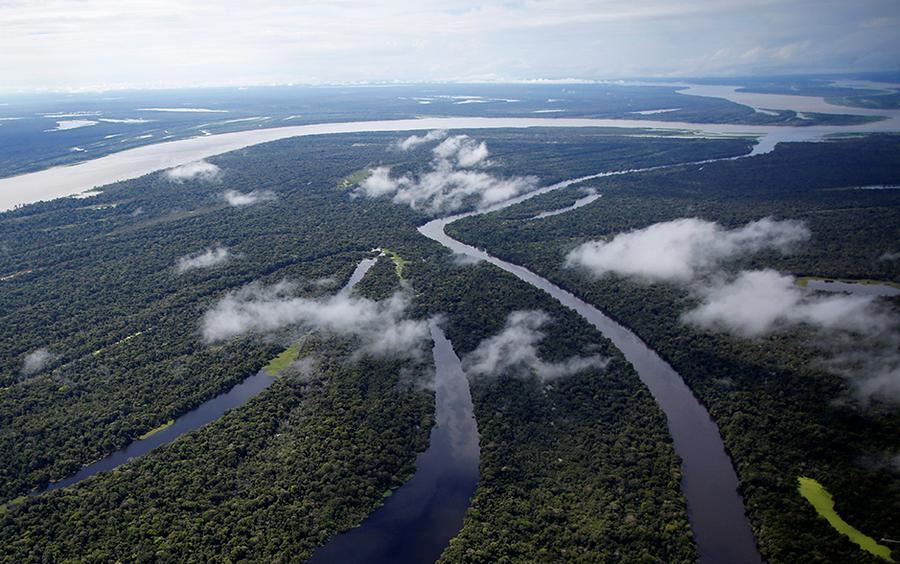
Deep in the western Amazon, where enormous rivers wind through forests that can disappear beneath seasonal floodwaters, an unusual bird moves through the trees.
It is large, dark and surprisingly difficult to find.
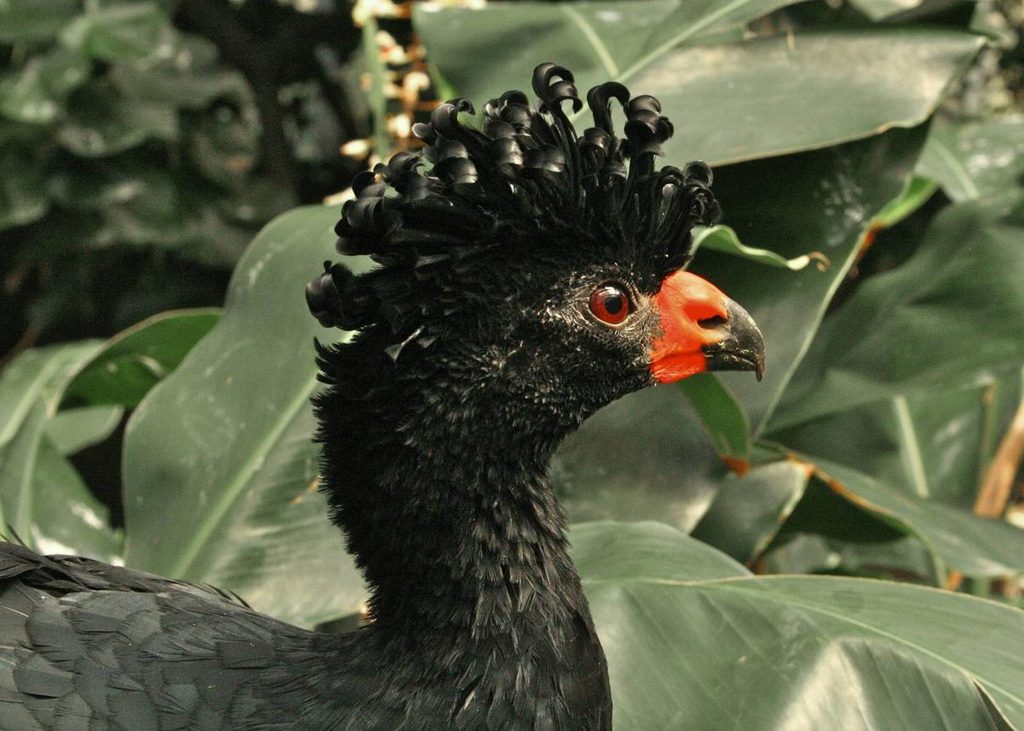
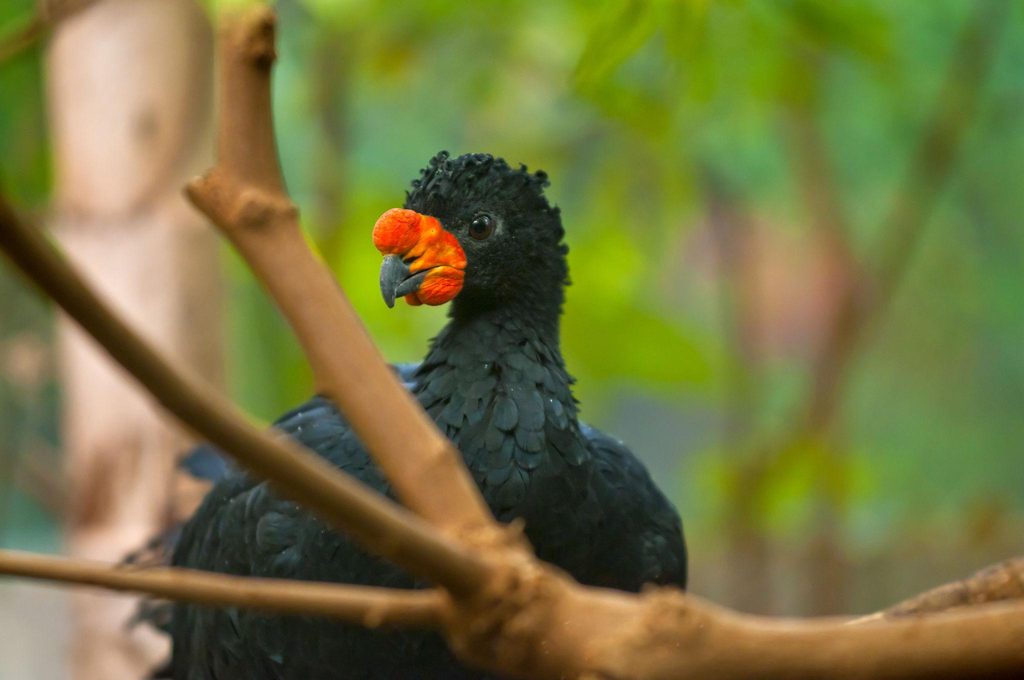
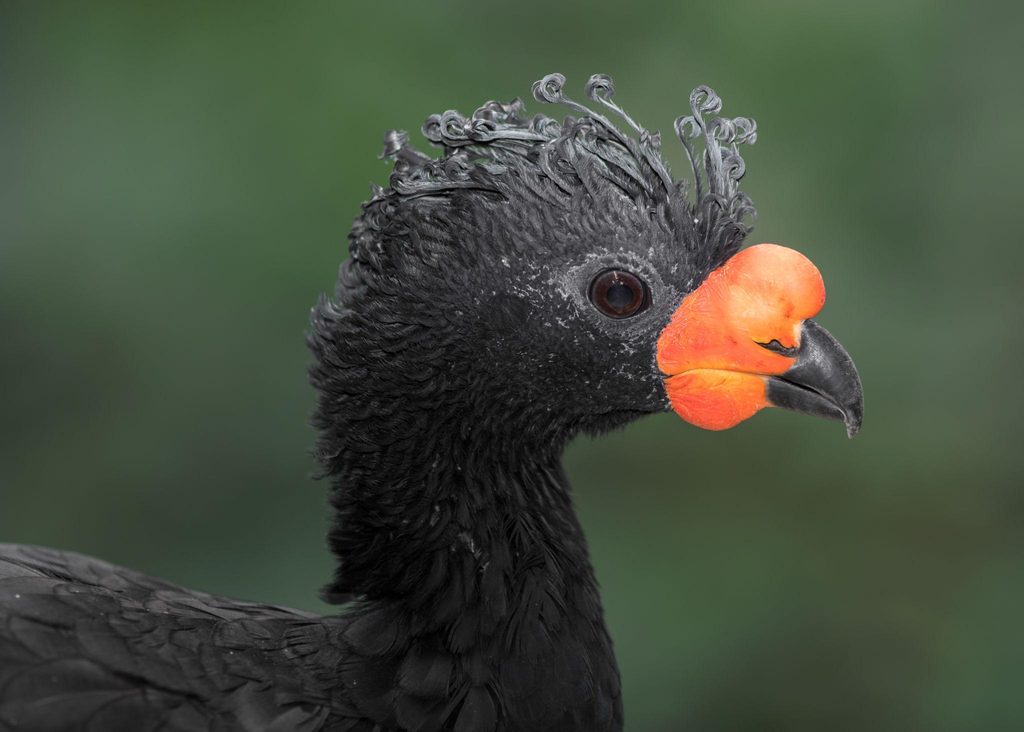
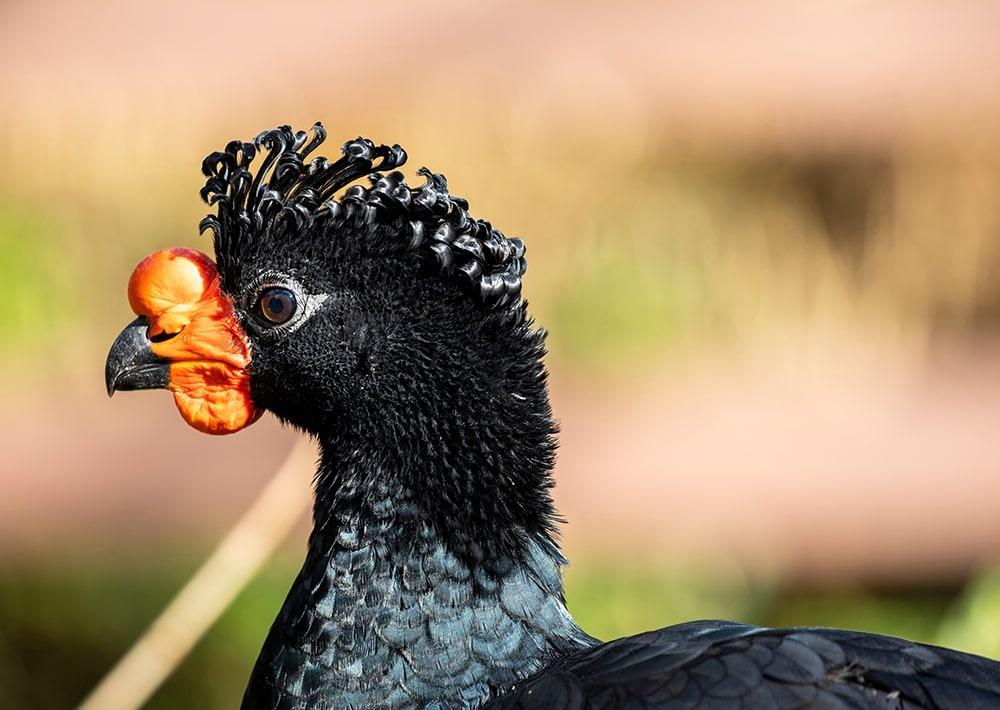
A male may reveal himself with glossy black feathers, a curled crest and a striking red ornament on his bill. A female looks somewhat different, lacking the male’s prominent facial ornamentation. Both belong to one of the Amazon’s lesser-known but increasingly important conservation stories: the Wattled Curassow (Crax globulosa).
The Wattled Curassow is classified as Endangered and has a restricted distribution associated with riverine and seasonally flooded forests of the western Amazon. Research has documented the species in Brazil, Colombia, Ecuador, Peru and Bolivia.
Unlike famous Amazon wildlife such as jaguars, anacondas and macaws, this bird rarely attracts international attention.
Yet its story reveals something important about the rainforest.
An animal can be in serious trouble without being famous.


6
The Wattled Curassow is closely connected to the Amazon’s waterways.
Researchers describe it as an Amazon Basin endemic associated particularly with white-water floodplain forests and river islands. These environments are constantly changing as rivers rise, fall, erode their banks and deposit new sediment.
This relationship with rivers makes the bird unusual.
Many rainforest species can occupy broad areas of upland forest.
The Wattled Curassow is much more selective.
It favors particular combinations of forest, water and seasonally flooded habitat.
That specialization can be useful when the ecosystem is intact.
But it can become a serious weakness when people alter the same areas.
A Bird Built for the Amazon’s River Forests
6
The Wattled Curassow is closely connected to the Amazon’s waterways.
Researchers describe it as an Amazon Basin endemic associated particularly with white-water floodplain forests and river islands. These environments are constantly changing as rivers rise, fall, erode their banks and deposit new sediment.
This relationship with rivers makes the bird unusual.
Many rainforest species can occupy broad areas of upland forest.
The Wattled Curassow is much more selective.
It favors particular combinations of forest, water and seasonally flooded habitat.
That specialization can be useful when the ecosystem is intact.
But it can become a serious weakness when people alter the same areas.


The Wattled Curassow is closely connected to the Amazon’s waterways.
Researchers describe it as an Amazon Basin endemic associated particularly with white-water floodplain forests and river islands. These environments are constantly changing as rivers rise, fall, erode their banks and deposit new sediment.
This relationship with rivers makes the bird unusual.
Many rainforest species can occupy broad areas of upland forest.
The Wattled Curassow is much more selective.
It favors particular combinations of forest, water and seasonally flooded habitat.
That specialization can be useful when the ecosystem is intact.
But it can become a serious weakness when people alter the same areas.
What Does the Wattled Curassow Look Like?


5
At first glance, the Wattled Curassow can look like a large black forest bird.
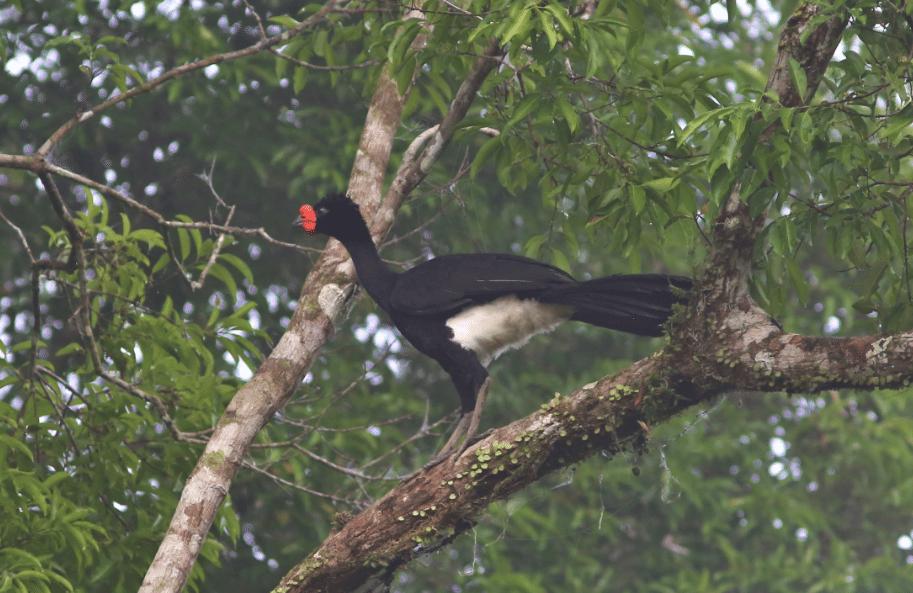
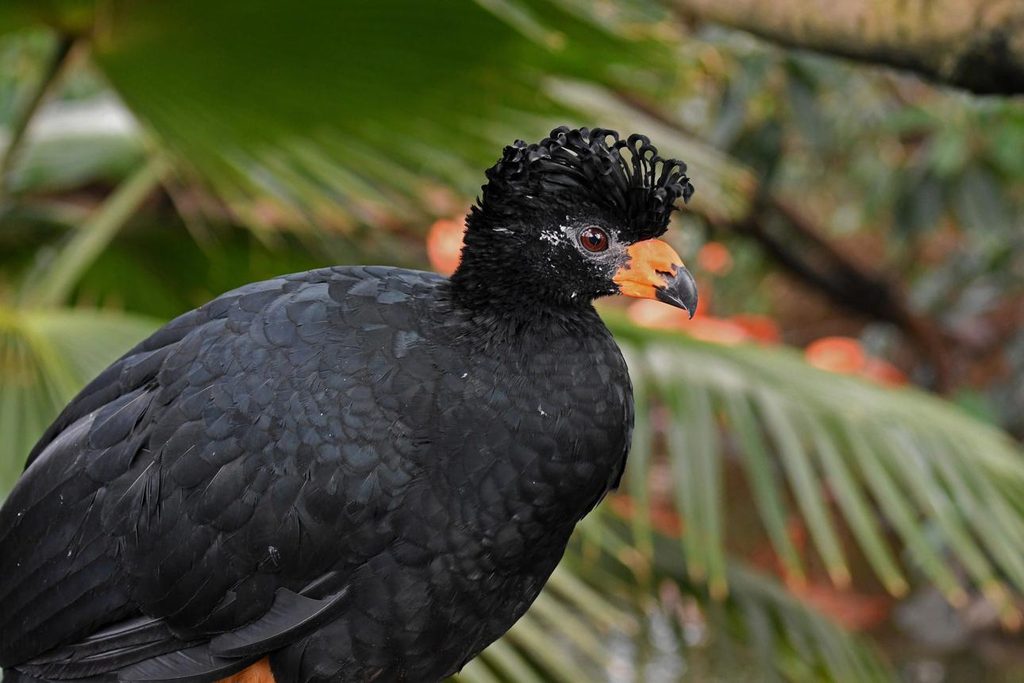
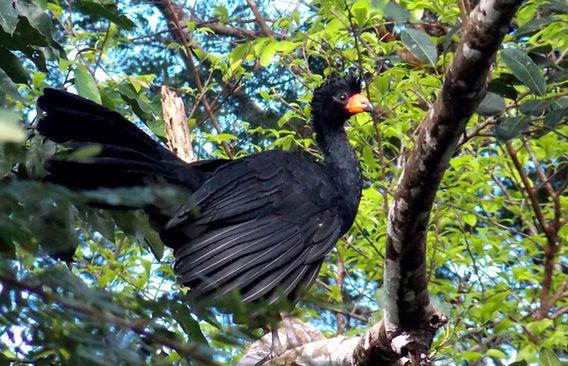
The male has predominantly black plumage, a curled crest and a distinctive bill with reddish facial ornaments and a hanging wattle. A white area beneath the tail provides an additional contrast against the dark body.
The female is less dramatically marked.
She lacks the male’s prominent bill knob and wattle and has a more reddish-buff area beneath the tail.
These differences are useful for birdwatchers and researchers trying to identify individuals in difficult rainforest conditions.
The bird is also relatively large. Published field references put males at roughly 82–89 centimeters, although measurements can vary by source and sex.
Its size means that it needs a substantial supply of food.
Fortunately, the Amazon floodplain provides a constantly changing menu.
What Does This Endangered Bird Eat?
Fruit is an important component of the Wattled Curassow’s diet.
Like other curassows, it can contribute to the movement of seeds through the forest, giving the bird an ecological role that goes beyond simply being another rainforest animal.
Its diet can change with local conditions and seasons. Research on Amazonian populations has documented the consumption of plant material as well as animal foods. Studies have also reported fish, insects, aquatic crustaceans and other small animals among foods taken by the species.
This flexible diet is especially useful in a landscape where water levels change dramatically.
During one season, fruit may be abundant.
During another, flooded habitats may provide access to different food resources.
The curassow’s behavior appears closely linked to this seasonal rhythm.
A Bird That Follows the Rhythm of the River

Imagine standing beside an Amazonian river during the wet season.
Water spreads into the surrounding forest.
Trees that normally stand on dry ground may become surrounded by water.
Animals must adjust.
The Wattled Curassow is particularly tied to this dynamic environment.
Field research in Peru found that the species changes its use of the landscape according to water levels. During flooding, birds were observed using upper forest layers and higher areas, while during lower-water periods they used different portions of the floodplain, including areas around lakes and channels.
This demonstrates why protecting a single patch of forest may not always be enough.
The bird depends on a changing landscape.
Its habitat includes the forest, river edges, islands, channels and seasonally flooded areas that together form the Amazon floodplain.
Why Is the Wattled Curassow Endangered?
The species faces two major pressures:
1. Hunting
Hunting has historically been a major threat.
The bird’s large body makes it a valuable target, while its preference for river-edge habitats can make populations relatively accessible to people traveling along waterways.
Researchers have described hunting as a major pressure on the species.
This creates a difficult situation.
The same rivers that provide the bird with habitat also provide humans with transportation routes.
As a result, some of the species’ preferred environments can be among the easiest areas for hunters to reach.
2. Habitat Loss
The second major problem is habitat destruction.
Seasonally flooded forests can be altered by logging, agricultural expansion, settlement and other human activities.
Research has described the Wattled Curassow as particularly vulnerable because it is restricted to floodplain forests and has strong habitat preferences near water.
When those forests disappear or become fragmented, the bird loses both feeding and breeding habitat.
A Small Population Spread Across Several Countries
One of the most concerning aspects of the Wattled Curassow is its rarity.
Older scientific assessments estimated only a small number of mature birds, with figures in the range of several hundred to around a thousand depending on the estimate and geographic coverage. A research paper described estimates of approximately 250–1,000 birds and noted continuing concerns about hunting and habitat loss.
Exact population numbers should be treated carefully because the species is difficult to survey.
The bird can live in remote floodplain forests, populations can be widely separated and water levels can dramatically change where individuals are found.
BirdLife International maintains a dedicated species factsheet for the Wattled Curassow and tracks its Red List assessment and population information.
The important point is not simply one population number.
It is the combination of rarity, restricted habitat and continuing human pressure.
The Secret Life of a Hard-to-Find Bird

5
Wattled Curassows are not birds that constantly advertise their presence.
Their behavior can be surprisingly difficult to observe.
They may move through dense vegetation, forage on the forest floor or perch in trees.
They can also occur in small groups, while individual birds may spend time away from larger gatherings. Field references report both solitary individuals and groups.
This secretive behavior is useful in a dangerous environment.
Staying hidden can reduce encounters with predators and people.
But it creates a problem for conservationists.
An animal that is difficult to see is also difficult to count.
Researchers therefore need repeated field surveys, local observations and other techniques to understand where populations remain.
Reproduction: Another Piece of the Puzzle
Scientists know less about the Wattled Curassow’s breeding behavior than they would like.
Available observations indicate that nests are constructed from sticks and leaves, and clutch sizes are generally small. Some sources report around two eggs as typical, although historical observations have documented variation.
Small clutch sizes can make population recovery challenging.
If adult birds are removed from a population through hunting, replacing them may take time.
This is particularly important for long-lived species.
Conservation isn’t simply about protecting today’s birds.
It is about ensuring that enough adults survive to reproduce over many future breeding seasons.

Why This Bird Matters to the Amazon Ecosystem
The Wattled Curassow may not receive the same attention as the jaguar, but it can still influence the forest around it.
Fruit-eating birds can move seeds from one location to another.
When seeds are carried away from the parent plant, they may have opportunities to germinate in new places.
Curassows and related birds therefore form an important part of tropical forest food webs.
Their disappearance could have effects that are difficult to see immediately.
A forest without its seed-dispersing animals can gradually become different from the ecosystem that existed before.
This is why protecting wildlife is about more than preventing individual species from disappearing.
It is also about preserving ecological relationships.
Conservation in 2026: Why River Forests Need Protection


6
In 2026, the Wattled Curassow remains a reminder that Amazon conservation must include river systems and floodplain forests, not just large areas of dry rainforest.
Protecting the species requires several approaches working together.
Protect important habitat
River islands, várzea forests and other suitable floodplain habitats need effective protection.
Reduce hunting pressure
Community-based conservation and stronger protection of wildlife can help reduce unsustainable hunting.
Monitor remaining populations
Regular surveys can reveal whether populations are increasing, declining or disappearing from particular areas.
Work with local communities
People living along Amazon rivers possess valuable knowledge about local wildlife. Conservation efforts are more likely to succeed when communities are involved rather than excluded.
Protect connected ecosystems
The bird’s habitat is dynamic. Conservation should consider rivers, floodplain forests, islands and surrounding vegetation as interconnected systems.
The Importance of Real Wildlife Photography
Photographs can play an important role in telling the story of endangered animals.
A single photograph can show people what a species actually looks like, where it lives and why losing it would matter.
For the Wattled Curassow, photographs also help demonstrate the difference between males and females and show how closely the species is associated with Amazonian forest.
However, wildlife photographs are usually copyrighted.
If you use one of the real photographs found online, do not simply copy the image to your website. Check the individual image’s license first. For example, Wikimedia Commons contains Wattled Curassow photographs with specific licensing information, while some photography websites explicitly prohibit reproduction without permission.
For a commercial website, always keep a record of the image source, license and required attribution.
A Future for the Wattled Curassow?
The Wattled Curassow’s future depends on whether enough of its riverine habitat can remain intact and whether hunting pressure can be reduced.
There is reason for concern, but conservation is not hopeless.
Protected forests, scientific monitoring, local conservation initiatives and responsible wildlife management can all contribute to maintaining remaining populations.
The key is acting before the species becomes even rarer.
Once a bird disappears from an entire river system, bringing it back can be enormously difficult.
Final Thoughts
The Wattled Curassow is not the loudest, most colorful or most famous bird in the Amazon.
That may be exactly why its story deserves more attention.
It is a bird shaped by rivers.
Its life is connected to flooded forests, forest islands, seasonal changes and the abundance of Amazonian plants and small animals.
Its remarkable red facial ornaments make it beautiful, but its ecological role makes it important.
Today, the species is classified as Endangered, with hunting and habitat loss among the major threats identified by researchers and conservation organizations.
In 2026, protecting this bird means protecting more than a single species.
It means protecting the forests along Amazonian rivers.
It means keeping floodplain ecosystems intact.
It means allowing wildlife populations to reproduce and recover.
And it means recognizing that some of the Amazon’s most important animals are the ones that most people have never heard of.
Somewhere along a remote Amazon river, a Wattled Curassow may still be moving quietly through the trees. The challenge for conservation is making sure future generations can hear—and see—that bird there too.
The Wattled Curassow: Inside the Fight to Save an Endangered Amazon Rainforest Bird in 2026
Alternative Titles:
- Wattled Curassow: The Rare Amazon Bird Disappearing From River Forests
- Meet the Wattled Curassow, One of the Amazon’s Most Threatened Birds
- The Endangered Wattled Curassow and Its Vanishing Amazon Habitat
Focus Keyword:Wattled Curassow Amazon rainforest
Secondary Keywords:Wattled Curassow 2026, endangered Amazon bird, endangered birds of Amazon rainforest, Crax globulosa, rare Amazon birds, Amazon rainforest wildlife, Amazon bird conservation, threatened rainforest birds, Amazon floodplain birds, endangered wildlife
Meta Description:Discover the endangered Wattled Curassow, a rare Amazon rainforest bird threatened by hunting and habitat loss, and learn why its river forests are vital in 2026.
Category:Endangered Wildlife
Subcategory:Amazon Rainforest Birds
Tags:Wattled Curassow, Crax globulosa, Amazon rainforest, Amazon birds, endangered birds, rare birds, rainforest wildlife, endangered wildlife, Amazon wildlife 2026, bird conservation, tropical birds, floodplain forest, South American birds
Suggested URL Slug:wattled-curassow-endangered-amazon-bird-2026