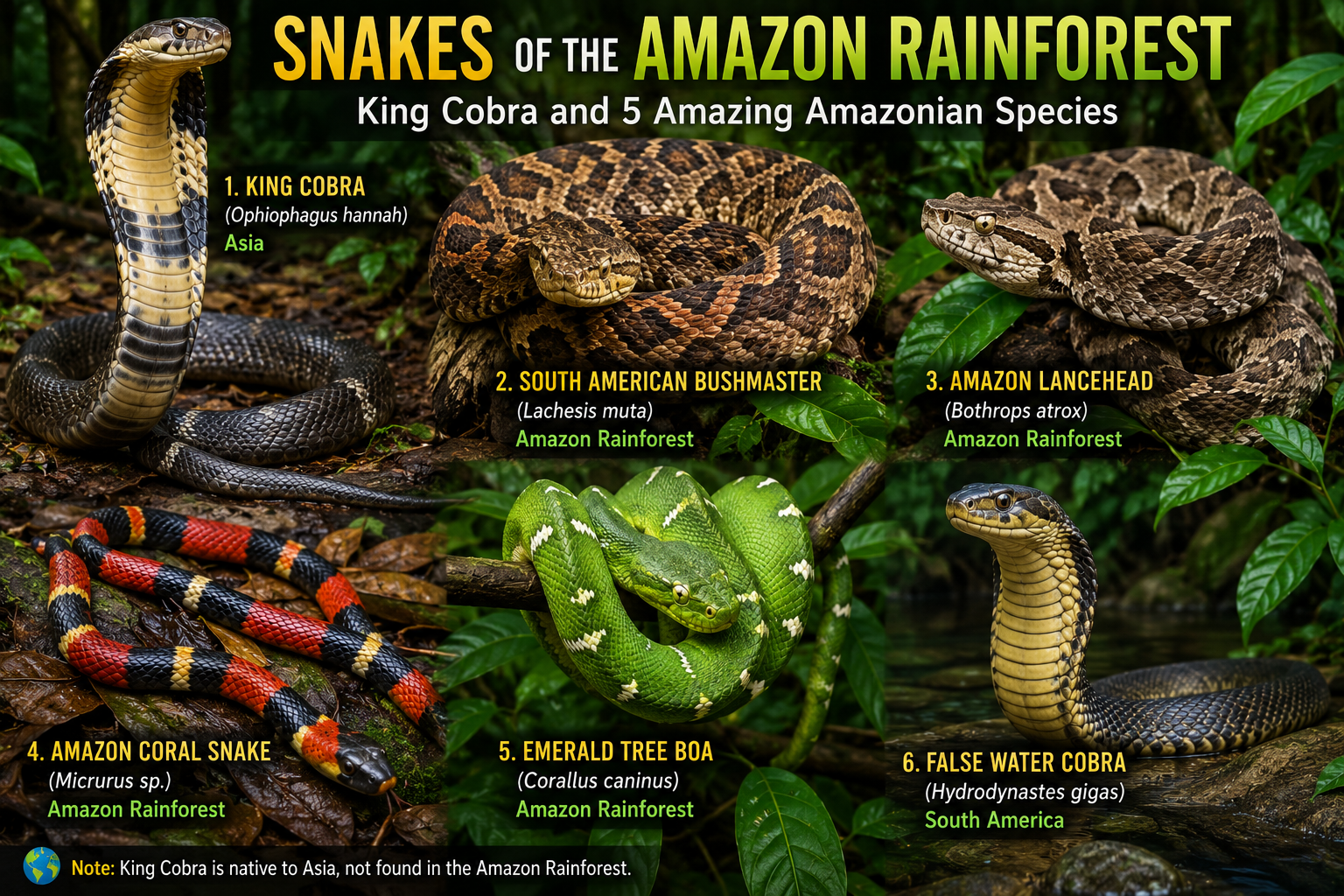
King Cobra vs. Amazon Snakes: 5 Incredible Species of the Rainforest
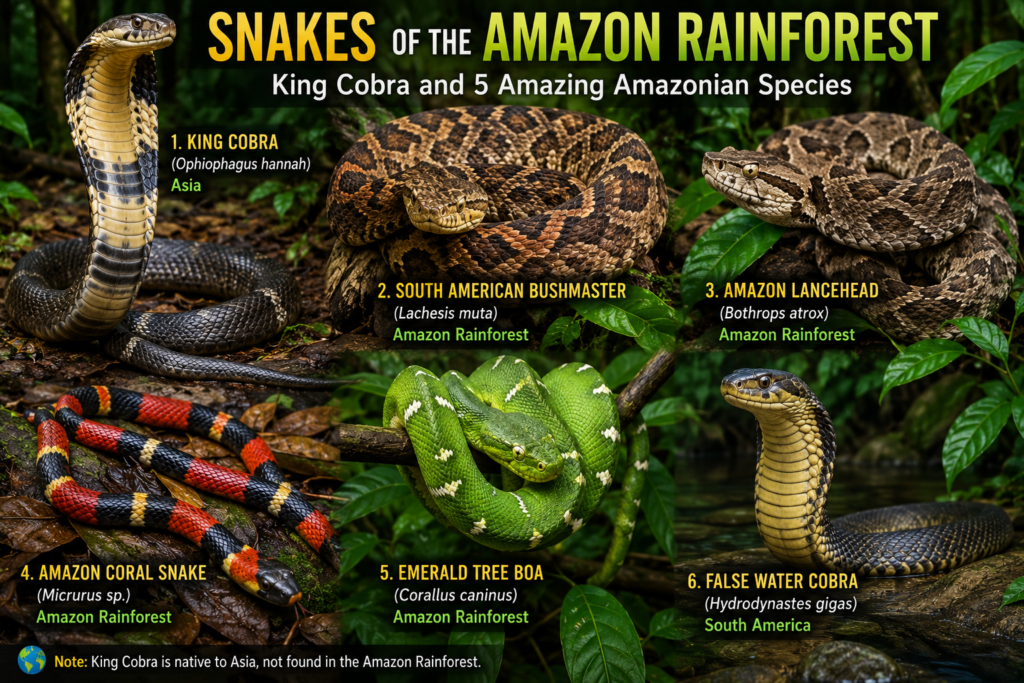
Few snakes have the reputation of the king cobra.
With its impressive size, raised body and distinctive hood, the king cobra has become one of the world’s best-known snakes. But there is an important geographical fact that is often overlooked: the king cobra is not an Amazon rainforest animal.
The species Ophiophagus hannah is native to South and Southeast Asia. Its documented range includes parts of India, southern China, the Malay Peninsula, Indonesia and the Philippines.
The Amazon, meanwhile, has its own extraordinary collection of snakes.
The rainforest and its rivers provide habitats for hundreds of reptile species. WWF notes that the Amazon biome contains around 370 types of reptiles, ranging from boas and caimans to many other specialized species.
Some Amazon snakes are venomous. Others rely on constriction. Some spend most of their lives on the forest floor, while others are adapted to living among branches.
So, if you are searching for “king cobra in the Amazon,” the accurate answer is no native king cobras—but plenty of fascinating Amazon snakes.
Let’s look at five of them.
1. South American Bushmaster — The Giant Venomous Snake
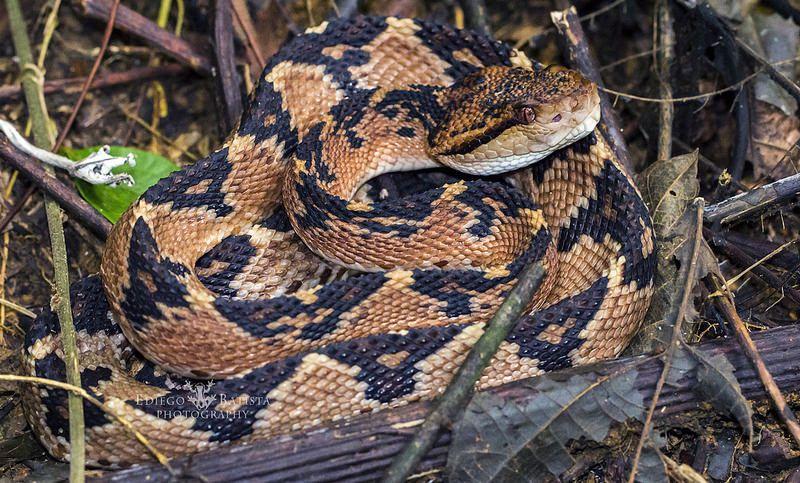

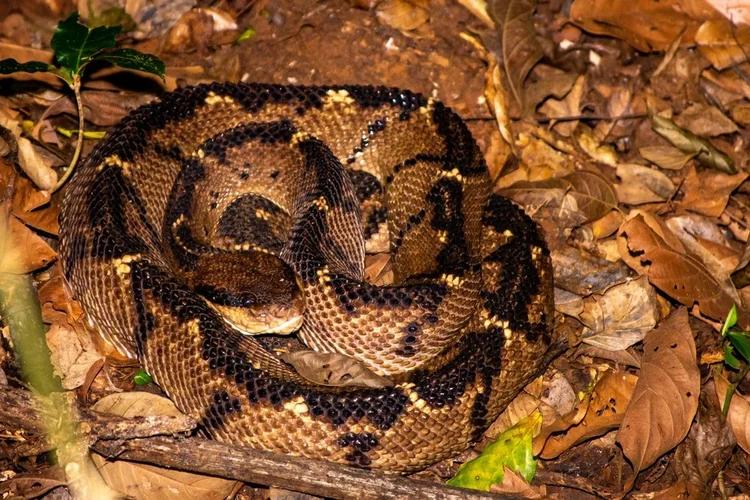
The South American bushmaster (Lachesis muta) is probably one of the Amazon’s most impressive venomous snakes.
It belongs to the pit-viper family, so it is completely unrelated to the king cobra. Nevertheless, its large size and powerful appearance can make it seem like a South American equivalent of a giant cobra.
Bushmasters are native to tropical areas of South and Central America, including Brazil, eastern Peru, Bolivia, the Guianas, Colombia, Ecuador and Venezuela. They are associated with humid tropical forests.
They are large snakes, with individuals capable of exceeding two meters and exceptional specimens reported at more than 3.5 meters. They are considered the longest venomous snakes in the Americas.
Their patterned scales provide excellent camouflage against fallen leaves and forest debris.
Unlike the king cobra, the bushmaster is a pit viper. It has specialized heat-sensing pits that help it detect warm-blooded prey.
A real photograph taken at a research station in Loreto, Peru, shows a South American bushmaster resting on the rainforest floor.


Image Alt Text:South American bushmaster resting on the rainforest floor in Peru
Image Caption:A South American bushmaster uses camouflage to blend into the Amazon rainforest floor.
2. Amazon Lancehead — A Master of Camouflage

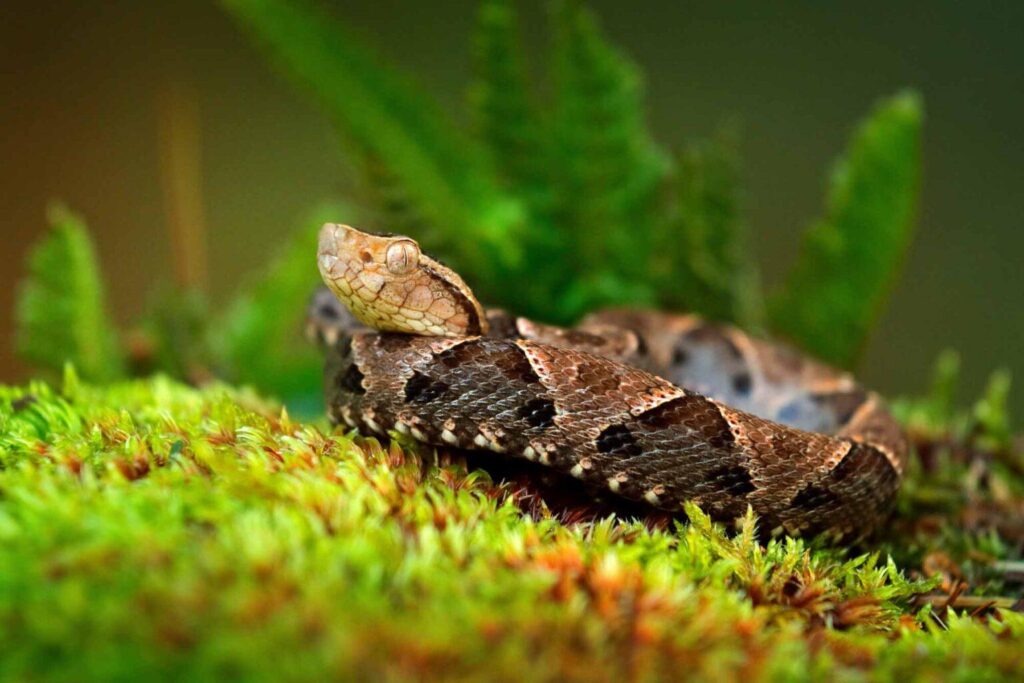

Another important Amazon snake is the common lancehead (Bothrops atrox).
This snake belongs to the same broader viper family as the bushmaster. It is not a cobra and does not have the distinctive hood associated with true cobras.
The lancehead is particularly interesting because camouflage is central to its survival.
Its earthy coloration and irregular markings can make it difficult to distinguish from leaves, branches and forest soil. A person walking through dense vegetation could potentially pass near one without noticing it.
The species is widely associated with Amazonian countries and tropical South America. Animal Diversity Web notes that Bothrops atrox typically extends farther south into Amazonian countries than the closely related Bothrops asper.
As a venomous pit viper, it should never be approached or handled in the wild.
For wildlife photographers, the safest approach is to maintain distance and use long lenses rather than attempting to move closer.


Image Alt Text:Common lancehead Bothrops atrox in Amazon rainforest vegetation
Image Caption:The Amazon lancehead's natural coloring helps it disappear among leaves and forest debris.
3. Amazon Coral Snakes — Bright Colors With a Warning
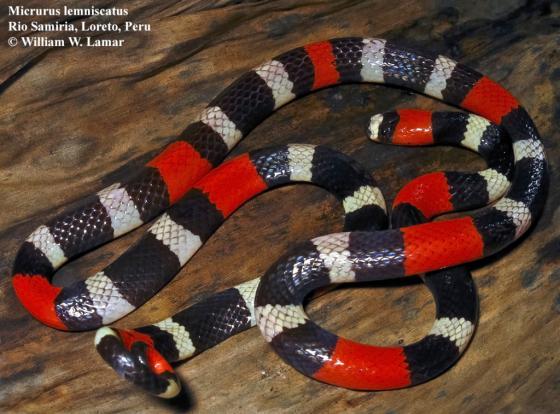
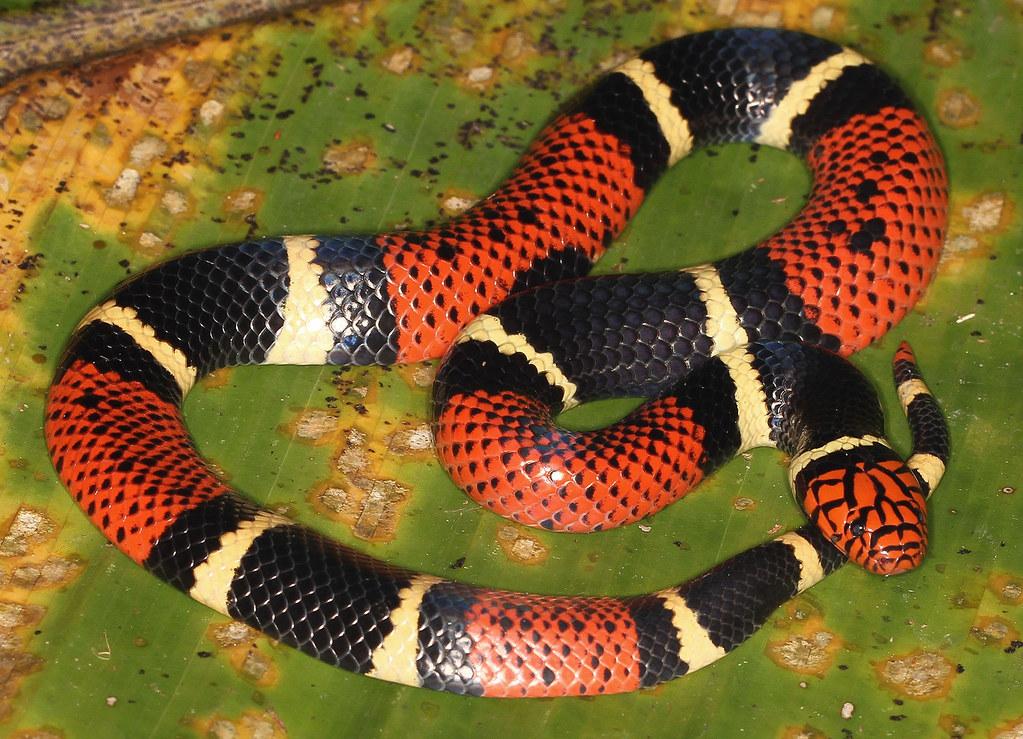
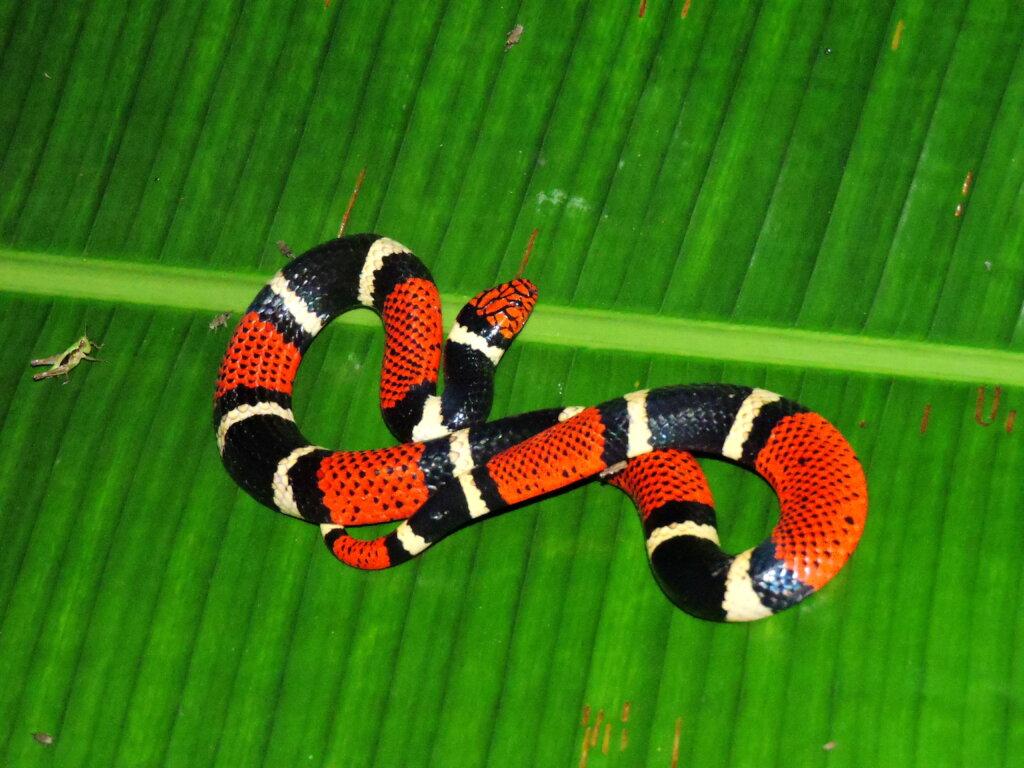
The Amazon is also home to several species of coral snakes.
Coral snakes belong to the elapid family—the same larger snake family that includes king cobras. But being in the same family does not mean that a coral snake is a king cobra or closely resembles one in behavior.
Amazonian coral snakes are generally much smaller and have a very different body shape.
Their most recognizable feature is their striking banded coloration. Red, black and pale or yellowish bands create a pattern that stands out against the forest floor.
The ribbon coral snake (Micrurus lemniscatus), for example, is a South American species documented in tropical forest habitats. A real wildlife photograph shows one coiled among fallen leaves.
Another fascinating Amazonian coral snake is Micrurus spixii. WWF’s historical documentation of Amazon discoveries includes Micrurus tikuna, a coral snake species described from the western Amazon.
Coral snakes are venomous, so their beautiful colors should never be interpreted as an invitation to get closer.


Image Alt Text:Amazonian coral snake with red black and pale bands on forest leaves
Image Caption:The colorful bands of Amazon coral snakes make them among the rainforest's most recognizable reptiles.

4. Emerald Tree Boa — A Snake of the Canopy


Not every impressive Amazon snake is venomous.
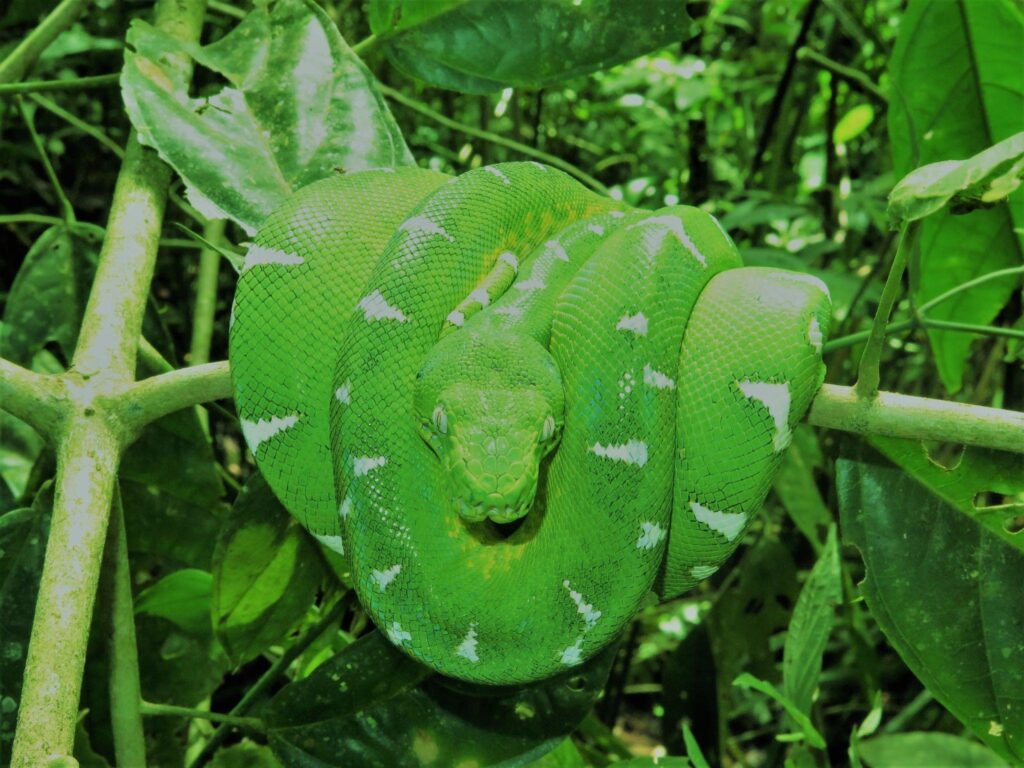
The emerald tree boa (Corallus caninus) is a spectacular example.
Its bright green body and white markings provide remarkable camouflage among leaves and branches. Rather than spending most of its time moving across the forest floor, this species is strongly associated with life in trees.
A real photograph from Guyana shows an emerald tree boa wrapped around a branch in tropical forest.
Its body is designed for climbing and gripping branches. The snake can remain almost motionless while waiting for suitable prey.
The emerald tree boa is a constrictor, meaning it does not depend on venom to subdue prey.
This is one of the easiest ways to understand the extraordinary diversity of Amazon snakes: two snakes can live in the same general rainforest region but have completely different hunting strategies.
The emerald tree boa is a specialist of the canopy, while other species spend much more time on the ground or near water.

Image Alt Text:Emerald tree boa coiled around a branch in tropical rainforest
Image Caption:An emerald tree boa blends into the green canopy of a South American rainforest.

5. False Water Cobra — A South American Snake With a Confusing Name


Here is the snake that makes the word “cobra” especially confusing.
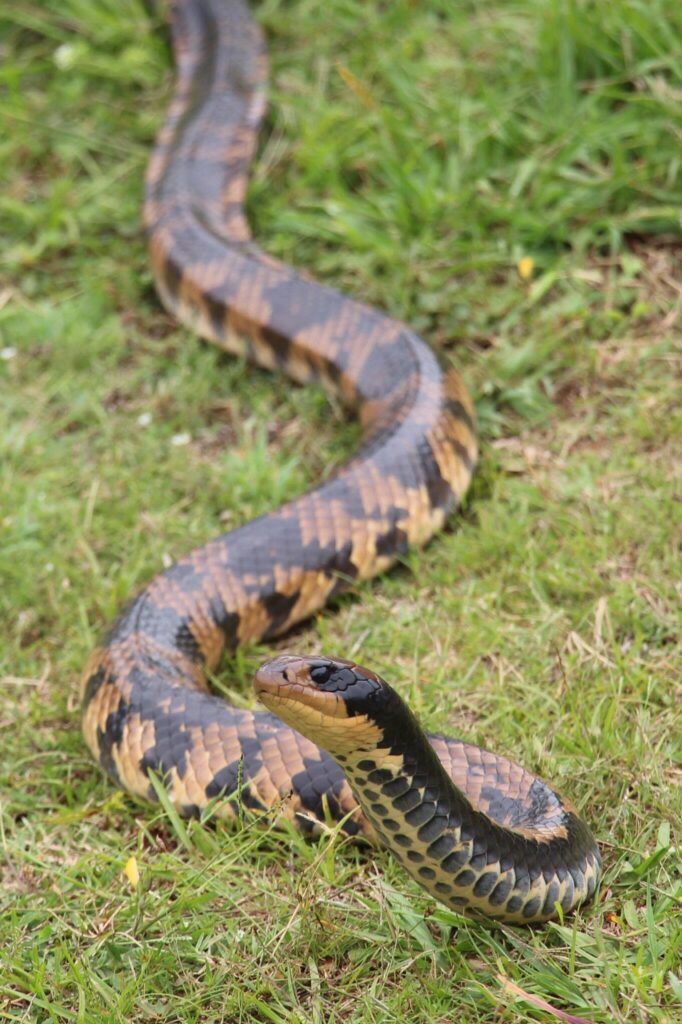
The false water cobra (Hydrodynastes gigas) is a South American snake whose common name contains “cobra,” but it is not a true cobra.
Its ability to spread its neck when threatened can make it look superficially cobra-like. However, its classification, range and biology are different from those of the king cobra.
A real photograph of a Brazilian false water cobra is available through Wikimedia Commons. The photographed snake was recorded in Brazil.
The name can therefore create confusion online. Someone searching for “Amazon cobra” may encounter photographs of this species and assume it is a king cobra.
It is important to check the scientific name when identifying snakes.
The scientific name provides a much more reliable way to distinguish species than common names, which can vary from one country or language to another.

Image Alt Text:False water cobra Hydrodynastes gigas in South America
Image Caption:The false water cobra can spread its neck defensively, but it is not a true cobra.


🐍 So Where Does the Real King Cobra Live?
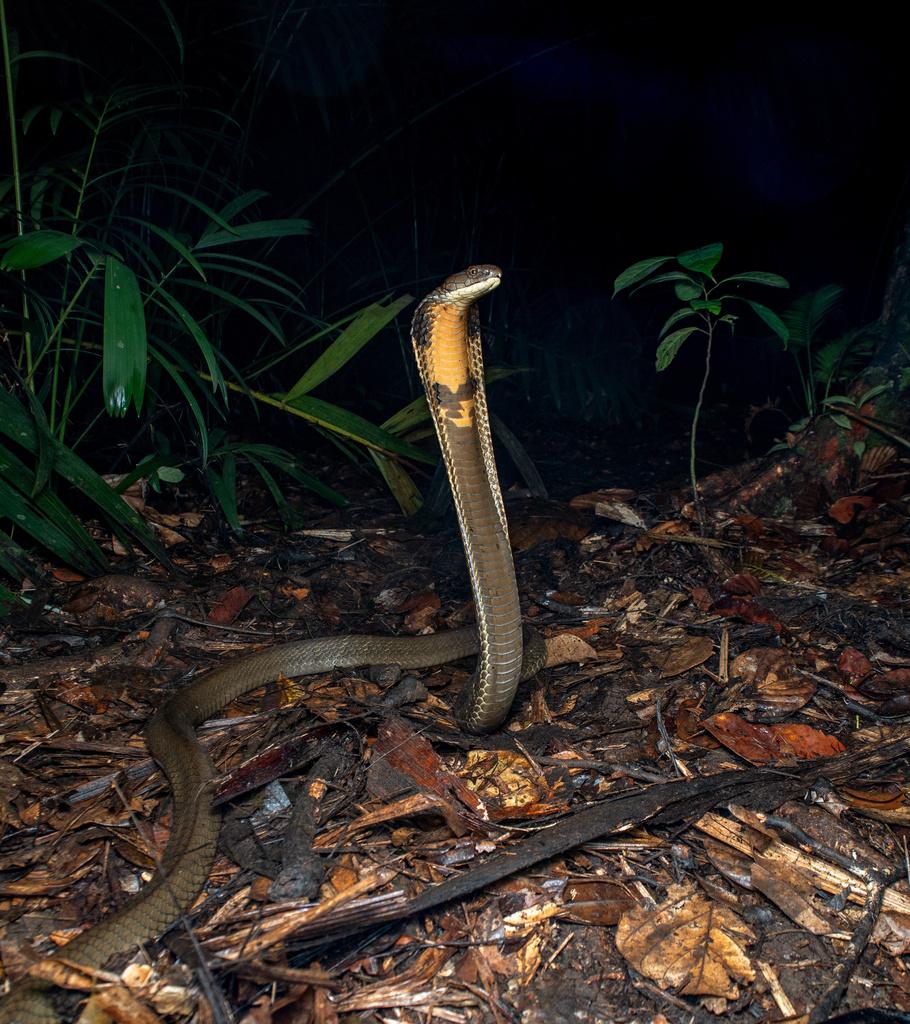
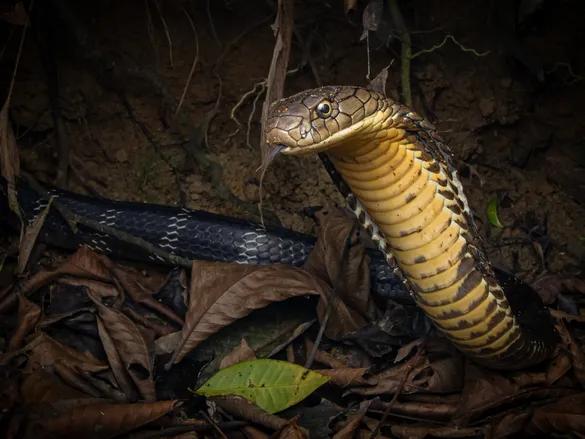
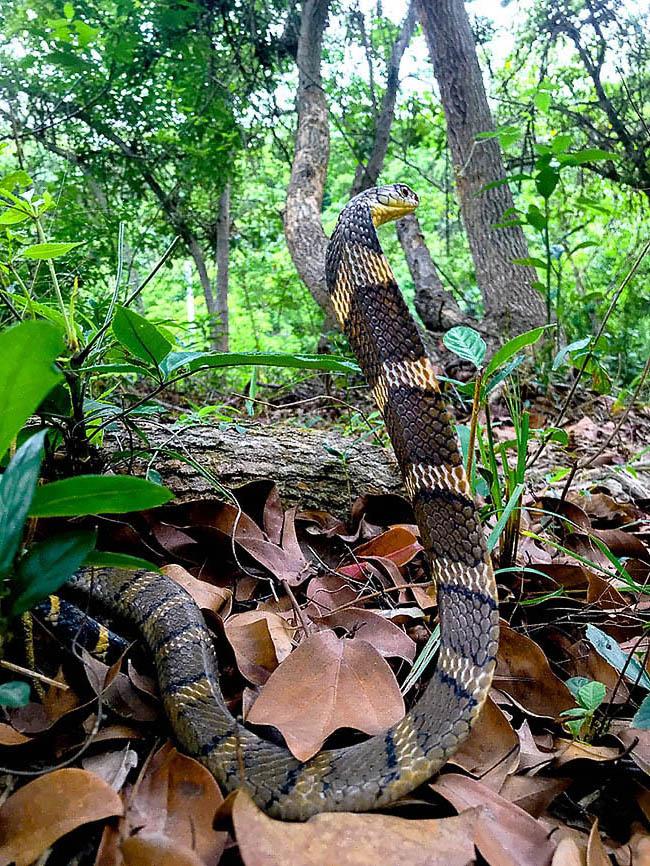
The real king cobra (Ophiophagus hannah) belongs to Asia, not South America.
Animal Diversity Web records its range from northern India through southern China and across the Malay Peninsula to parts of Indonesia and the Philippines.
It can inhabit forests, areas near streams, bamboo thickets and other tropical environments.
The king cobra is particularly unusual because it specializes in eating other snakes. Its scientific name, Ophiophagus, reflects this snake-eating lifestyle.
It is also capable of raising the front part of its body and expanding its neck into a recognizable hood when threatened.
That appearance is probably one reason people sometimes associate any large Amazon snake with the king cobra.
But geography tells us otherwise.
King cobra = Asia.
Bushmasters, lanceheads, coral snakes and many boas = Americas, including parts of the Amazon region.
A real king cobra photograph should therefore not be labeled “Amazon king cobra.”


🌎 Why Are There No Native King Cobras in the Amazon?
South America and Asia developed their wildlife communities separately over millions of years.
The Amazon’s snakes belong to lineages that evolved in the Americas. King cobras belong to an Asian lineage.
The result is two different collections of rainforest reptiles.
Both regions have tropical forests, rivers, high humidity and abundant prey, so some animals may develop superficially similar adaptations. But similar environments do not mean that the same species naturally occurs in both places.
This is an important idea in wildlife education.
A snake photographed in a green tropical forest is not automatically an Amazon animal.
For example, the real king cobra image above may look perfectly at home in a rainforest setting—but its natural geographic range is Asian.
🌿 How Amazon Snakes Survive
Amazon snakes occupy several different ecological niches.
Some remain close to the ground where leaf litter provides camouflage. Others climb trees and wait among branches. Some spend considerable time near streams and wetlands.
The Amazon’s enormous variety of habitats helps explain why its snake community is so diverse.
WWF reports that the Amazon biome contains around 370 reptile species, illustrating the enormous scale of reptile diversity in the region.
For snakes, camouflage is particularly valuable.
A brown-and-black bushmaster can disappear among fallen leaves. A green tree boa can become difficult to see among foliage. Bright coral-snake bands create a completely different visual signal.
Each appearance reflects a different survival strategy.
⚠️ Are Amazon Snakes Dangerous?
Some Amazon snakes are medically significant because they possess venom.
The bushmaster and lanceheads are examples of venomous pit vipers, while coral snakes are venomous elapids.
However, the existence of dangerous snakes does not mean that the rainforest is filled with animals actively hunting humans.
Most wild snakes prefer to avoid people.
The safest rule for anyone exploring rainforest habitat is simple:
Never touch, corner, chase or attempt to capture a wild snake.
If a snake is encountered, give it plenty of space and allow it to move away.
Wildlife photography should always prioritize the safety of both the photographer and the animal.
🔬 Why Scientific Names Matter
Common names can cause enormous confusion.
“False water cobra” sounds like a cobra.
“Coral snake” sounds like a single species, although many different coral snakes exist.
“Lancehead” can refer to multiple related species.
“Bushmaster” can refer to snakes within the genus Lachesis.
Scientific names help researchers and wildlife enthusiasts communicate more precisely.
For your World Animals TV website, including the scientific name alongside the common name is a useful practice because it makes your wildlife articles more educational and easier to verify.
🐾 Protecting Amazon Snakes Means Protecting the Forest
Snakes are sometimes unpopular because people fear them. Yet they are important parts of rainforest ecosystems.
Predatory snakes can influence populations of rodents, amphibians, birds and other animals. In turn, snakes become prey for larger predators.
The Amazon ecosystem is interconnected.
When forests are cleared, rivers are polluted or habitats become fragmented, reptiles can lose shelter, feeding grounds and breeding areas.
WWF describes the Amazon as one of Earth’s most biologically diverse ecosystems and emphasizes the importance of conservation as development pressures increase.
Protecting snakes therefore means protecting the habitats that support the entire wildlife community.
🐍 Final Thoughts: The Amazon Has Its Own Snake Legends
The king cobra is undoubtedly one of the world’s most spectacular snakes.
But it does not belong to the Amazon rainforest.
Instead, the Amazon has its own remarkable snake legends: the enormous South American bushmaster, camouflaged lanceheads, brightly patterned coral snakes, green emerald tree boas and the unusual false water cobra.
Each has evolved in a different way to survive within South America’s forests, rivers and wetlands.
So the next time you see a photograph labeled “King Cobra in the Amazon,” look carefully.
The snake may actually be a completely different species.
The Amazon does not need a king cobra to be extraordinary. Its native snakes are already remarkable enough.
📸 6-Image Plan for Your WordPress Article
| # | Real Image | Image Alt Text | Recommended Filename |
|---|---|---|---|
| 1 | South American Bushmaster | South American bushmaster resting in the Amazon rainforest | south-american-bushmaster-amazon.jpg |
| 2 | Amazon Lancehead | Common lancehead Bothrops atrox in Amazon rainforest vegetation | amazon-lancehead-bothrops-atrox.jpg |
| 3 | Amazon Coral Snake | Amazonian coral snake with red black and pale bands | amazon-coral-snake.jpg |
| 4 | Emerald Tree Boa | Emerald tree boa coiled around a rainforest branch | emerald-tree-boa-amazon.jpg |
| 5 | False Water Cobra | False water cobra Hydrodynastes gigas in South America | false-water-cobra-south-america.jpg |
| 6 | King Cobra — Asia | King cobra Ophiophagus hannah in its Asian forest habitat | king-cobra-asian-forest.jpg |
Real-photo sources
- South American bushmaster: a photograph documented in Loreto, Peru.
- Ribbon coral snake: real Micrurus lemniscatus photograph from iNaturalist.
- False water cobra: real Hydrodynastes gigas photograph from Brazil.
- Emerald tree boa: real photograph from Guyana.
- King cobra: real Ophiophagus hannah photograph; use it specifically to illustrate the Asian species, not an Amazon animal.
Copyright note: Before uploading any photograph to your website, check the individual source page for its current license and attribution requirements. A photograph being visible online does not automatically mean it is free to republish.
🔎 Complete WordPress SEO Package
Focus Keyword:King Cobra Amazon rainforest
SEO Secondary Keyword:Amazon rainforest snakes
Long-Tail Keywords:
- Does king cobra live in Amazon rainforest
- king cobra vs Amazon snakes
- snakes found in Amazon rainforest
- venomous snakes in Amazon forest
- Amazon rainforest cobra
- South American bushmaster
- Amazon coral snake
- emerald tree boa
- false water cobra
SEO Title:King Cobra vs Amazon Snakes: 5 Amazing Rainforest Species
Meta Description:Does the King Cobra live in the Amazon rainforest? Discover the truth and meet five remarkable Amazon snakes, including bushmaster, lancehead, coral snake and tree boa.
URL Slug:king-cobra-amazon-rainforest-snakes
Category:Wildlife
Subcategory:Reptiles
Tags:King Cobra, Amazon rainforest, Amazon snakes, rainforest snakes, bushmaster, lancehead, coral snake, emerald tree boa, false water cobra, reptiles, wildlife, South America
Featured Image Title:King Cobra vs Amazon Rainforest Snakes
Featured Image Alt Text:King cobra compared with Amazon rainforest snakes
Featured Image Description:A wildlife comparison showing the Asian king cobra alongside several snake species native to South America and the Amazon region.
Image Caption:The king cobra is an Asian snake; the Amazon has its own remarkable snake species.
Suggested Excerpt:The true king cobra does not live naturally in the Amazon. Discover five remarkable Amazon snakes and learn how they differ from the world's famous Asian cobra.
Open Graph Title:King Cobra vs. Amazon Snakes: 5 Incredible Species
Open Graph Description:Discover the truth about king cobras and meet five remarkable snakes associated with the Amazon rainforest.
Pinterest Title:King Cobra vs Amazon Snakes: 5 Amazing Snake Species
Pinterest Description:King cobra in the Amazon? Not quite! Discover five fascinating Amazon rainforest snakes and learn which species really lives in South America.
Suggested Website Author:World Animals TV
Update Label:Updated August 2026
Recommended Article Type:Wildlife Education / Reptiles / Nature
Suggested Internal Links:
- Amazon Rainforest Animals
- Jaguar
- Anaconda
- Rainforest Wildlife
- South American Animals
- Dangerous Animals of the Amazon
Important SEO correction: I recommend not publishing a headline such as “King Cobra in the Amazon Forest” as a factual statement. The accurate and more interesting SEO angle is “King Cobra vs. Amazon Snakes”, because the king cobra’s natural range is Asian, while the Amazon has its own native snake fauna.