
19 Incredible Animals That Prove Nature Is Stranger Than Fiction
Updated: September 2026
Recommended for: WordPress / World Animals TV
Article type: Original Wildlife Feature
Approx. length: 1,500 words
A Journey Into the Hidden World of Extraordinary Animals
The natural world contains animals that can look almost imaginary. Some have armored bodies, others can regenerate lost body parts, and some are so small that an entire world exists beneath the surface of a pond or on a speck of household dust.
From the powerful American alligator to the delicate moon jellyfish, these animals occupy remarkably different environments. Some live in freshwater rivers and swamps, some inhabit coral reefs and deep oceans, while others spend their lives in forests, grasslands or microscopic freshwater habitats.
What makes them fascinating is not simply their appearance. Their bodies and behaviors reveal how evolution has produced countless solutions to the challenges of survival.
Here are 19 remarkable animals that demonstrate just how creative nature can be.
1. American Alligator — The Ancient Predator of Wetlands


6
The American alligator (Alligator mississippiensis) is a familiar symbol of the southeastern United States, but its biology is anything but ordinary.
This large reptile is equipped with a heavily armored back, powerful tail, short legs and a broad snout. Its nostrils sit near the tip of its snout, allowing it to breathe while much of its body remains submerged.
Alligators are opportunistic predators. Their diet can include fish, turtles, frogs, birds, mammals and invertebrates.
One particularly interesting feature is their ability to replace teeth. The Smithsonian’s National Zoo reports that an alligator can go through approximately 3,000 teeth during its lifetime.
The species was once close to extinction, but conservation measures helped it recover dramatically.
Today, the American alligator is an excellent example of how effective conservation can change the future of a species.

2. Starfish — The Sea Animal That Isn’t a Fish
The animal commonly called a starfish is more accurately known as a sea star.
Despite its name, it is not a fish. Sea stars have no fins, scales or gills. Instead, they belong to a group called echinoderms, alongside sea urchins and sand dollars.
Their most unusual feature is their water vascular system.
Seawater moves through this internal system and helps operate hundreds or thousands of tiny tube feet underneath the animal.
Those tube feet allow sea stars to move, grip surfaces and capture prey.
Some species can also regenerate lost arms.
This ability is especially remarkable because regeneration can range from replacing a single arm to rebuilding much of the body in certain species.
The familiar five-armed shape is not universal either. Some species have many more arms.
So the next time you see a sea star, remember that you’re looking at a very different kind of animal from a fish.
3. Sea Sponges — Animals That Live Without a Nervous System


7
Sea sponges may look like plants, rocks or underwater decorations, but they are animals.
Sponges belong to the phylum Porifera and have an incredibly simple body design. NOAA explains that they have no nervous, digestive or circulatory system. Instead, water flows through their porous bodies, delivering oxygen and food.
Their simplicity is deceptive.
Sponges have survived for hundreds of millions of years and occur in an astonishing variety of forms.
Some resemble barrels.
Others grow like branches, tubes or delicate glass structures.
They also provide shelter for other marine organisms and contribute to nutrient cycling and water filtration.
A reef without its sponge community would therefore be a very different ecosystem.

4. Cuttlefish — The Masters of Color and Disguise


7
The cuttlefish belongs to the cephalopod family, alongside octopuses, squids and nautiluses.
Its body is built for sophisticated movement and camouflage.
Cuttlefish can rapidly alter their appearance using specialized skin structures. They can produce different patterns and colors, helping them communicate, attract mates or blend into their surroundings.
They also possess a structure called a cuttlebone, which helps regulate buoyancy.
The Smithsonian notes that cuttlefish have eight arms plus two specialized feeding tentacles.
This combination of intelligence, vision, camouflage and flexible movement makes the cuttlefish one of the most fascinating animals in coastal seas.

5. Moon Jellyfish — A Transparent Drifter


7
The moon jellyfish is famous for its nearly transparent bell.
Rather than swimming like a fish, it pulses its body and drifts with currents.
Jellyfish are much more diverse than many people realize. NOAA notes that there are more than 200 documented species of true jellyfish, with many additional related stinging animals.
The translucent body can make a jellyfish difficult to see in open water.
Its tentacles and oral structures help capture tiny prey from the surrounding water.
Although jellyfish sometimes receive negative attention because of their stings, they are important parts of marine food webs.
They can provide food for fish, sea turtles and other predators.

6. Patterned Beetles — Tiny Bodies With Huge Variety
Patterned beetles demonstrate how much visual diversity can exist within insects.
Their hardened wing covers can display spots, stripes, metallic colors and intricate patterns.
The patterns may serve different purposes.
Some help insects blend into leaves or bark. Others warn predators that the beetle may taste unpleasant or be difficult to eat.
Beetles occupy almost every terrestrial environment, from forests and grasslands to deserts and gardens.
Their small size allows them to exploit ecological niches that are unavailable to larger animals.
A close-up photograph reveals something easy to miss with the naked eye: an insect’s body is an extraordinarily detailed piece of biological engineering.
7. Millipede — The Forest Floor’s Recycling Crew


6
The millipede is one of nature’s great recyclers.
Most millipedes feed on decaying leaves, wood and other organic material.
Their work helps break down material that would otherwise accumulate on the forest floor.
Despite the name, millipedes do not normally have exactly 1,000 legs. Their bodies contain many segments, with most segments bearing two pairs of legs.
Their slow movement is well suited to a lifestyle based on decomposing vegetation rather than chasing prey.
Some species protect themselves by curling into a spiral when threatened.
Others produce defensive chemicals.
Although they rarely receive the attention given to charismatic mammals, millipedes are essential contributors to healthy soils.

8. Nautilus — A Living Window Into Ancient Seas


6
The nautilus is one of the most recognizable marine animals.
Its spiral shell gives it an appearance that seems to connect the modern ocean with the distant past.
Nautiluses are cephalopods, but unlike octopuses and most squid and cuttlefish, they retain an external shell.
Inside that shell are multiple chambers.
NOAA explains that these chambers work somewhat like ballast tanks in a submarine. The animal can adjust fluid within them to control buoyancy.
Nautiluses also use jet propulsion to move through the water.
The Smithsonian notes that living nautiluses represent one of the last surviving branches of the ancient shelled cephalopods.
Their survival into the modern era makes them especially valuable to scientists studying cephalopod evolution.

9. Ladybug — A Tiny Beetle With a Famous Warning


6
The ladybug, or ladybird beetle, is one of the most recognizable insects.
Its bright red or orange body decorated with dark spots is not merely attractive.
In many species, bright coloration acts as a warning to predators.
Ladybugs can also release defensive chemicals when threatened.
Many species are beneficial in gardens and agricultural systems because they consume aphids and other small insects.
This makes the tiny beetle an important natural predator.
Their cheerful appearance has also given them an unusually positive reputation among humans.
But beneath those colorful wing covers is a highly effective little predator.

10. Dust Mite — An Entire World Too Small to See
Dust mites are among the smallest animals on this list.
They are microscopic relatives of spiders and ticks and are commonly associated with household dust.
They feed primarily on microscopic organic material, including flakes of shed skin.
Because they are so tiny, an ordinary room can contain an ecosystem invisible to the human eye.
Their existence is a reminder that wildlife is not always found in jungles, oceans or mountains.
Sometimes it is living around us without being noticed.
11. Hydra — The Tiny Freshwater Animal That Can Regenerate


5
Hydra is a tiny freshwater animal belonging to the cnidarian group.
It has a simple tubular body with tentacles surrounding its mouth.
The tentacles are equipped with specialized stinging cells that help Hydra capture tiny prey.
But Hydra is especially famous for its regenerative abilities.
Its simple body organization allows it to replace damaged tissue and, under suitable conditions, reproduce asexually by producing buds.
Because of this remarkable biology, Hydra has become an important organism in research into regeneration and aging.
It may be tiny, but it provides scientists with a fascinating window into how animals repair themselves.

12. Moray Eel — The Predator With a Second Set of Jaws


6
The moray eel is one of the ocean’s most unusual predators.
Its long body allows it to hide inside cracks, caves and reef crevices while waiting for prey.
But its strangest feature may be inside its throat.
Moray eels possess a second set of jaws known as pharyngeal jaws.
When a moray captures prey, these internal jaws can move forward and help pull the food deeper into the throat.
This unusual feeding mechanism allows the eel to handle prey in a way that differs dramatically from most fish.
Its narrow body is also perfectly suited to moving through rocky crevices.
Instead of chasing prey across open water, the moray often relies on ambush and surprise.

13. Marine Worms — Hidden Engineers of the Seafloor
Marine worms include an enormous variety of animals with very different body forms and lifestyles.
Some live inside sediments.
Others burrow through mud or sand.
Some build tubes and filter food from the water.
Others are active predators.
Their work is important because burrowing animals continually disturb and mix seafloor sediments.
This process can move oxygen and nutrients into deeper layers and influence the organisms living around them.
What looks like ordinary sand or mud may therefore contain an enormous community of small animals working beneath the surface.
14. Blue Jay — The Clever Voice of North American Woodlands


7
The Blue Jay (Cyanocitta cristata) is one of North America’s most recognizable songbirds.
Its blue, white and black plumage makes it easy to identify, but its intelligence and vocal abilities are equally interesting.
Blue Jays produce a wide variety of calls and can imitate sounds made by other birds.
They also consume a broad range of foods, including seeds, nuts, insects and other items.
Their habit of carrying and caching nuts can have ecological consequences because forgotten seeds may eventually grow into new plants.
A familiar backyard bird can therefore have a much larger role in forest ecology than its size suggests.
15. Bat — The Only Mammal Capable of True Powered Flight


6
Bats are extraordinary mammals.
They are the only mammals capable of true powered flight, rather than merely gliding.
Their wings are modified forelimbs, with elongated fingers supporting a thin membrane of skin.
Many bats use echolocation to navigate and locate prey in darkness.
Their ecological roles are equally important.
Depending on the species, bats may eat insects, fruit, nectar, fish or even small vertebrates.
Smithsonian notes that bats provide important ecosystem services, including pest control, pollination and seed dispersal.
This makes bats much more than mysterious nighttime animals.
They are essential members of many ecosystems.
16. Jumping Spider — A Predator With Incredible Vision


7
Jumping spiders belong to the family Salticidae and are famous for their large forward-facing eyes.
Their excellent vision is unusual among spiders.
Rather than relying primarily on webs to capture prey, many jumping spiders actively hunt.
They stalk prey, approach carefully and then leap.
Their ability to judge distance is particularly impressive for such tiny animals.
Some species also use visual displays during courtship, with males moving their bodies and legs to communicate with females.
The result is a miniature predator that combines exceptional eyesight, stealth and athletic movement.
17. Flatworm / Planarian — The Regeneration Specialist
Planarians are flatworms famous for their remarkable regenerative abilities.
If a planarian is divided, certain species can regenerate missing structures because their bodies contain populations of specialized stem cells.
Their simple appearance hides a surprisingly sophisticated biological system.
Scientists study planarians because understanding how they rebuild tissues can provide clues about regeneration more broadly.
They are also important freshwater organisms and can be found in streams, ponds and other aquatic environments.
Their story shows that extraordinary biological abilities don’t always belong to large or complex animals.
18. Octopus — The Intelligent Master of Disguise


7
The octopus may be one of the most remarkable animals in the ocean.
It has eight arms, highly flexible movement and an extraordinary ability to manipulate its environment.
Smithsonian describes octopuses as highly intelligent animals capable of problem-solving and changing their appearance.
Their bodies are also anatomically unusual.
Octopuses have three hearts and blue blood. Their blood contains hemocyanin, a copper-based molecule that carries oxygen.
They can change color and patterns using specialized skin structures, allowing them to camouflage themselves or communicate.
Some species can squeeze through surprisingly small openings because they lack a rigid skeleton.
An octopus can therefore combine intelligence, flexibility, camouflage and dexterity in a way few other animals can match.
19. The Common Thread: Adaptation
Although these animals seem unrelated, they all reveal the same powerful idea:
survival depends on adaptation.
The alligator’s armored body protects it while its powerful jaws capture prey.
The sea star uses tube feet to move and feed.
Sponges filter water through porous bodies.
Cuttlefish use camouflage to communicate and avoid danger.
Jellyfish drift through the ocean while capturing tiny prey.
Millipedes recycle dead vegetation.
Nautiluses use their chambered shells to regulate buoyancy.
Hydra and planarians demonstrate extraordinary regenerative abilities.
Moray eels use hidden jaws to pull prey into their throats.
Bats transformed their forelimbs into wings.
Jumping spiders rely on sharp vision rather than giant webs.
Octopuses combine intelligence and camouflage to survive in complex marine environments.
There is no single definition of a successful animal.
Some species survive through strength.
Others survive through invisibility.
Some use speed.
Others rely on patience.
Some are enormous.
Others are microscopic.
Evolution has produced all of these solutions over immense periods of time.
Why These Animals Matter
It is easy to focus on the most beautiful or charismatic species, but ecosystems depend on animals of every size.
A sponge filters water.
A millipede processes dead leaves.
A bat controls insect populations or spreads seeds.
A sea star influences marine communities.
A marine worm changes the structure of the seafloor.
A planarian contributes to freshwater ecosystems.
A beetle can affect plant and insect populations.
Even tiny organisms that humans rarely notice can play important roles.
The more scientists study nature, the clearer it becomes that ecosystems are interconnected networks rather than collections of separate species.
Protecting wildlife therefore means protecting habitats and ecological relationships—not just individual animals.
Final Thoughts
From an American alligator waiting quietly in a wetland to an octopus disappearing against a coral reef, the animal kingdom is filled with extraordinary adaptations.
The sea star reminds us that a “starfish” isn’t actually a fish.
The sponge proves that a simple body can survive for hundreds of millions of years.
The cuttlefish demonstrates the power of camouflage.
The nautilus carries a living connection to ancient cephalopods.
The hydra and planarian reveal astonishing regenerative abilities.
The bat demonstrates how mammals conquered powered flight.
The jumping spider turns exceptional vision into a hunting weapon.
And the octopus combines flexibility, intelligence and disguise into one extraordinary package.
These animals may live in completely different worlds, but together they tell one story:
nature is endlessly inventive.
The stranger an animal appears, the more interesting the question becomes—not why does it look like that?, but what problem did that unusual feature solve?
That question opens the door to one of the most fascinating subjects on Earth: the science of survival.
📸 7-Image WordPress Plan
For your WordPress website, I recommend 7 real wildlife images, with each image representing several animals. This keeps the article attractive without making the page too heavy.
Image 1 — Wetlands & Marine Life
Animals: American Alligator, Starfish, Sea Sponge
Alt text: American alligator, sea star and sea sponge representing unusual animals from freshwater and marine habitats
Filename: alligator-starfish-sea-sponge-wildlife.jpg
Image 2 — Colorful Ocean Animals
Animals: Cuttlefish, Moon Jellyfish, Moray Eel
Alt text: Cuttlefish, moon jellyfish and moray eel in colorful underwater habitats
Filename: cuttlefish-moon-jellyfish-moray-eel.jpg
Image 3 — Ancient & Small Animals
Animals: Nautilus, Millipede, Patterned Beetle
Alt text: Nautilus, millipede and patterned beetle showing unusual animal adaptations
Filename: nautilus-millipede-beetle.jpg
Image 4 — Tiny Creatures
Animals: Ladybug, Dust Mite, Hydra, Planarian
Alt text: Ladybug, dust mite, freshwater hydra and planarian representing tiny animal life
Filename: ladybug-dust-mite-hydra-planarian.jpg
Image 5 — Forest & Night Wildlife
Animals: Blue Jay, Bat, Jumping Spider
Alt text: Blue Jay, bat and jumping spider representing remarkable terrestrial animals
Filename: blue-jay-bat-jumping-spider.jpg
Image 6 — Marine Predators
Animals: Octopus, Moray Eel, Marine Worm
Alt text: Octopus, moray eel and marine worm living in marine ecosystems
Filename: octopus-moray-eel-marine-worm.jpg
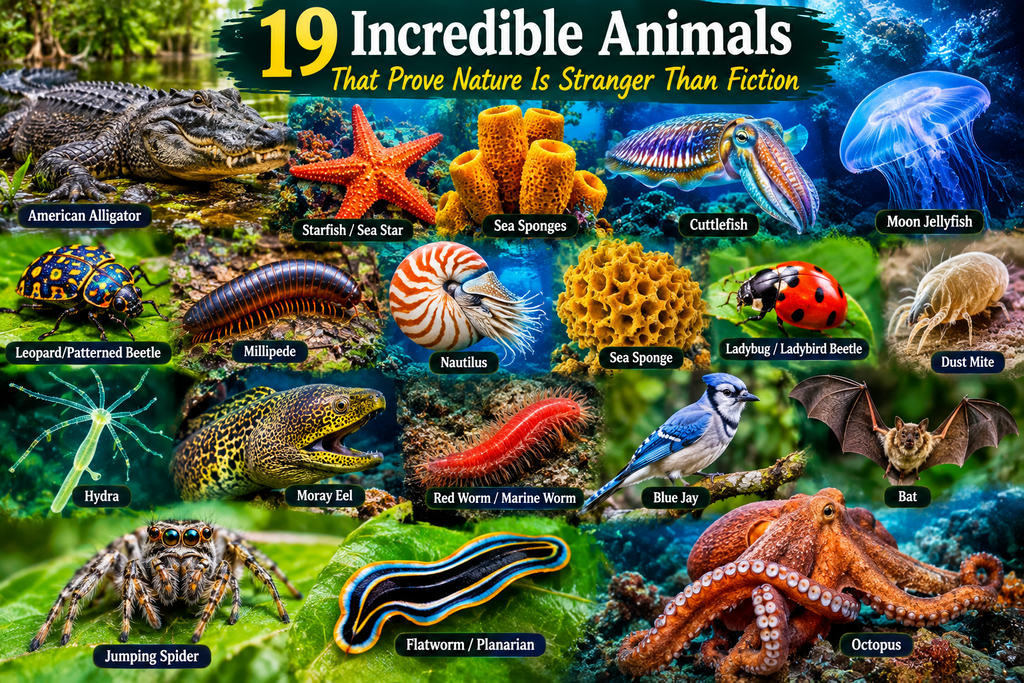
Image 7 — Featured Image: All Animals Together
Alt text: Collage of 19 incredible animals including American alligator, sea star, sponge, cuttlefish, jellyfish, nautilus, octopus and other unusual wildlife
Filename: 19-incredible-animals-nature-2026.jpg
Important: Real wildlife photographs found through image search are not automatically free to republish. Before uploading to WordPress, verify the photographer’s license or use public-domain/appropriately licensed images.
🔎 Complete WordPress SEO Package
New SEO Title
19 Incredible Animals That Prove Nature Is Stranger Than Fiction
Alternative SEO Title
19 Amazing Animals With Extraordinary Survival Adaptations
Focus Keyword
incredible animals
Secondary Keywords
- incredible animals 2026
- amazing animals
- unusual animals
- strange animals
- bizarre animals
- rare wildlife
- fascinating animal facts
- animal adaptations
- American alligator
- sea star
- sea sponge
- cuttlefish
- moon jellyfish
- nautilus
- moray eel
- octopus
- blue jay
- bats
- jumping spiders
- planarian
- hydra
- millipede
- ladybug
- marine worms
Meta Description
Discover 19 incredible animals, from American alligators and octopuses to nautiluses, bats, jumping spiders and tiny Hydra, and learn their amazing survival adaptations.
Short Description / Excerpt
Explore 19 remarkable animals from oceans, wetlands, forests and microscopic habitats, and discover the unusual adaptations that help them survive.
Category
Animals & Wildlife
Subcategory
Amazing Animals
Tags
Amazing Animals, Incredible Animals, Strange Animals, Unusual Animals, Wildlife, Animal Facts, Animal Adaptations, American Alligator, Starfish, Sea Star, Sea Sponge, Cuttlefish, Moon Jellyfish, Nautilus, Moray Eel, Octopus, Blue Jay, Bat, Jumping Spider, Planarian, Hydra, Millipede, Ladybug, Marine Worm, Wildlife 2026, Nature
Suggested URL Slug
19-incredible-animals-2026
Featured Image Title
19 Incredible Animals That Prove Nature Is Stranger Than Fiction
Featured Image Alt Text
Collage of 19 incredible animals from marine, freshwater, forest and microscopic habitats
Featured Image Caption
From powerful alligators to microscopic Hydra, these remarkable animals reveal the extraordinary diversity of life on Earth.
Recommended Image Size
1200 × 675 px
Recommended WordPress Schema
Article
Author
World Animals TV
Suggested Internal Links
Amazing AnimalsRare AnimalsOcean AnimalsFreshwater AnimalsBirds & WildlifeAnimal AdaptationsWildlife FactsEndangered Animals