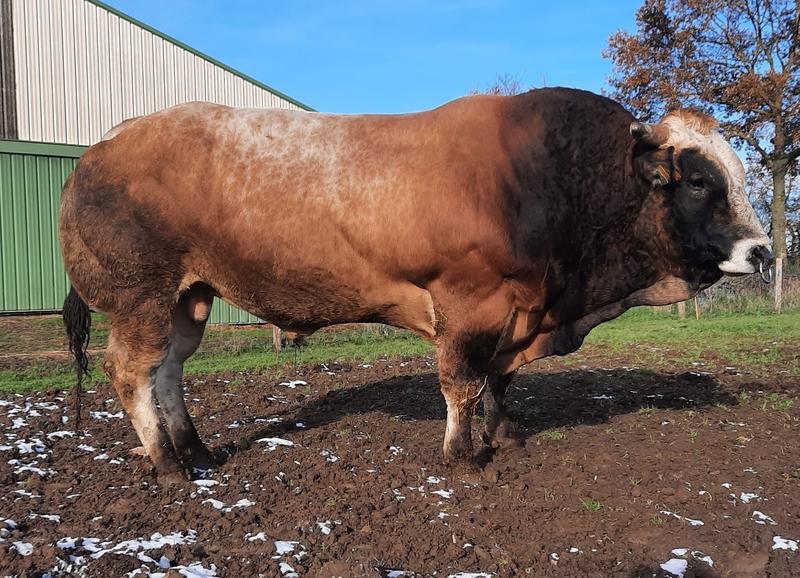
Charolais cattle originated in France and became internationally famous for their fast growth and strong beef characteristics.
The breed is generally creamy white to wheaten in color. Mature bulls are expected to have strong legs and feet capable of supporting their heavy bodies, along with broad backs, powerful hindquarters, and substantial muscling.
The Charolais is particularly impressive because its size is combined with a strong beef-producing frame. Rather than simply being tall, the breed has a deep and muscular body designed for growth and meat production.
Charolais genetics have also become important in crossbreeding systems around the world. Their growth potential and muscularity can be passed into offspring when breeders select suitable animals.
6 Extraordinary Animals That Look Like They Belong on Another Planet
Nature has produced animals in almost every imaginable shape and size. Some are built for speed, others for camouflage, and some have developed such unusual characteristics that they seem almost impossible.
A giant lizard stalks dry islands in Indonesia. A flightless parrot walks through the forests of New Zealand at night. A primate spends much of its life grazing on grass in the Ethiopian highlands. On the volcanic Galápagos Islands, a lizard dives into the ocean to eat algae. New Zealand’s mysterious kiwi searches through leaf litter after dark, while a brilliant golden frog carries one of the most powerful natural toxins known in the animal kingdom.
These animals may live thousands of kilometers apart, but they share something important: each has evolved extraordinary solutions to the challenges of survival.
This 2026 wildlife guide explores six of the world’s most fascinating animals and the behaviors that make them so unusual.
1. Komodo Dragon — The Giant Lizard That Hunts With Patience
7
The Komodo dragon (Varanus komodoensis) is one of the most intimidating reptiles alive today. It is the largest living lizard and can reach around 3 meters in length and more than 130 kilograms. Wild Komodo dragons are found on several Indonesian islands, including Komodo, Rinca and parts of Flores.
Despite its enormous size, the Komodo dragon does not need to chase everything it eats.
Patience is one of its greatest weapons.
The dragon can wait among vegetation for an opportunity to attack. When suitable prey comes close, it can move rapidly, using powerful legs, claws and sharp, serrated teeth.
Its hunting system is particularly remarkable. Komodo dragons possess venom glands, and their bites can combine tissue damage with toxins that promote blood loss and shock. They can also use their exceptional sense of smell to locate carrion or follow wounded prey.
This combination makes the Komodo dragon an efficient predator and scavenger.
A surprising survival strategy
Young Komodo dragons face a completely different world from adults. They are vulnerable to larger dragons, so juveniles spend considerable time in trees, where their smaller bodies allow them to climb more easily.
As they grow, their lifestyle changes.
Eventually, the young lizard becomes a huge ground-dwelling predator.
Habitat
Komodo dragons live in tropical forests, savannas and other habitats across Indonesia’s Lesser Sunda Islands. Their environment can become extremely dry during parts of the year, making water and food valuable resources.
Image Alt Text:Wild Komodo dragon walking through dry forest in Indonesia
2. Kākāpō — The Parrot That Cannot Fly
6
Few birds are as unusual as the kākāpō (Strigops habroptilus).
It is a large, green, flightless parrot with an owl-like face, strong legs and a distinctive waddling walk. It is also nocturnal.
And there is remarkable news about the species in 2026.
On September 1, 2026, New Zealand’s Department of Conservation announced that the official kākāpō population had reached 325 birds, including 90 chicks from the 2026 breeding season. This was described as a recovery-era high and the first time the population had exceeded 300 in roughly 75 years.
That makes 2026 an especially significant year for this extraordinary bird.
Why did the kākāpō become flightless?
New Zealand’s wildlife evolved for millions of years in an environment with relatively few land predators.
The kākāpō evolved toward a ground-based lifestyle.
Instead of flying away from danger, it relies on camouflage, hiding and its ability to move through dense vegetation.
Its green feathers blend remarkably well with forest plants.
A bird that comes alive at night
During daylight hours, kākāpō generally rest in ground or treetop roosts. At night, they become active.
They walk through forests searching for plant material, fruit, seeds and other food.
Males also have one of the strangest courtship behaviors among birds.
They gather at traditional display areas and produce deep booming calls to attract females.
The kākāpō is also the world’s only known lek-breeding parrot.
Conservation success
Kākāpō recovery depends on predator-free islands and carefully managed sanctuaries because introduced mammals such as rats, cats and stoats historically devastated the species.
Modern conservation teams monitor birds with transmitters, manage nests and provide supplementary food when necessary. In 2026, scientists have also been using high-resolution aerial imagery and deep-learning technology to identify important tree species in kākāpō habitat.
The species’ progress shows what long-term conservation can accomplish.
Image Alt Text:Kākāpō flightless green parrot resting in New Zealand forest
3. Gelada — The Grass-Eating Primate With a Dramatic Chest
7
The gelada (Theropithecus gelada) is sometimes casually called a “gelada baboon,” although it is a distinct primate.
It lives in the highlands of Ethiopia, where steep cliffs and open grasslands create a very different environment from the tropical forests where many other primates live.
One of its most unusual characteristics is its diet.
A primate that prefers grass
Most people picture monkeys and baboons eating fruits, insects or other varied foods.
Geladas are specialists.
They spend much of their day feeding on grasses and other vegetation, using their hands to pull food toward their mouths. Smithsonian describes them as unusual among primates because they graze primarily on grass.
Their bodies and behavior are closely connected to this lifestyle.
Instead of spending most of their time high in trees, they spend hours on the ground.
The red chest
Another unforgettable feature is the bare patch of skin on the chest.
In males and females, the coloration can communicate information about social and reproductive condition. Males may have particularly vivid red coloration.
The markings give the animal a striking appearance and are one reason the species is sometimes nicknamed the “bleeding-heart” baboon.
A highly social animal
Geladas live in complex social groups.
Large gatherings can contain hundreds of animals, while smaller social units form the core of their relationships.
Communication is extremely important.
Geladas use many different calls, facial expressions and body signals to maintain social relationships, warn others and manage conflicts.
At night, the animals retreat toward steep cliffs.
These rocky sleeping sites provide protection from predators and make it difficult for large predators to approach them.
Their survival strategy is therefore based on both social cooperation and geography.
Image Alt Text:Gelada primate with red chest in Ethiopian highlands
4. Marine Iguana — The Lizard That Goes Underwater
7
Imagine seeing a lizard walk toward the ocean and disappear beneath the waves.
That is exactly what the marine iguana does.
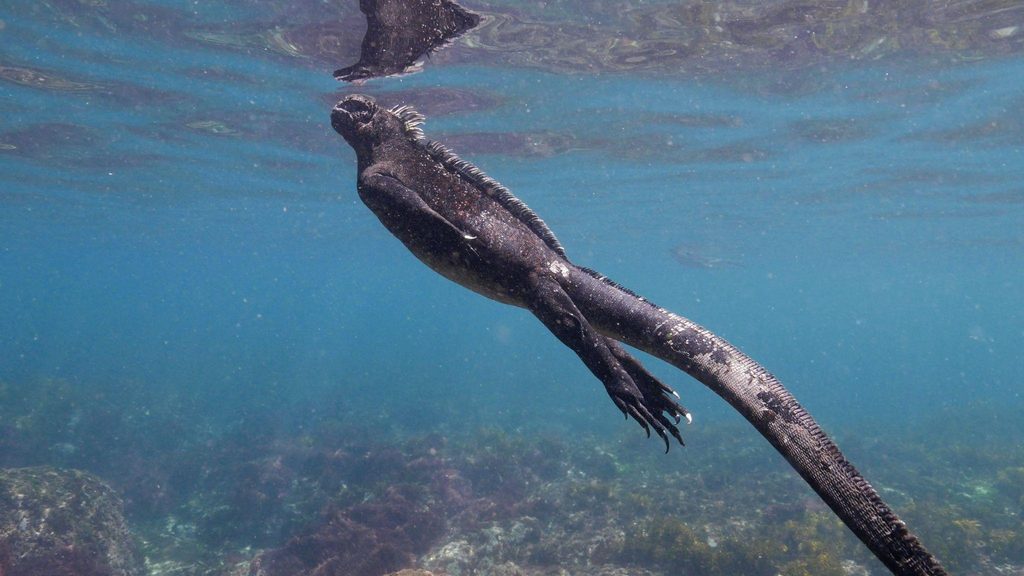
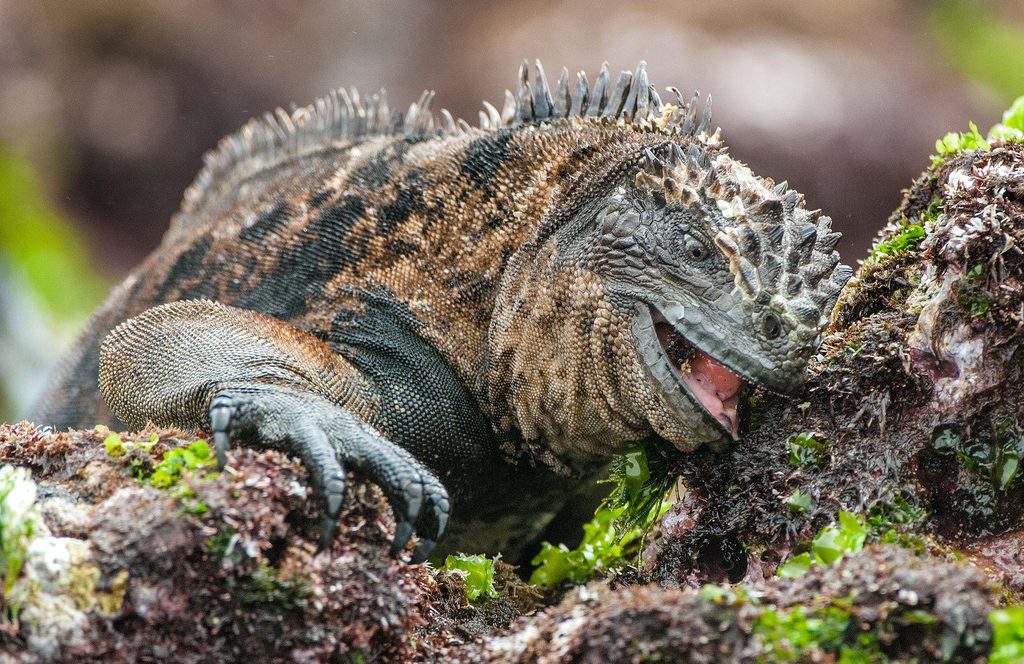
The marine iguana (Amblyrhynchus cristatus) is found only in the Galápagos Islands and is the only lizard in the world adapted to feed in the sea.
This makes it one of the clearest examples of evolution adapting an animal to an extraordinary food source.
Diving for dinner
Marine iguanas feed primarily on marine algae.
They can dive into cold seawater and scrape algae from rocks.
Their flattened tails act like paddles, helping them move through the water, while their claws allow them to grip rocks.
But the ocean presents another problem:
cold temperatures.
After feeding, marine iguanas return to land and bask in the sun to restore their body temperature.
The salt problem
Eating marine algae means swallowing salt.
Marine iguanas have special salt glands associated with their nostrils that help remove excess salt from their bodies.
You may sometimes see one sneeze or forcefully expel salty material near the nose.
It isn’t simply a strange behavior.
It is part of the animal’s adaptation to marine life.
An extraordinary response to El Niño
Food availability can change dramatically during powerful El Niño events.
Marine iguanas can suffer severe food shortages when ocean conditions reduce the growth of algae.
Researchers have documented an extraordinary response: some adults can actually shrink in length during severe shortages and later grow again when food becomes abundant.
That makes the marine iguana one of the most unusual vertebrates when it comes to coping with environmental changes.
Image Alt Text:Marine iguana resting on volcanic rocks beside Galapagos ocean
5. Kiwi — New Zealand’s Nocturnal Bird With Nostrils at the End of Its Bill
6
The kiwi is one of New Zealand’s most recognizable animals.
It is also one of the strangest birds alive.
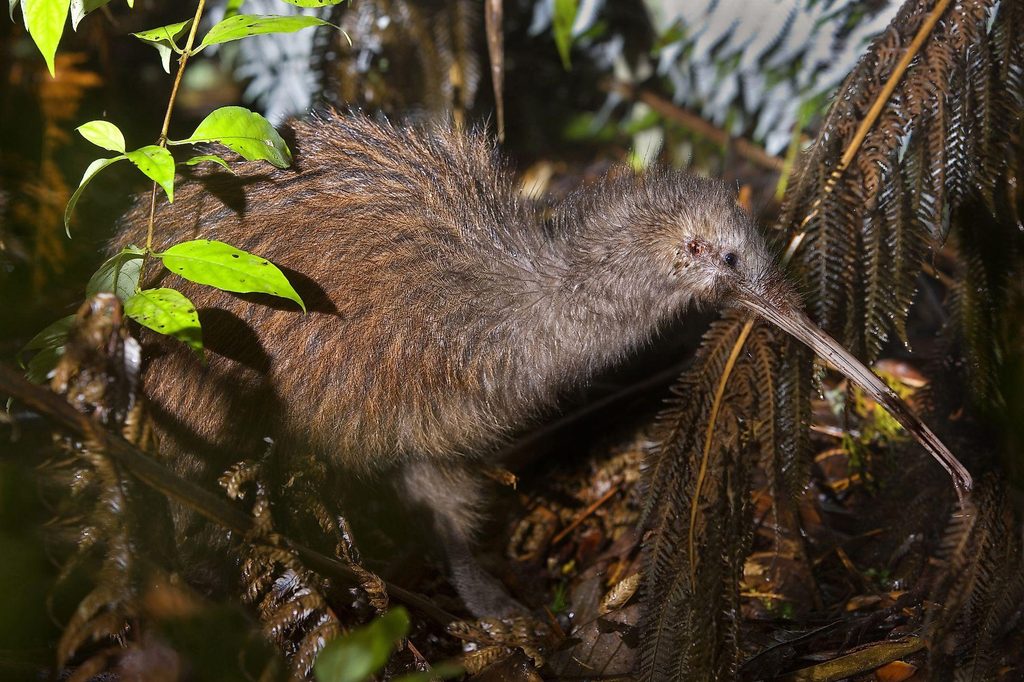
Kiwi cannot fly. Their feathers are loose and hair-like, their wings are extremely reduced and they have strong legs.
But their most unusual feature may be their bill.
Unlike most birds, kiwi have nostrils located near the tip of the bill.
This gives them an exceptional ability to investigate scents in the soil.
A bird that hunts like a mammal
Kiwi are generally active at night.
They walk through forest floors and use their bills to probe leaf litter and soil while searching for insects, worms and other small organisms.
Their strong legs help them move through dense vegetation.
Instead of flying from tree to tree, the kiwi has become a ground specialist.
A huge egg
For its body size, the kiwi produces an unusually large egg.
The chick that emerges is already feathered and relatively independent compared with many other birds.
New Zealand’s Department of Conservation reports that kiwi chicks leave the nest to feed at about five days old and are not fed by their parents.
Why kiwi need protection
Introduced predators are a major threat.
Stoats are especially dangerous to chicks, while dogs can kill adult kiwi.
New Zealand’s conservation programs use predator control, fenced sanctuaries, offshore islands and community-led projects to protect populations.
The kiwi is therefore much more than a cute national symbol.
It represents an entire conservation effort to protect New Zealand’s unique wildlife.
Image Alt Text:Brown kiwi searching through forest leaf litter in New Zealand
6. Golden Poison Frog — A Tiny Animal With a Powerful Defense
6
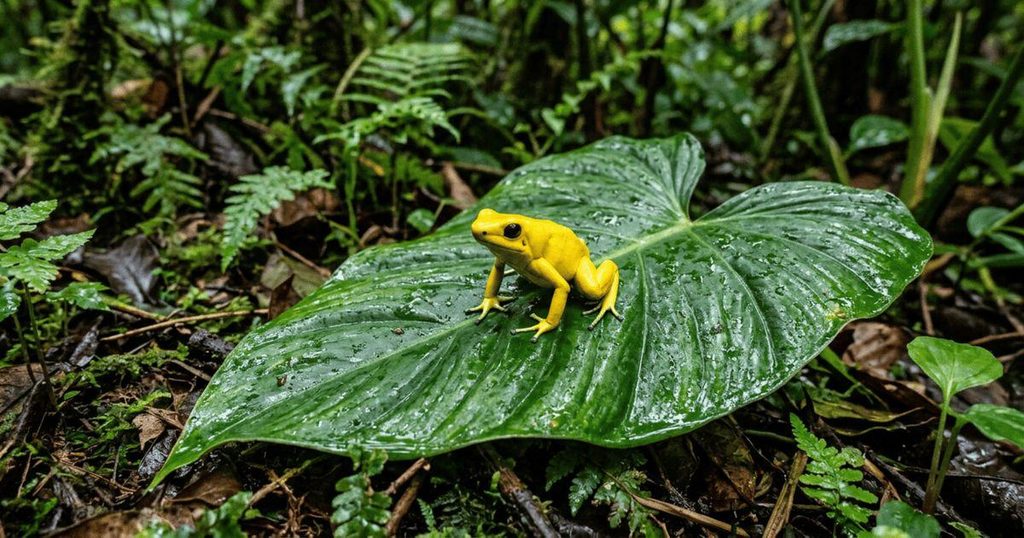
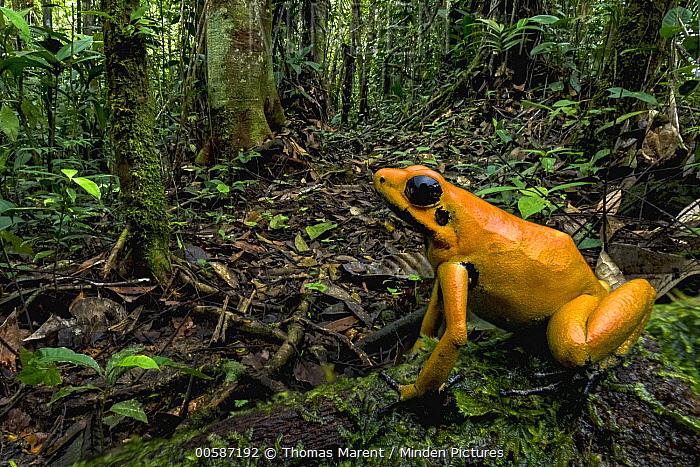
The golden poison frog (Phyllobates terribilis) may look harmless because of its tiny size.
It is not.
This brilliantly colored frog is native to humid rainforest environments in Colombia and is regarded as one of the most toxic frogs known.
Its bright yellow coloration is an example of warning coloration, signaling potential predators that attacking it could be dangerous.
Smithsonian’s National Zoo explains that the golden frog is the most toxic of the documented poison-arrow frog species and produces the alkaloid toxin batrachotoxin.
Where does the poison come from?
An especially interesting mystery surrounds its toxicity.
Golden poison frogs acquire their toxins through their natural diet.
In human care, frogs fed a different diet do not develop the same toxic skin chemistry.
This suggests that the frog’s extraordinary chemical defense is closely connected to what it eats in the wild.
A bright warning
The frog doesn’t need to hide.
Instead, its bright coloration can advertise its toxicity.
This is called aposematic coloration.
Predators that learn to associate the bright colors with an unpleasant or dangerous experience may avoid similar-looking frogs in the future.
Why tiny doesn’t mean defenseless
The golden poison frog demonstrates one of nature’s most interesting principles:
survival doesn’t always depend on size.
A tiny animal can discourage predators through chemistry rather than strength.
That is an extraordinary evolutionary solution.
Image Alt Text:Golden poison frog Phyllobates terribilis in Colombian rainforest
🌎 Six Animals, Six Extraordinary Survival Strategies
These six animals demonstrate how different environments can produce radically different solutions to survival.
Animal
Environment
Extraordinary Adaptation
Komodo dragon
Indonesian islands
Venom, powerful bite and patient ambush hunting
Kākāpō
New Zealand forests
Flightlessness, nocturnal lifestyle and camouflage
Gelada
Ethiopian highlands
Grass-based diet and complex social behavior
Marine iguana
Galápagos Islands
Diving into the ocean to feed on algae
Kiwi
New Zealand forests
Nocturnal ground foraging and highly sensitive bill
Golden poison frog
Colombian rainforest
Powerful chemical defense and warning coloration
What makes these animals so fascinating is that none of them is simply “weird” by accident.
Their unusual characteristics have practical purposes.
The Komodo dragon’s powerful hunting system helps it exploit large prey.
The kākāpō’s ground-based lifestyle developed in an environment where flying was less important.
The gelada’s teeth, hands and social behavior suit its grassland existence.
The marine iguana transformed a terrestrial lizard body into an animal capable of exploiting marine algae.
The kiwi became a nocturnal ground forager.
And the golden poison frog developed an extraordinary chemical defense.
🔬 What These Animals Teach Us About Evolution
Evolution doesn’t have a single design plan.
Instead, animals respond to the pressures of their individual environments over countless generations.
An island without many mammalian predators can produce a flightless parrot.
A volcanic island surrounded by nutrient-rich ocean water can produce a swimming lizard.
A highland landscape covered in grass can favor a primate that spends hours grazing.
A rainforest full of predators can favor an animal that advertises its toxicity with brilliant colors.
This is why isolated ecosystems are so scientifically important.
When populations become separated by mountains, oceans, islands or changing habitats, they can follow different evolutionary paths.
Eventually, those differences can produce animals that seem completely unlike their relatives.
🛡️ Why Conservation Matters in 2026
Several of the animals in this article face serious conservation challenges.
The kākāpō is classified as critically threatened in New Zealand, but its recovery provides one of the most encouraging wildlife stories of 2026. The population reached 325 birds on September 1, 2026, after 90 chicks from the year’s breeding season were added to the official count.
Kiwi also remain vulnerable to introduced predators, while marine iguanas face environmental pressures including invasive species, pollution and climate-related changes.
The golden poison frog illustrates another conservation challenge.
Amphibians around the world are vulnerable to habitat loss and disease. Related golden frog conservation programs demonstrate how scientists are increasingly using captive breeding, disease research and carefully managed reintroduction efforts to protect endangered amphibians.
Protecting unusual animals means protecting the environments that made their unusual adaptations possible.
🌿 Final Thoughts
The natural world is full of animals that challenge our expectations.
The Komodo dragon looks like a survivor from the age of dinosaurs.
The kākāpō is a parrot that gave up flight and became a nocturnal forest wanderer.
The gelada is a primate that spends much of its life eating grass.
The marine iguana is a lizard that dives into the ocean.
The kiwi is a bird that searches for food on the ground at night.
And the golden poison frog carries an extraordinary chemical defense inside a body smaller than many people’s palms.
Their differences are exactly what make them valuable.
Every strange body shape, unusual behavior and specialized survival technique tells a story about the environment in which an animal evolved.
And in 2026, the story of wildlife conservation is still being written.
The recovery of the kākāpō shows that determined conservation can make a measurable difference. At the same time, the threats facing many other unusual species remind us that protection cannot stop.
The strangest animals on Earth are not mistakes of nature. They are masterpieces of adaptation—and each one is worth protecting.
📸 IMAGE SEO PACKAGE
1. Komodo Dragon
Alt Text:Wild Komodo dragon walking through dry forest in Indonesia Image Title:Komodo Dragon Wildlife 2026 Filename:komodo-dragon-wildlife-2026.jpg
2. Kākāpō
Alt Text:Kākāpō flightless green parrot resting in New Zealand forest Image Title:Kakapo New Zealand Wildlife 2026 Filename:kakapo-new-zealand-2026.jpg
3. Gelada
Alt Text:Gelada primate with red chest in Ethiopian highlands Image Title:Gelada Ethiopian Highlands Wildlife Filename:gelada-ethiopia-wildlife-2026.jpg
4. Marine Iguana
Alt Text:Marine iguana resting on volcanic rocks beside Galapagos ocean Image Title:Marine Iguana Galapagos Wildlife Filename:marine-iguana-galapagos-2026.jpg
5. Kiwi
Alt Text:Brown kiwi searching through forest leaf litter in New Zealand Image Title:Kiwi Bird New Zealand Wildlife 2026 Filename:kiwi-bird-new-zealand-2026.jpg
6. Golden Poison Frog
Alt Text:Golden poison frog Phyllobates terribilis in Colombian rainforest Image Title:Golden Poison Frog Colombia Wildlife Filename:golden-poison-frog-colombia-2026.jpg
Featured Image
Alt Text:Six extraordinary animals including Komodo dragon, kakapo, gelada, marine iguana, kiwi and golden poison frog Filename:six-extraordinary-animals-2026.jpg
Image licensing note: The image-search results above are examples of real wildlife photographs, but many are copyrighted. Before downloading and uploading any photograph to your website, check its license and attribution requirements. For a commercial website, use properly licensed images.
6 Extraordinary Animals That Look Like They Belong on Another Planet | 2026
Meta Description: Discover six extraordinary animals from around the world: Komodo dragon, kākāpō, gelada, marine iguana, kiwi and golden poison frog, with their unique habitats, behaviors and survival adaptations.
Exploring Endangered Species in the Amazon Rainforest
Category: Amazon Wildlife & Conservation Tags: Amazon rainforest, endangered species, Amazon wildlife, wildlife conservation, rainforest animals, endangered animals, Amazon biodiversity, jaguar, giant armadillo, tapir, harpy eagle, spider monkey Focus Keyphrase: Endangered species in the Amazon rainforest Suggested URL Slug:endangered-species-amazon-rainforest Meta Description: Explore endangered and threatened wildlife in the Amazon rainforest and discover how habitat loss, hunting, climate change and conservation efforts are shaping their future.
Exploring Endangered Species in the Amazon Rainforest: Wildlife Fighting to Survive
The Amazon rainforest is one of the greatest wildlife habitats on Earth.
Behind its walls of green vegetation are rivers, wetlands, forests and enormous tree canopies supporting thousands of species. Some are familiar to people around the world, while others are so secretive that scientists rarely see them.
But the Amazon’s incredible biodiversity is facing growing pressure.
Deforestation, habitat fragmentation, illegal hunting, pollution, fires and climate change can make survival increasingly difficult for wildlife.
The International Union for Conservation of Nature, or IUCN, uses categories such as Vulnerable, Endangered and Critically Endangered to describe different levels of extinction risk.
In this article, we explore several remarkable Amazon species and the challenges they face.
1. The Jaguar: The Ghost of the Amazon
Few animals represent the Amazon more powerfully than the jaguar.
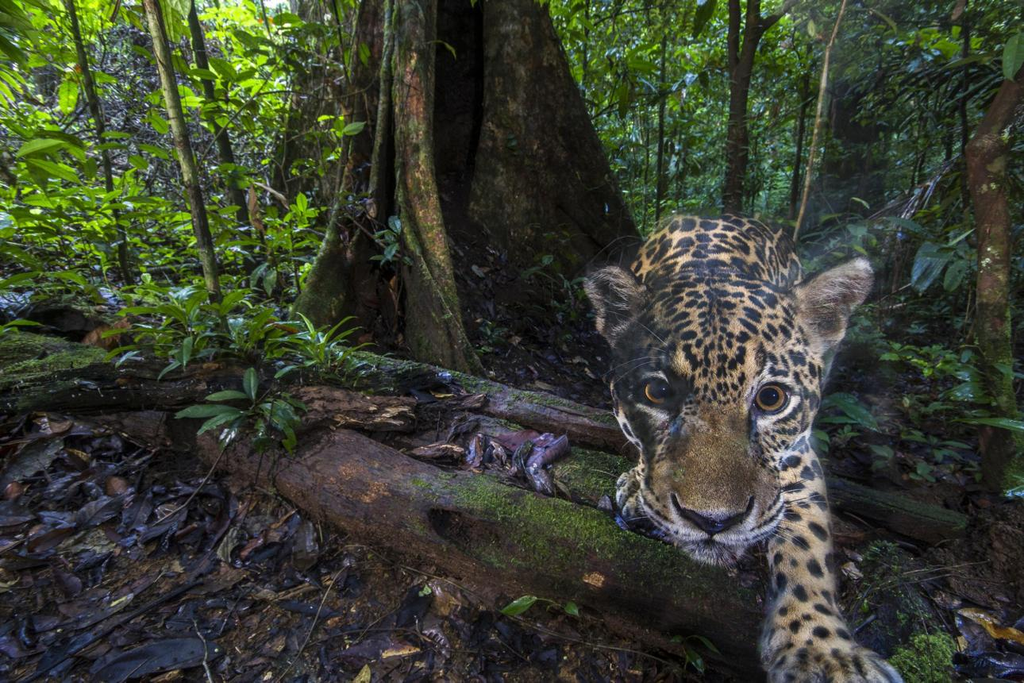
With its golden coat and dark rosettes, this large cat is one of the rainforest’s top predators. Jaguars need extensive territories where they can find prey, water and places to reproduce.
The problem is that forests are increasingly divided by roads, agriculture, mining and other human activities.
A jaguar may survive in one isolated patch of forest, but fragmented habitat can make movement and reproduction more difficult.
Protecting connected forests is therefore essential.
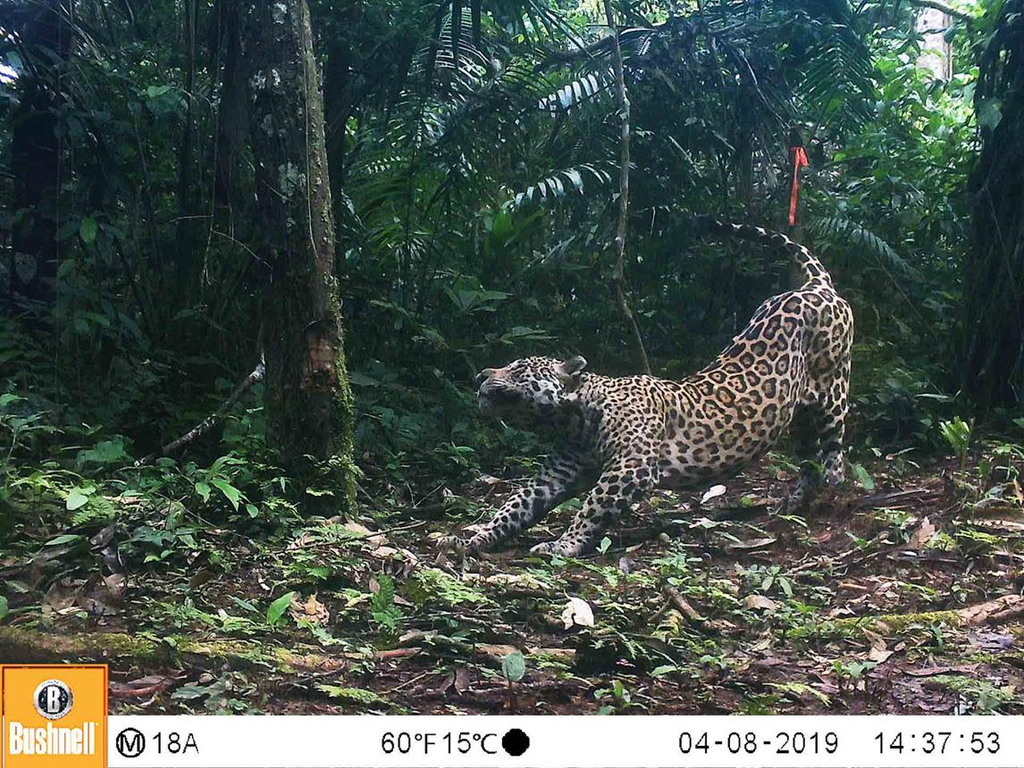
Camera traps have become an important conservation tool because they allow researchers to document jaguars without constantly disturbing them. Amazon Conservation says its monitoring programs have captured thousands of wildlife images and documented threatened and vulnerable species across the western Amazon.
Picture 1 — Alt Text: “Jaguar walking through dense Amazon rainforest habitat”
2. The Giant Armadillo: A Rare Forest Engineer
The giant armadillo is one of the Amazon’s most unusual mammals.
It is enormous compared with other armadillo species and possesses powerful claws designed for digging.
Yet despite its size, it is difficult to see.
Giant armadillos are generally solitary and can spend much of their time away from human observers.
Their digging behavior also gives them an ecological role beyond their own survival. Burrows can provide shelter for other animals, meaning one armadillo can indirectly create habitat for several other species.
Habitat destruction is a major concern because these animals need large areas of suitable forest.
Protecting remote forest landscapes can therefore benefit the giant armadillo and many other species living alongside it.
Picture 2 — Alt Text: “Giant armadillo searching for food on the Amazon rainforest floor”
3. The Lowland Tapir: A Giant Seed Disperser
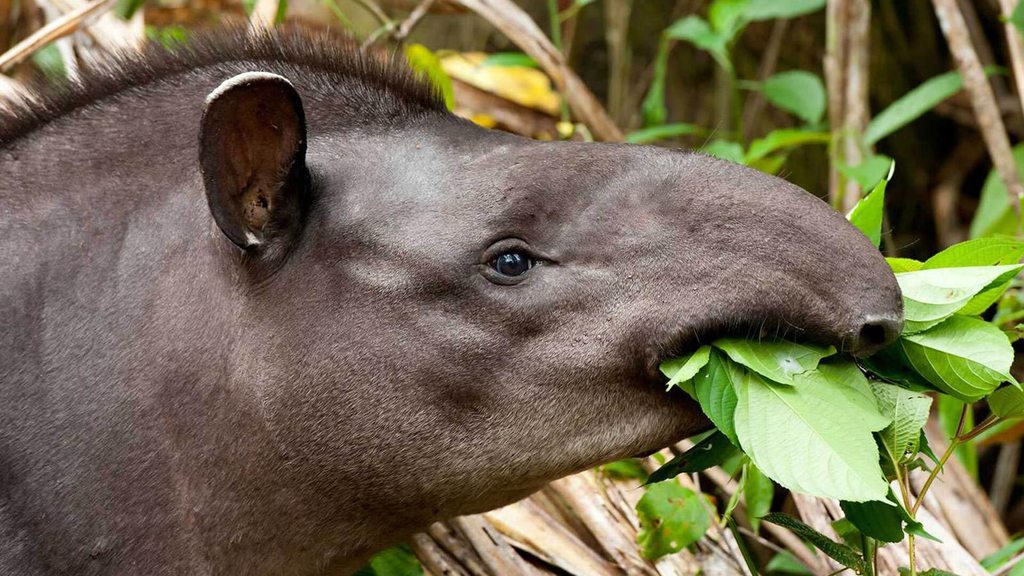
The lowland tapir may look slow and peaceful, but it plays an important role in the Amazon ecosystem.
Sometimes described as a forest gardener, the tapir eats large quantities of vegetation and fruit.
As it travels through the forest, it can transport seeds from one location to another.
This makes the animal part of the rainforest’s natural regeneration system.
Tapirs also use rivers and other water sources, making healthy forest and freshwater environments important to their survival.
When forests become fragmented or heavily disturbed, tapirs can lose access to important feeding and shelter areas.
Protecting large connected habitats is therefore one of the most important ways to help them.
Picture 3 — Alt Text: “Lowland tapir foraging beside a river in the Amazon rainforest”
4. The Harpy Eagle: A Predator of the Canopy
Far above the forest floor, another threatened Amazon icon watches from the trees.
The harpy eagle is among the largest and most powerful eagles in the Americas.
Its enormous talons are adapted for catching prey in the forest canopy.
But an animal at the top of the food chain needs a healthy ecosystem beneath it.
Large predators require suitable habitat and enough prey to survive.
When forests are cleared, the problem does not stop with the trees. The loss of vegetation can reduce prey populations and eliminate nesting areas.
The harpy eagle therefore represents an important conservation principle: protecting predators often means protecting the entire ecosystem supporting them.
Picture 4 — Alt Text: “Harpy eagle perched high in an Amazon rainforest tree”
5. The Black Spider Monkey and the Importance of the Canopy
The Amazon canopy is a world of its own.
Among its residents are spider monkeys, agile primates that move through branches searching for fruit and other foods.
Their long limbs and gripping tails help them travel through the treetops.
But canopy animals can be particularly vulnerable when forests are fragmented.
A road or cleared area may create a gap that is difficult or dangerous to cross.
When populations become isolated, animals may have fewer opportunities to interact with other groups.
This is why wildlife corridors are so important.
Keeping forest patches connected gives animals a better chance to move, find food and maintain healthy populations.
Picture 5 — Alt Text: “Black spider monkey moving through the Amazon rainforest canopy”
6. River Wildlife Faces a Different Kind of Threat
Not every endangered Amazon animal lives among trees.
The rivers are home to their own remarkable wildlife.
Fish, turtles, river dolphins and other aquatic species depend on healthy freshwater systems.
Pollution from mining and other activities can introduce contaminants into waterways. Changes to rivers can also affect breeding grounds and food supplies.
The Amazon Assessment Report highlights how deforestation, fires and mining can threaten biodiversity and damage ecosystem services across the basin.
This means rainforest conservation must include both land and water.
Protecting a forest while allowing its rivers to become heavily polluted would leave an important part of the ecosystem unprotected.
Picture 6 — Alt Text: “Amazon River wildlife living in a healthy freshwater ecosystem”
7. Why Camera Traps Are Changing Wildlife Conservation
One of the most exciting developments in Amazon conservation is the use of technology.
Camera traps can remain in forests for long periods and photograph animals automatically when they pass.
This allows researchers to study species that are difficult to observe directly.
Amazon Conservation reports deploying more than 100 camera traps and collecting more than 10,000 photographs and videos of mammals and birds in the western Amazon.
These images can reveal where animals live, how frequently they appear and how wildlife communities change over time.
For rare species, even one photograph can be valuable.
A single image may confirm that an animal is still using a particular forest.
Picture 7 — Alt Text: “Wildlife camera trap monitoring endangered animals in the Amazon rainforest”
What Is Putting Amazon Wildlife at Risk?
The threats facing Amazon animals are interconnected.
Habitat loss
When forests are cleared, animals lose feeding areas, nesting sites and shelter.
Fragmentation
A forest can remain on a map while being divided into isolated pieces. This can make movement and reproduction more difficult.
Hunting
Illegal hunting can reduce populations of large mammals and birds, particularly where wildlife is already under pressure.
Mining and pollution
Mining can damage forests and affect rivers, creating problems for both terrestrial and aquatic animals.
Climate change
Changing temperatures, rainfall patterns, drought and wildfire can alter habitats and food availability.
Amazon Conservation warns that continued deforestation is pushing the rainforest toward a potential ecological tipping point.
There Is Still Hope
The story of endangered Amazon wildlife is not only a story of decline.
Conservation projects are producing important results.
Protected areas can preserve large blocks of habitat.
Wildlife corridors can reconnect fragmented forests.
Indigenous communities play important roles in protecting Amazon landscapes.
Scientists are using camera traps, satellite monitoring and other technologies to understand changes in wildlife populations.
Perhaps most importantly, researchers continue discovering new information about the Amazon.
The more we understand these ecosystems, the better we can design conservation strategies.
What Can We Do?
Protecting Amazon wildlife requires action at many levels.
Governments can strengthen protected areas and environmental enforcement.
Scientists can continue monitoring threatened species.
Local communities can participate in sustainable conservation programs.
Consumers can also make choices that reduce pressure on forests, including supporting products and organizations committed to responsible sourcing and conservation.
There is no single solution.
The Amazon is too large and complicated for that.
But thousands of individual conservation efforts can combine to create meaningful protection.
Final Thoughts
The Amazon rainforest is not simply a collection of beautiful animals.
It is a living network.
Jaguars depend on prey.
Tapirs help distribute seeds.
Spider monkeys move through the canopy.
Harpy eagles depend on healthy forests.
Giant armadillos create shelter through their digging.
River animals depend on clean and functioning waterways.
When one part of the ecosystem is damaged, other species can feel the effects.
That is why protecting endangered species means protecting their habitats too.
The Amazon still contains some of the planet’s most extraordinary wildlife, and there is reason to hope.
But hope needs action.
Every protected forest, every wildlife corridor, every successful conservation project and every new scientific discovery can give Amazon animals another chance to survive.
The future of these species is still being written—and the decisions made today will help determine what that future looks like.
Amazing Facts About the Amazon’s Unique Wildlife
Category: Amazon Wildlife Tags: Amazon Rainforest, Amazon Animals, Wildlife Facts, Rainforest Wildlife, Jaguar, River Dolphin, Electric Eel, Glass Frog, Hoatzin, Giant River Otter, Wildlife Conservation Focus Keyphrase: Amazing facts about Amazon wildlife SEO Title: Amazing Facts About the Amazon’s Unique Wildlife: 7 Amazing Animals Meta Description: Discover amazing facts about Amazon wildlife, including jaguars, river dolphins, electric eels, glass frogs, hoatzins and giant river otters. URL Slug: amazing-facts-amazon-unique-wildlife
Amazing Facts About the Amazon’s Unique Wildlife
Imagine walking beneath a wall of green so enormous that the sky almost disappears. Somewhere above you, a colorful bird calls from the canopy. Beneath the water, an electric eel is moving silently through the darkness. A jaguar may be resting several hundred meters away, while a tiny frog clings to a leaf almost impossible to see.
This is the Amazon Rainforest—a place where survival has produced some of the most remarkable animals on Earth.
The Amazon is considered one of the world’s richest ecosystems. The western Amazon alone is home to hundreds of mammal species, about 1,300 bird species, hundreds of reptiles and more than 400 amphibian species. Scientists are still discovering species and documenting wildlife in areas that remain difficult to explore.
Here are seven amazing facts that reveal why Amazon wildlife is so special.
1. Jaguars Are Surprisingly Comfortable Around Water
The jaguar is one of the Amazon’s most powerful predators, but its strength is not its only advantage.
Unlike many cats, jaguars are excellent swimmers. Rivers, streams and flooded forests do not necessarily form barriers for these animals. Instead, water can become part of their hunting environment.
Their muscular bodies, strong jaws and powerful limbs allow them to tackle prey that would be difficult for many other predators.
Jaguars also need large areas of connected habitat. Conservation organizations use camera traps to monitor them because their presence can provide valuable information about the condition of the surrounding ecosystem.
📸 Picture 1: Jaguar walking through dense Amazon rainforest near a river. Alt text:Jaguar walking through the Amazon rainforest beside a river
2. Pink River Dolphins Live in a Completely Different World
The Amazon river dolphin is one of the most recognizable animals of South American rivers.
Its pinkish color is one of its most famous characteristics, although individuals can vary in appearance. More importantly, the dolphin is specially adapted to freshwater environments.
During periods of flooding, Amazon rivers can expand into surrounding forests. Trees that normally stand on dry ground may become surrounded by water, creating an enormous temporary underwater landscape.
River dolphins can move through these changing environments while searching for food. Their flexible bodies and necks help them maneuver through complicated waterways.
The seasonal transformation of the Amazon demonstrates something important: the lives of many animals are closely connected to the rhythm of rising and falling water.
📸 Picture 2: Pink river dolphin swimming through Amazonian freshwater. Alt text:Pink Amazon river dolphin swimming through freshwater rainforest habitat
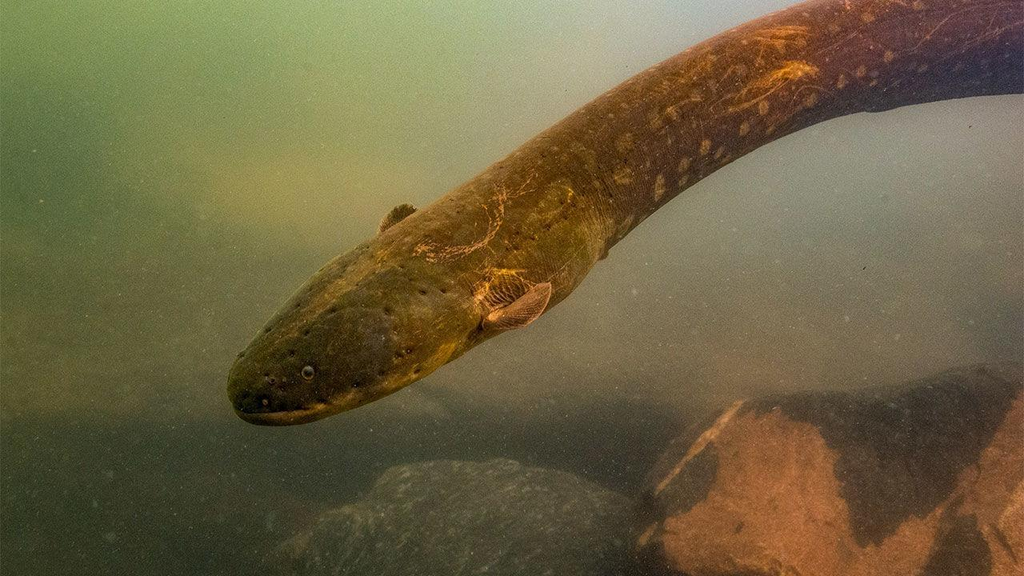
3. Electric Eels Have Their Own Biological Power System
Few Amazon animals sound as extraordinary as the electric eel.
Electric eels can produce electrical discharges using specialized organs in their bodies. Electricity can help them hunt, defend themselves and sense their surroundings.
This ability becomes particularly useful in dark or muddy water where visibility is limited.
Instead of relying entirely on eyesight, an electric eel can interact with its environment using electrical signals. It is an incredible example of evolution producing a highly specialized survival strategy.
The animal’s name can also be misleading: despite being called an eel, electric eels are actually knifefish rather than true eels.
📸 Picture 3: Electric eel moving through dark Amazon river water. Alt text:Electric eel swimming through dark Amazon freshwater
4. Glass Frogs Can Make Themselves Difficult to See
Deep in the rainforest, survival sometimes means becoming almost invisible.
Glass frogs are famous for their translucent bodies. In several species, parts of the underside can appear remarkably transparent, making these tiny amphibians difficult to detect against leaves and vegetation.
Their unusual appearance isn’t just beautiful—it can provide camouflage.
Many glass frogs are associated with vegetation near streams. Their small size and ability to blend into their surroundings demonstrate how even tiny rainforest animals can possess highly specialized adaptations.
When you look at a green leaf in the Amazon, there may be far more life on it than your eyes can detect.
📸 Picture 4: Tiny glass frog resting on a rainforest leaf. Alt text:Transparent glass frog resting on a green Amazon rainforest leaf
5. The Hoatzin Looks Like a Bird From Another Era
The hoatzin is one of the strangest-looking birds in the Amazon.
It has a distinctive crest, unusual coloration and a digestive system adapted for a leaf-heavy diet. But the most fascinating feature appears when the birds are young.
Hoatzin chicks have claws on their wings. These claws can help young birds climb through vegetation when they are too small or vulnerable to fly effectively.
As the birds grow, the wing claws disappear.
The hoatzin is therefore a wonderful example of how an animal’s body can change as it moves through different stages of life.
Its unusual biology has fascinated scientists for generations and has helped make it one of the Amazon’s most memorable birds.
📸 Picture 5: Hoatzin perched among Amazon rainforest vegetation. Alt text:Hoatzin bird perched on vegetation in the Amazon rainforest
6. Giant River Otters Have Strong Family Bonds
The giant river otter is another Amazon animal whose life is closely connected to freshwater.
These large otters are highly social and can live in family groups. They communicate with one another using different vocalizations and spend much of their time swimming, hunting and exploring waterways.
Their streamlined bodies and webbed feet make them excellent swimmers.
Healthy rivers and wetlands are particularly important for these animals. At the Los Amigos conservation area in southeastern Peru, researchers have documented thousands of species across a mosaic of forests, wetlands, oxbow lakes and waterways, including giant river otters.
Seeing a group of giant river otters moving together is a reminder that Amazon wildlife isn’t always about solitary survival. Cooperation can be just as important.
📸 Picture 6: Giant river otters swimming together in an Amazon river. Alt text:Giant river otter family swimming together in an Amazonian river
7. Scientists Are Still Discovering Amazon Wildlife
Perhaps the most exciting fact about the Amazon is that the wildlife story is far from complete.
New species continue to be discovered, while modern technology is helping scientists find animals that are difficult to observe directly.
Camera traps are particularly valuable. They can operate day and night without requiring researchers to remain in the forest. Amazon Conservation reports that its camera-trap programs have produced more than 10,000 photographs and videos of dozens of mammal and bird species.
Some conservation areas have revealed an astonishing diversity. At the Los Amigos Biological Station in Peru, researchers have recorded more than 4,300 species across numerous taxonomic groups.
That means every expedition into the rainforest can potentially add another piece to our understanding of Amazon biodiversity.
📸 Picture 7: Wide Amazon rainforest scene showing forest canopy, river and wildlife. Alt text:Amazon rainforest ecosystem with wildlife, river and dense tropical forest
Why Amazon Wildlife Is So Important
The animals of the Amazon are not isolated from one another.
Predators help regulate prey populations. Birds and mammals can spread seeds. Insects pollinate plants. Amphibians respond to changes in environmental conditions. Aquatic animals are connected to the health of rivers and wetlands.
Together, these relationships create a huge ecological network.
That is why protecting individual animals is only part of conservation. Protecting their habitats is equally important.
Conservation organizations are using protected areas, wildlife corridors, scientific research, camera traps and satellite monitoring to help maintain connected habitats. Corridors are particularly valuable because they allow animals to move between areas of suitable forest rather than becoming trapped in isolated patches.
A Rainforest Full of Secrets
The Amazon is often described as a rainforest, but that simple word hides an incredibly complicated world.
It is a place of towering trees, flooded forests, rivers, wetlands, caves, streams and countless smaller habitats. Each environment provides opportunities for different animals to survive.
A jaguar may dominate the forest floor. A hoatzin may occupy the branches. A glass frog may hide on a leaf. An electric eel may patrol the river below.
And somewhere in the enormous forest, there may be species that scientists have not yet documented.
That is what makes the Amazon so fascinating.
Its wildlife isn’t extraordinary because every animal is large or dangerous. It is extraordinary because evolution has produced countless different solutions to the challenge of staying alive.
From electricity and camouflage to swimming, climbing and social cooperation, Amazon animals have developed abilities that seem almost impossible.
Final Thoughts
The Amazon Rainforest remains one of the greatest wildlife treasures on Earth.
Its animals show us that nature does not follow a single formula for survival. Some species use strength. Others use intelligence, camouflage, cooperation or highly specialized biological abilities.
And the story continues.
As scientists explore more of the rainforest and use better technologies to monitor its wildlife, new discoveries are likely to change our understanding of this remarkable ecosystem.
The Amazon still has many secrets hidden beneath its leaves, within its rivers and high above its canopy—and every discovery gives us another reason to protect it.
Documentary Highlights: Conservation Efforts in the Amazon
Focus Keyphrase: Conservation efforts in the Amazon
SEO Title: Conservation Efforts in the Amazon: How People Are Protecting the Rainforest
Meta Description: Discover how conservation efforts in the Amazon are protecting wildlife through Indigenous leadership, technology, wildlife corridors, canopy bridges and scientific research.
URL Slug: conservation-efforts-in-the-amazon
A New Story Is Being Written in the Amazon
When people imagine the Amazon Rainforest, they often picture endless green trees, colorful birds, jaguars moving silently through the forest and rivers filled with wildlife.
But behind those beautiful images is another story—one about people working every day to protect this extraordinary ecosystem.
Conservation in the Amazon is no longer based on a single solution. Scientists are using camera traps and satellites. Indigenous communities are protecting their territories. Governments are creating wildlife corridors. Researchers are building bridges that allow animals to cross roads safely.
Together, these efforts are creating a new kind of conservation story—one that combines traditional knowledge, modern technology and practical action.
Here are some of the most interesting conservation developments helping protect the Amazon.
1. Protecting the Amazon Means Connecting Forests
One of the biggest problems facing rainforest wildlife is fragmentation.
A forest may remain standing in one location while roads, farms and other development divide surrounding habitat into smaller pieces. For animals that need large territories, these isolated patches can become difficult or dangerous to navigate.
In July 2026, Ecuador officially recognized the Yasuní–Limoncocha–Cuyabeno Conservation Corridor, connecting more than 173,000 hectares of Amazon rainforest.
The corridor links three important protected areas: Yasuní National Park, Limoncocha Biological Reserve and Cuyabeno Wildlife Reserve. It also includes territories connected with Kichwa, Siona and Siekopai communities.
This approach is important because wildlife does not recognize human boundaries.
A jaguar does not know where one protected area ends. A monkey does not understand a political border. Animals need connected habitats where they can find food, mates and shelter.
📸 Picture 1: Aerial view of Amazon rainforest stretching between protected areas.
Alt text:Connected Amazon rainforest landscape protected for wildlife and local communities
2. Indigenous Communities Are Central to Conservation
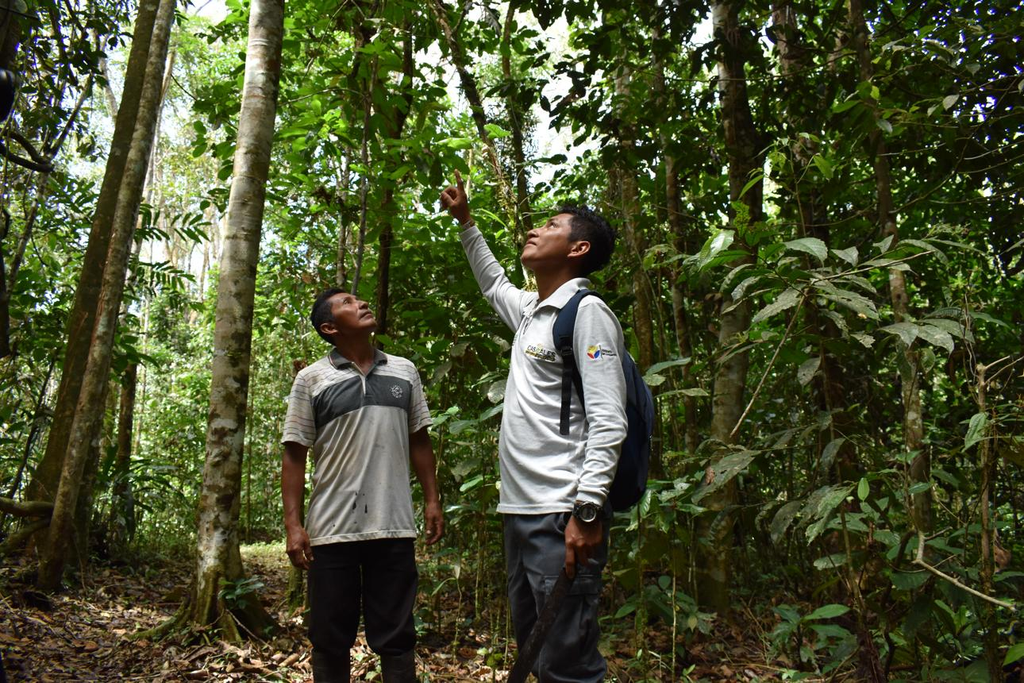
One of the most important parts of modern Amazon conservation is the role of Indigenous communities.
For generations, Indigenous peoples have developed detailed knowledge of their forests, rivers, plants and wildlife. Today, conservation programs increasingly combine this knowledge with scientific tools.
In Ecuador’s new corridor, Indigenous territories and communities are part of the broader conservation landscape. The corridor’s development involved consultations with local communities and includes participatory governance.
Elsewhere in the Amazon, Indigenous leaders are also being trained to use drones and other technologies to monitor their territories.
This creates an important shift.
Instead of conservation being something done only by outside researchers, local communities can become active participants in monitoring and protecting their own forests.
The result can be stronger local knowledge, faster responses to threats and greater community involvement.
📸 Picture 2: Indigenous community members walking through Amazon rainforest.
Alt text:Indigenous community members participating in Amazon rainforest conservation
3. Tiny Camera Traps Are Watching the Forest
You cannot protect what you cannot understand.
That is why wildlife monitoring has become such an important part of conservation.
Camera traps are small motion-activated cameras that can remain in the forest for long periods. When an animal passes in front of the camera, the device records an image or video.
This allows scientists to study animals without constantly following them through the forest.
Amazon Conservation reports that more than 100 camera traps have been deployed across parts of the western Amazon, producing more than 10,000 photographs and videos involving more than 40 species of mammals and birds.
The images can reveal where animals are living, how frequently they appear and how wildlife populations respond to changes in their habitat.
Sometimes, one photograph can provide valuable evidence that a species is still using an area.
📸 Picture 3: Wildlife camera trap positioned beside an Amazon forest trail.
Alt text:Camera trap monitoring wildlife in the Amazon rainforest
4. Technology Is Giving Conservationists a New Set of Eyes
The Amazon is enormous, and protecting such a huge landscape from the ground alone is extremely difficult.
That is where drones, satellites and remote sensing technology are becoming increasingly useful.
Conservation organizations are using satellite monitoring to identify deforestation and other changes in forest cover. Drones can also help local communities inspect large areas that would otherwise take much longer to survey on foot.
Amazon Conservation’s technology programs combine satellite analysis, drones, camera traps and other tools to improve monitoring and help communities and authorities respond to threats.
The technology itself is not the solution. Its real value comes when people can turn the information into action.
A satellite image can reveal forest loss. A drone can help investigate a location. Local people can then use that information to understand what is happening on the ground.
Alt text:Conservation worker using a drone to monitor the Amazon rainforest
5. Wildlife Bridges Are Giving Animals a Safer Way Across Roads
Sometimes conservation does not require protecting an enormous new area of forest.
Sometimes it means building a bridge.
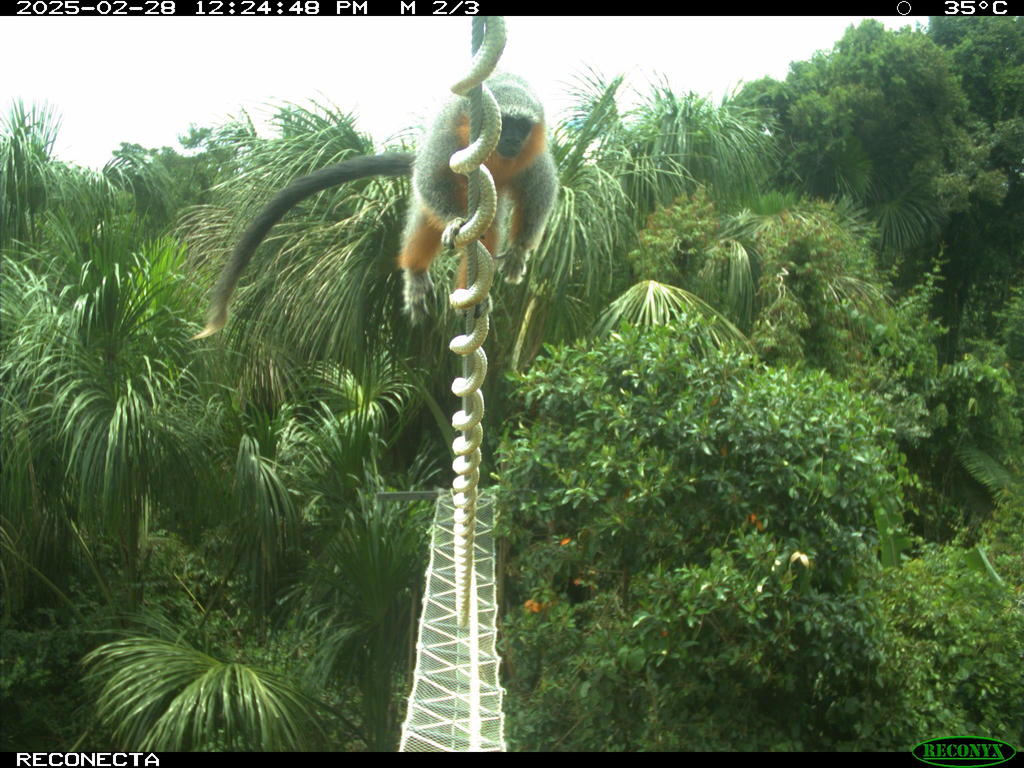
In Brazil’s Mato Grosso state, researchers have been testing canopy bridges that allow animals living in trees to cross roads without descending to the ground.
Eight bridges were installed near Alta Floresta in 2024. During the following 15 months, camera traps recorded around 15,000 wildlife crossings, including use by six primate species. No roadkill was recorded at the monitored sites during the study period.
The idea is simple but powerful.
Instead of forcing monkeys and other tree-dwelling animals onto the road, the bridges create a safe route through the canopy.
It demonstrates how relatively small conservation projects can solve very specific problems.
📸 Picture 5: Monkey crossing a rope bridge above a Brazilian Amazon road.
Alt text:Amazon monkey using a wildlife canopy bridge above a road
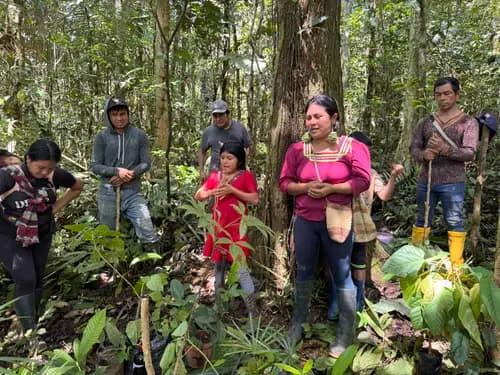
6. Conservation Is Also About Teaching the Next Generation
Protecting the Amazon cannot depend only on today’s scientists and conservation workers.
Children living in and around the rainforest will eventually become the people making decisions about these landscapes.
That is why environmental education has become part of many conservation programs.
In Ecuador, conservation activities have brought children from Amazonian communities into educational programs focused on understanding local wildlife and the connection between animals, forests and their territories.
One recent program involved children learning about species such as jaguars, harpy eagles, tapirs and other animals associated with Amazon conservation corridors.
These experiences can transform conservation from an abstract environmental topic into something personal.
When a child understands that a forest provides habitat for animals and also supports the community, protecting it can become part of everyday life.
📸 Picture 6: Children learning about Amazon wildlife during an environmental education activity.
Alt text:Children learning about Amazon rainforest wildlife and conservation
7. The Future Depends on Cooperation
Perhaps the most important lesson from current conservation work is that no single organization can save the Amazon alone.
Governments control laws and protected areas. Scientists provide research. Conservation organizations develop projects and technology. Indigenous communities contribute territorial knowledge and leadership. Local residents depend on forests and rivers for their livelihoods.
Successful conservation requires these groups to work together.
Amazon Conservation says its approach combines science, technology, local partnerships and Indigenous leadership. Its alliance across Amazonian countries reports having helped protect more than 14.6 million acres of forest through long-term conservation partnerships.
The challenges remain enormous, but these projects show that conservation is not simply about stopping destruction.
It is also about building better systems for the future.
What a Conservation Documentary Really Shows
A powerful Amazon documentary should not show only beautiful wildlife.
It should show the people behind the protection.
It should show a scientist checking a camera trap before sunrise. A community member examining a drone image. Children learning the names of animals in their forest. A monkey crossing a bridge above a busy road.
These scenes tell a different story about the Amazon.
They show that conservation is not one dramatic event. It is thousands of small decisions repeated over many years.
A protected corridor.
A camera recording a jaguar.
A community monitoring its territory.
A bridge helping a monkey cross a road.
A child discovering why the forest matters.
Each action may seem small on its own, but together they can create something much bigger.
Final Thoughts
The Amazon remains one of the most important wildlife landscapes on Earth, but protecting it requires more than simply declaring forests protected.
The conservation efforts developing across the region show a more connected approach—one that combines science, technology, Indigenous knowledge, education and cooperation.
New corridors can reconnect fragmented habitats. Camera traps can reveal hidden wildlife. Drones and satellites can help detect threats. Canopy bridges can give animals safer routes across roads.
Most importantly, local communities are increasingly becoming part of the conservation story rather than simply observers of it.
The Amazon’s future is still uncertain, but these efforts provide reasons for hope.
The rainforest may be enormous, but its protection begins with individual people, individual communities and individual actions.
And perhaps the most powerful conservation story is not about what we have already saved—it is about what we can still protect.
Image SEO Summary
Image
Suggested File Name
Alt Text
1
amazon-conservation-corridor.jpg
Connected Amazon rainforest landscape protected for wildlife and local communities
2
indigenous-amazon-conservation.jpg
Indigenous community members participating in Amazon rainforest conservation
3
amazon-wildlife-camera-trap.jpg
Camera trap monitoring wildlife in the Amazon rainforest
4
amazon-conservation-drone.jpg
Conservation worker using a drone to monitor the Amazon rainforest
5
amazon-wildlife-canopy-bridge.jpg
Amazon monkey using a wildlife canopy bridge above a road
6
amazon-environmental-education.jpg
Children learning about Amazon rainforest wildlife and conservation
7
amazon-rainforest-protection.jpg
Conservation landscape protecting Amazon rainforest habitat and wildlife
Strong Alternative Headline
Saving the Amazon: 7 Powerful Conservation Efforts Giving Rainforest Wildlife a Future
Suggested Featured Image Alt Text
Conservation workers protecting Amazon rainforest habitat and wildlife
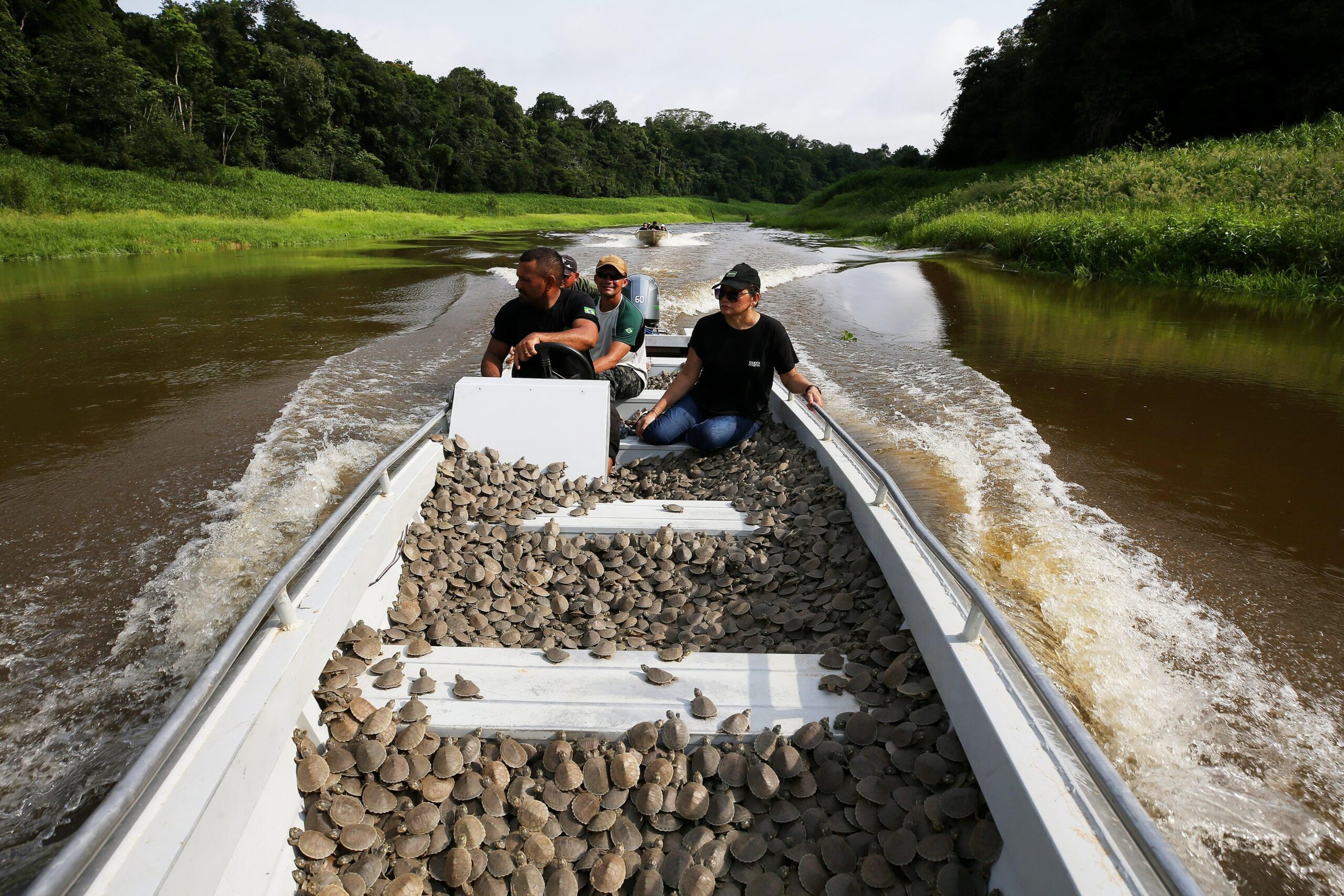
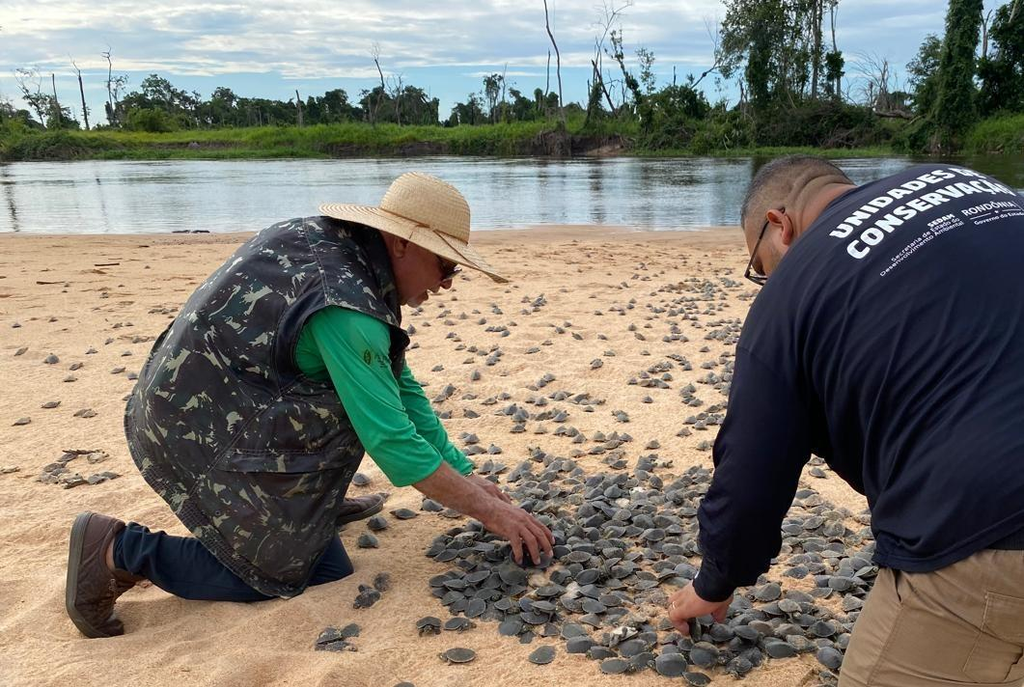
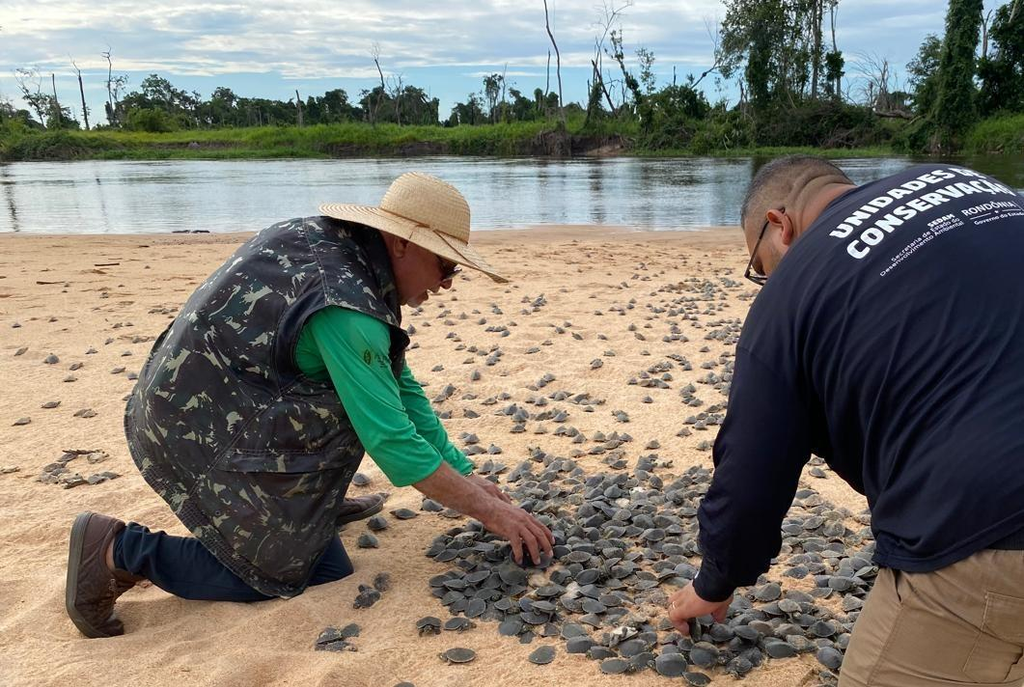
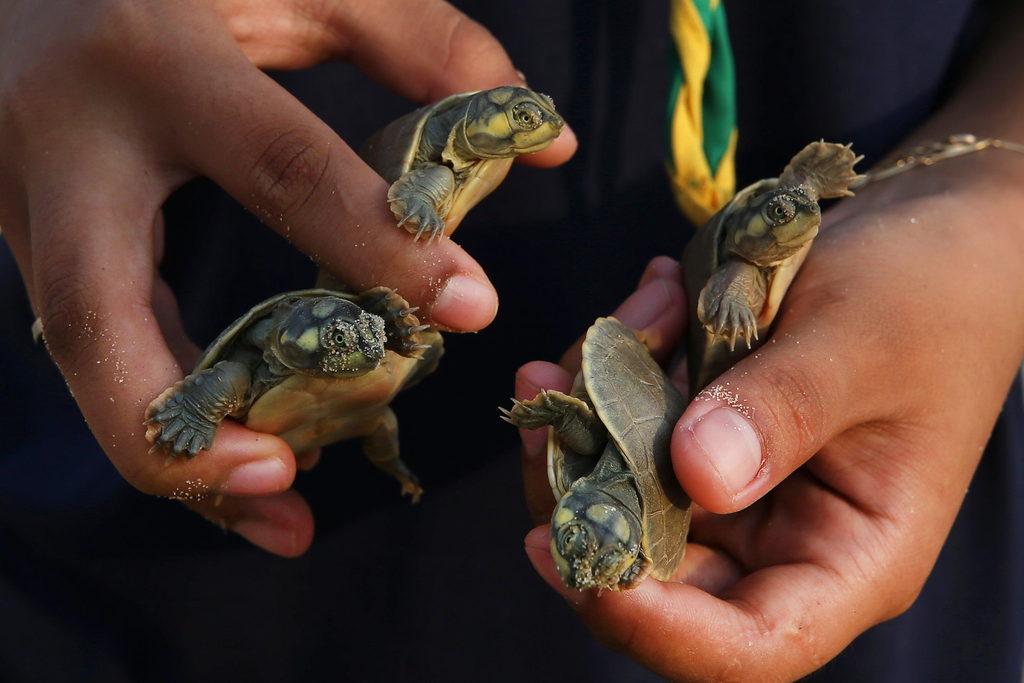
Amazon River Turtle Listed as Endangered: A Warning for One of the Rainforest’s Most Important Reptiles
Category: Amazon Wildlife News Tags: Amazon wildlife news, Amazon rainforest 2026, July 2026 news, Amazon river turtle, endangered animals, turtle conservation, Brazil wildlife, Amazon River, rainforest conservation, wildlife protection Focus Keyphrase: Amazon river turtle endangered 2026 Suggested URL Slug:amazon-river-turtle-endangered-2026 Meta Description: Brazil has listed the Amazon river turtle as endangered for the first time in July 2026. Discover why its population is declining and what conservationists are doing to protect it.
A New Warning From the Amazon
Deep in the rivers and floodplains of the Amazon lives a reptile that has quietly played an important role in the rainforest ecosystem for generations.
The Amazon river turtle, also known as the six-tubercled Amazon River turtle, has long been part of life along the region’s waterways.
But in July 2026, its situation received a major warning.
Brazil officially listed the species as endangered for the first time, following evidence that its population has fallen by roughly half.
The decision is more than a change in conservation status.
It is a signal that one of the Amazon’s freshwater animals is facing increasing pressure from human activity.
And because the turtle depends on healthy rivers, beaches and floodplain forests, protecting it means protecting an entire river ecosystem.
1. Meet the Amazon River Turtle
The six-tubercled Amazon River turtle is a freshwater species found in parts of the Amazon basin.
It spends much of its life associated with rivers and surrounding wetlands.
Like many Amazon turtles, it is closely connected to the seasonal rhythm of the river.
When water levels change, sandbanks and river beaches can become important places for nesting.
This relationship with the river makes the turtle particularly vulnerable to changes in its environment.
A healthy river is not simply a place where the turtle swims.
It is also where the animal feeds, moves, reproduces and raises the next generation.
Picture 1 — Alt Text: “Six-tubercled Amazon River turtle swimming in a freshwater river”
2. Why the Population Decline Is So Serious
According to recent reporting, the turtle’s population has been reduced by approximately half.
That is a major decline for a species that was once much more common in parts of its range.
Population declines can happen for several reasons.
One important problem is the collection of turtles and their eggs.
Because turtle eggs are concentrated in nesting areas, they can be especially vulnerable during the breeding season.
Adult turtles may also be captured for food.
When too many eggs and adults are removed, fewer young turtles survive to adulthood.
The result can be a slow population decline that may not be obvious until the damage has become serious.
Picture 2 — Alt Text: “Amazon river turtle resting near a sandy riverbank”
3. The Amazon Riverbank Can Become a Nursery
One of the most fascinating parts of the turtle’s life occurs on Amazon riverbanks.
During the appropriate seasonal conditions, females come onto sandy areas to lay eggs.
These nesting sites may look simple.
A stretch of sand beside a huge river might appear almost empty.
But beneath the surface, it can contain the future of an entire turtle population.
After the eggs hatch, tiny turtles must make their way toward the water.
This is a dangerous stage of life.
Predators can eat young turtles, while human activity can disturb nesting beaches.
Protecting these seemingly ordinary riverbanks can therefore be extremely important.
Picture 3 — Alt Text: “Amazon river turtle nesting on a sandy riverbank during breeding season”
4. Young Turtles Face a Dangerous Journey
For a hatchling, reaching the river is only the beginning.
A young turtle is small and vulnerable.
It must find food, avoid predators and survive changing river conditions.
Only a fraction of hatchlings will eventually become adults.
This is normal in many wildlife populations.
But when humans also collect eggs or capture turtles, the pressure can become much greater.
That is why conservationists often focus heavily on nesting beaches.
If more hatchlings survive their earliest stages, the population has a better chance of recovering over time.
Picture 4 — Alt Text: “Young Amazon river turtle hatchling moving toward the river”
5. Why Local Communities Matter
The Amazon is not an empty wilderness.
Millions of people live throughout the wider Amazon region, including Indigenous peoples and river communities whose lives are closely connected to the rivers.
For generations, turtles have been part of local food traditions and river life.
That means successful conservation cannot simply be about creating rules from far away.
Local communities need to be part of the solution.
Community monitoring, protection of nesting beaches and sustainable fishing and harvesting practices can help wildlife while respecting people’s livelihoods.
When local residents become guardians of nesting areas, they can notice changes that outside researchers might never see.
Picture 5 — Alt Text: “Amazon river community monitoring turtle nesting habitat”
6. Protecting the Turtle Means Protecting the River
The new endangered status also highlights a bigger environmental issue.
The turtle is not isolated from its ecosystem.
It depends on rivers, sandbanks, wetlands and surrounding forests.
When these habitats are damaged, the turtle can suffer.
Pollution can affect aquatic environments.
Changes to river systems can alter nesting areas.
Human activity can disturb beaches where turtles reproduce.
And the loss of surrounding forest can change the ecological conditions of the entire landscape.
Protecting the turtle therefore requires more than saving individual animals.
It requires protecting the places where they live.
Picture 6 — Alt Text: “Healthy Amazon rainforest river providing habitat for freshwater turtles”
7. An Endangered Listing Can Change the Future
Being officially recognized as endangered can strengthen conservation attention.
It can encourage authorities and conservation organizations to monitor populations more carefully, protect important habitat and address threats.
For a species that has experienced such a significant decline, that attention is urgently needed.
The July 2026 announcement does not mean the Amazon river turtle is doomed.
Quite the opposite.
It provides an opportunity to increase protection before the population falls even further.
Many conservation success stories begin with a similar moment: scientists identify a serious decline, governments respond, and communities become part of the recovery effort.
Picture 7 — Alt Text: “Amazon river turtle conservation project protecting endangered freshwater turtles”
Why This Turtle Matters to the Amazon
It is easy to overlook freshwater turtles.
They do not receive the same attention as jaguars, giant eagles or river dolphins.
But turtles are part of the ecological machinery of the Amazon.
They interact with aquatic environments and food webs and contribute to the movement of nutrients and seeds.
Their presence also tells us something about the health of the rivers they depend on.
When a common river animal begins disappearing, it can be a warning that larger environmental changes are taking place.
The turtle’s decline should therefore concern more than turtle lovers.
It should concern anyone interested in the future of the Amazon.
A Larger Warning for Amazon Wildlife
The Amazon is experiencing many environmental changes at once.
Recent July 2026 reporting has highlighted declining wildlife populations, habitat fragmentation, drought concerns and increasing pressure on Amazon rivers.
At the same time, there are encouraging conservation developments.
In July, Ecuador announced a new conservation corridor linking more than 173,000 hectares of Amazon rainforest and connecting Yasuní National Park, Limoncocha Biological Reserve and Cuyabeno Wildlife Reserve.
These developments show that conservation can move in both directions.
Some species are becoming more threatened.
At the same time, governments and conservation groups are creating new ways to protect habitat.
The future depends on which trend becomes stronger.
What Can Be Done?
Protecting the Amazon river turtle will require several actions working together.
Protect nesting beaches
Important nesting areas need protection during the breeding season.
Reduce illegal collection
Removing excessive numbers of adults and eggs can seriously damage populations.
Monitor populations
Scientists and local communities need reliable information about turtle numbers and nesting success.
Protect rivers
Clean water and healthy river ecosystems are essential.
Support local communities
Conservation programs are more likely to succeed when local people benefit from and participate in protecting wildlife.
Final Thoughts
The July 2026 decision to recognize the Amazon river turtle as endangered is a serious warning.
A creature that has lived alongside Amazon rivers for generations is now facing a future that is far less certain.
But the story does not have to end with decline.
The turtle still has nesting beaches.
The rivers still flow.
The rainforest still provides habitat.
And people are beginning to pay greater attention to what is happening.
The biggest lesson may be that wildlife conservation often begins with noticing the animals that are easiest to overlook.
The Amazon river turtle may not be the rainforest’s most famous animal.
But its survival is connected to the health of the rivers, wetlands and forests that support countless other species.
Saving the Amazon’s quiet creatures may be one of the best ways to protect the entire ecosystem they call home.
15,000 Safe Crossings: How Tiny Bridges Are Changing the Future of Amazon Wildlife
Category: Amazon Wildlife News Tags: Amazon wildlife news, Amazon rainforest 2026, August 2026 news, wildlife bridges, canopy bridges, animal conservation, Amazon animals, Brazil rainforest, wildlife crossings, rainforest conservation Focus Keyphrase: Amazon wildlife news August 2026 Suggested URL Slug:amazon-wildlife-canopy-bridges-august-2026 Meta Description: New August 2026 Amazon wildlife news reveals how canopy bridges have helped animals make 15,000 safe road crossings without a recorded roadkill at monitored sites.
15,000 Safe Crossings: How Tiny Bridges Are Changing the Future of Amazon Wildlife
There is a remarkable new conservation story coming from the Amazon in August 2026.
Instead of building enormous highways, fences or expensive concrete structures, conservationists are using something surprisingly simple: rope bridges suspended high above roads.
The idea sounds almost too simple.
But new monitoring results from Brazil suggest that these bridges can make a major difference. Camera traps recorded approximately 15,000 crossings by tree-dwelling wildlife over 15 months, with no roadkill recorded at the monitored bridge locations.
For animals that normally spend their lives in the forest canopy, the bridges provide a safe way to cross roads without coming down to ground level.
It could become an important new tool for protecting Amazon wildlife.
1. A Road Can Become a Wall for a Tree-Dwelling Animal
Imagine living your entire life in the treetops.
Your home is connected by branches. You travel from tree to tree. You search for fruit, leaves and insects above the ground.
Then suddenly, a road cuts through the forest.
For a human, crossing the road may seem easy.
For a monkey or another canopy animal, however, the road can create a dangerous gap.
Many tree-dwelling animals are reluctant to descend to the ground, where they may encounter vehicles, predators or unfamiliar habitat.
This is where canopy bridges come in.
The bridges recreate a connection between trees, allowing animals to remain above the traffic.
Picture 1 — Alt Text: “Rope canopy bridge connecting Amazon rainforest trees above a road”
2. Thousands of Animals Have Already Used the Bridges
Researchers installed a series of rope canopy bridges near Alta Floresta in northern Mato Grosso, Brazil.
Camera traps were then used to record wildlife activity around the structures.
The results were remarkable.
Over approximately 15 months, cameras recorded 15,000 wildlife crossings by arboreal animals. Most importantly, researchers reported no roadkill at the monitored bridge locations.
That number changes the way we should think about wildlife crossings.
A bridge does not have to be enormous to be useful.
Sometimes a few ropes between two trees can reconnect a broken piece of forest.
Picture 2 — Alt Text: “Amazon monkey crossing a rope canopy bridge above a forest road”
3. Monkeys Are Among the Main Beneficiaries
Several species of primates have been observed using canopy bridges.
This is particularly important because monkeys can depend heavily on continuous tree cover.
A road can divide their habitat into separate pieces.
If animals are unable to cross safely, groups can become isolated from one another and from important feeding areas.
The bridges provide an alternative route.
Instead of climbing down and attempting to cross the road, an animal can move upward, step onto the bridge and continue through the canopy.
For a monkey, the solution may feel completely natural once it becomes familiar.
Picture 3 — Alt Text: “Amazon monkey safely crossing a wildlife canopy bridge between trees”
4. Some Animals Need Time to Trust a New Bridge
One of the fascinating discoveries from canopy-bridge research is that animals do not necessarily use a new bridge immediately.
Some species can be extremely cautious.
Researchers have observed animals examining new bridges before deciding whether they are safe.
This makes sense.
A rope structure hanging between trees is not something an animal has encountered throughout its evolutionary history.
The first reaction may be uncertainty.
But once animals learn that the bridge provides a safe route, they can begin using it repeatedly.
Different animals may also prefer different bridge designs.
Some primates may feel more comfortable with additional support, while other tree-dwelling mammals may use simpler structures.
Picture 4 — Alt Text: “Wild Amazon animal approaching a newly installed canopy bridge”
5. The Bridges Can Protect More Than One Species
The greatest value of a canopy bridge is that it does not necessarily help only one species.
Several kinds of arboreal mammals can potentially use the same connection.
Monkeys, opossums, kinkajous and other tree-dwelling animals have been recorded using canopy crossings in Amazon conservation projects.
This makes the bridges particularly interesting from an ecological perspective.
A single structure can become a small highway through the treetops.
Instead of one animal making one journey, many animals can use the same route repeatedly.
In this sense, the bridge becomes part of the forest’s infrastructure.
Picture 5 — Alt Text: “Multiple Amazon rainforest animals using canopy bridges to cross roads safely”
6. Why This Matters as Roads Expand
Roads are important for people.
They connect communities, transport food and goods, and support economic activity.
But roads can also divide wildlife habitat.
This creates one of the difficult challenges of modern conservation: how can humans continue using landscapes while reducing the danger to wildlife?
Canopy bridges offer one possible answer.
Instead of removing roads completely, conservationists can create safe crossing points where they are most needed.
That approach could become increasingly important as roads and other infrastructure fragment forest landscapes.
The August 2026 findings provide encouraging evidence that relatively simple structures can make a measurable difference.
Picture 6 — Alt Text: “Amazon forest road with wildlife canopy bridge connecting both sides”
7. A Small Bridge Can Become a Lifeline
The most powerful part of this story is not the number 15,000.
It is what the number represents.
Every recorded crossing means an animal successfully moved from one side of a road to another.
That could mean reaching food.
It could mean returning to a sleeping area.
It could mean finding another group of its species.
It could mean avoiding a dangerous encounter with traffic.
For wildlife, a connection that looks tiny to humans can be enormously important.
The forest may appear continuous from above, but roads can create invisible barriers for animals living among the trees.
A rope bridge can remove part of that barrier.
A New Idea for Amazon Conservation
The Amazon faces enormous conservation challenges.
Deforestation, climate change, illegal mining, pollution and habitat fragmentation all create pressure on wildlife.
No single solution can solve these problems.
But canopy bridges demonstrate an important principle: conservation does not always require enormous projects.
Sometimes a carefully designed intervention in exactly the right location can help thousands of animals.
Research from other Amazon conservation projects has similarly shown that canopy bridges can reconnect habitats for tree-living animals such as monkeys, sloths, porcupines and kinkajous.
The new 2026 results add another encouraging example.
What Could Happen Next?
Researchers will need to continue monitoring the bridges to determine how different species use them over longer periods.
Questions remain.
Which animals use the bridges most frequently?
Do young animals learn to use them from adults?
Which bridge designs work best?
How many bridges are needed along a road?
And can the approach be expanded to other parts of the Amazon?
Answering these questions could help conservationists decide where similar structures would provide the greatest benefit.
If the method continues to prove effective, canopy bridges could become an increasingly common part of road planning in rainforest regions.
The Bigger Amazon Story
The August 2026 canopy-bridge news arrives at an important time.
Scientists are warning that Amazon forests are facing increasing pressure from deforestation and warming, while other research shows that portions of the forest can recover when given the opportunity.
At the same time, conservationists are working to reconnect fragmented habitats.
In Ecuador, for example, a new conservation corridor is being developed to reconnect important Amazon rainforest areas that have been divided by deforestation.
These projects share the same basic idea:
Wildlife needs connected habitat.
Whether the connection is a huge conservation corridor or a small rope bridge above a road, maintaining movement between forest areas can be critical.
Final Thoughts
The Amazon is often associated with enormous trees, powerful rivers and spectacular animals.
But sometimes the most hopeful wildlife stories are surprisingly small.
A few ropes.
Two trees.
One road.
And thousands of animals finding a safe way across.
The latest August 2026 results showing around 15,000 recorded crossings without a roadkill at the monitored sites demonstrate how creative conservation can help wildlife adapt to a landscape increasingly shaped by people.
The Amazon still faces enormous challenges.
But this story offers an important reminder: protecting wildlife is not always about choosing between people and nature.
Sometimes, with the right design, we can build a way for both to share the same landscape.
And high above an Amazon road, a simple rope bridge may be giving thousands of animals exactly that chance.
Meta Description: Discover seven fascinating Amazon animal stories featuring manatees, giant river otters, camouflage experts, unusual snakes, rainforest frogs, and wildlife adapted to seasonal floods.
7 Strange Amazon Animal Stories That Show How Wild Nature Can Be
The Amazon Rainforest is often imagined as a place filled with giant predators and colorful birds. But some of its most fascinating stories belong to animals that quietly survive in unusual ways.
Deep inside the rainforest, mammals have adapted to life underwater, birds disappear against tree branches, frogs protect their eggs from danger, and entire animal communities change when rivers rise.
These stories reveal why the Amazon remains one of the world’s most extraordinary ecosystems.
1. The Amazon Manatee That Lives on Plants
Alt Text: Amazonian manatee swimming through calm freshwater vegetation.
The Amazonian manatee is a large aquatic mammal that spends much of its life underwater.
Unlike many large predators of the Amazon, it is a peaceful herbivore.
It feeds on aquatic vegetation and can consume impressive quantities of plants.
Its body is perfectly adapted to river life, with a rounded shape and powerful tail used for movement.
During periods when water levels fall, manatees can travel between different parts of the river system in search of food.
Unfortunately, their slow movements and dependence on freshwater habitats make them vulnerable to human activities.
2. The Otter Babies That Learn by Watching
Alt Text: Giant river otter mother swimming with young pups in the Amazon.
Young giant river otters do not instantly become expert hunters.
They learn important skills by watching adults.
Parents teach youngsters how to locate fish, move through rivers, and interact with other members of the family.
This learning period is essential because catching fast-moving fish requires practice.
A young otter may spend months developing the coordination needed to become an efficient hunter.
The Amazon therefore has its own form of wildlife education—passed from one generation to the next.
3. The Snake That Uses Color as a Warning
Alt Text: False coral snake moving through Amazon rainforest vegetation.
The Amazon contains many brightly colored snakes.
Some species display red, yellow, black, or orange bands that can make predators hesitate.
The false coral snakes are especially interesting because some resemble highly venomous coral snakes.
This similarity can provide protection through mimicry.
A predator that has learned to avoid dangerous snakes may hesitate before attacking an animal with a similar appearance.
In the Amazon, looking dangerous can sometimes be as valuable as actually being dangerous.
4. The Bird That Pretends to Be a Broken Branch
Alt Text: Potoo bird perfectly camouflaged against a dead Amazon tree branch.
The potoo is one of the rainforest’s greatest camouflage experts.
During the daytime, it chooses a broken branch and freezes.
Its body shape, feather pattern, and posture can make it almost indistinguishable from the surrounding wood.
Even its eyes can be difficult to notice.
At night, however, the bird becomes active and hunts flying insects.
Its transformation from “dead branch” to nighttime predator is one of the Amazon’s most remarkable examples of camouflage.
5. The Monkey That Uses Its Voice to Control Territory
Alt Text: Howler monkey sitting high in the Amazon rainforest canopy.
The howler monkey has an extraordinary voice.
Its deep calls can travel long distances through the forest.
Rather than constantly fighting neighboring groups, howler monkeys can use vocal displays to communicate where their territory begins and ends.
This saves energy and reduces the risk of physical conflict.
At dawn, several groups may call back and forth across the forest, creating one of the most recognizable sounds of the Amazon.
6. The Frog Eggs That Survive Above the Ground
Alt Text: Amazon rainforest frog eggs attached to a leaf above a stream.
For many frogs, laying eggs directly in a river or pond is dangerous.
Some Amazon species have developed alternative strategies.
They attach eggs to vegetation above water, where they remain protected from many aquatic predators.
When the young develop sufficiently, they can fall or move into the water below.
A simple leaf can therefore become a temporary nursery suspended above the rainforest floor.
7. When Fish Swim Through the Trees
Alt Text: Fish swimming between trees in a flooded Amazon forest.
During the rainy season, rising rivers can flood enormous areas of forest.
The transformation is extraordinary.
Fish swim between tree trunks and feed on fruits that fall from branches.
Birds and mammals explore newly created waterways.
Aquatic animals gain access to areas that were previously dry forest.
When the flood eventually disappears, nutrients and seeds remain behind.
For many Amazon species, the annual flood is not merely a natural event—it is an essential part of their life cycle.
A Forest That Changes Throughout the Year
The Amazon is never exactly the same.
During dry periods, animals may concentrate around shrinking rivers and remaining water sources.
When rains arrive, rivers expand and connect isolated habitats.
This constant cycle has shaped the behavior and evolution of countless species.
Hidden Lessons From Amazon Wildlife
These animals demonstrate several powerful survival strategies:
Camouflage: Potoos disappear against branches.
Mimicry: Some snakes resemble dangerous species.
Communication: Howler monkeys use sound to maintain territories.
Learning: Young otters develop hunting skills by observing adults.
Adaptation: Flood-dependent animals adjust to dramatic changes in water levels.
Why the Amazon Needs Protection
The survival of these animals depends on healthy forests and rivers.
Deforestation, habitat fragmentation, pollution, hunting pressure, and changes to river systems can affect wildlife in ways that are not immediately visible.
Protecting the Amazon means protecting both the land and the waterways that connect its ecosystems.
Final Thoughts
The Amazon Rainforest continues to surprise us with extraordinary wildlife.
A peaceful manatee can live beneath the water. Young otters learn from their parents. A snake can survive by looking like a dangerous relative. A bird can disappear against a tree branch, while a frog can raise its young above a river.
And every year, rising water can transform the forest into a temporary underwater world.
These stories show that the Amazon is not simply a rainforest. It is a constantly changing living system where every animal has evolved its own remarkable way to survive.
📸 WordPress Image SEO
#
File Name
Alt Text
1
amazonian-manatee.jpg
Amazonian manatee swimming through freshwater vegetation
2
giant-river-otter-pups.jpg
Giant river otter mother swimming with young pups
3
false-coral-snake-amazon.jpg
False coral snake moving through Amazon rainforest vegetation
4
amazon-potoo-camouflage.jpg
Potoo bird camouflaged against a dead rainforest branch
5
amazon-howler-monkey.jpg
Howler monkey sitting high in the Amazon rainforest canopy
6
amazon-frog-eggs-leaf.jpg
Amazon frog eggs attached to a leaf above a rainforest stream
7
flooded-amazon-forest-fish.jpg
Fish swimming between trees in a seasonally flooded Amazon forest
Featured Image Alt Text: Capybara calmly resting among different animal species near water.
The Animal That Makes Friends With Everyone: Why Even Crocodiles Rarely Fight With the Capybara
Most animals have enemies.
Some defend territory. Others compete for food. Many avoid strangers entirely.
But one animal seems to ignore all those rules.
Meet the capybara—the world’s largest rodent and possibly one of nature’s most peaceful creatures.
Across South America, capybaras have become famous for something unusual: they are regularly seen relaxing beside birds, sharing space with monkeys, tolerating cats and dogs, and sometimes even sitting surprisingly close to crocodilians without conflict.
It almost looks impossible.
How does one animal seem to get along with nearly everyone?
A Giant Rodent With an Unexpected Personality
Capybaras live in wetlands, rivers, and grassy areas where many other species gather.
Unlike highly territorial animals, capybaras are social and calm.
They usually live in groups and spend much of their day eating grasses, resting, swimming, and staying alert for danger.
Because they are herbivores, they do not compete with predators for food.
That alone reduces many possible conflicts.
Their relaxed body language also appears to make other animals less defensive.
Why Birds Love Capybaras
One of the most common wildlife scenes shows birds standing directly on capybaras.
Small birds often search for insects around their bodies or simply use them as safe resting places.
Capybaras rarely react aggressively.
Instead of chasing visitors away, they usually continue resting.
This creates the appearance of an open invitation.
The Strange Relationship With Crocodilians
Perhaps the most surprising images show capybaras sitting near crocodilians.
In South America, capybaras sometimes share water environments with caimans.
To people, it looks like an impossible friendship.
But reality is more complicated.
Capybaras remain cautious and stay aware of danger.
At the same time, crocodilians do not attack constantly. Predators conserve energy and often ignore animals unless hunting conditions are favorable.
Because capybaras are calm and predictable, peaceful moments can happen—and photographers capture them.
That does not mean capybaras are immune from predation.
It simply means nature is often more peaceful than people expect.
Friends Across Species
Capybaras have become famous for accepting company from many animals.
Nature’s Rarest Wonders: 7 Animals Born With Astonishing Colors That Defy Their Species
Nature’s Rarest Wonders: 7 Animals Born With Astonishing Colors That Defy Their Species
Nature is full of surprises. While most animals are born with colors that help them survive in their environments, some are born with extraordinary appearances that make them look completely different from others of their species.
These unusual colors are often caused by rare genetic mutations that affect pigmentation. In some cases, the mutation removes color entirely. In others, it creates darker, brighter, or even completely unexpected shades.
Although these animals may appear magical, their unique coloration can make life more difficult. They often struggle to camouflage themselves, avoid predators, or find mates.
Here are seven fascinating examples of animals born with colors so unusual that they seem almost unreal.
1. The White Lion: A Ghost of the Savannah
Lions are normally golden-brown, allowing them to blend into dry grasslands while hunting.
However, a rare genetic condition sometimes produces white lions.
Unlike albino animals, white lions still have normal eye and skin pigmentation. Their pale appearance is caused by a recessive gene known as leucism, which reduces pigment in the fur.
White lions are incredibly rare in the wild. Their bright coats make camouflage difficult, especially during hunts.
Despite these challenges, white lions remain among the most beautiful and mysterious animals ever documented.
Many people mistake them for mythical creatures when they first see photographs.
2. The Pink Grasshopper That Looks Like a Toy
One of the strangest color mutations ever recorded occurs in grasshoppers.
While most grasshoppers are green or brown, a tiny percentage are born bright pink.
Scientists believe the unusual color results from a genetic condition called erythrism, which causes excessive red pigmentation.
Pink grasshoppers are extremely rare, with some estimates suggesting only one in several hundred thousand develops this coloration.
Because they stand out dramatically against vegetation, they are easier for birds and predators to spot.
Even so, every time a pink grasshopper is discovered, photographs quickly spread across the internet because of its incredible appearance.
3. The Black Penguin That Shocked Researchers
Penguins are famous for their black-and-white coloring.
Occasionally, however, a rare condition called melanism causes some penguins to develop unusually dark feathers.
Instead of displaying the classic tuxedo appearance, melanistic penguins may appear almost entirely black.
Wildlife researchers have documented a small number of these unusual birds in Antarctica and South America.
The condition occurs when the body produces excessive amounts of melanin, the pigment responsible for dark coloration.
These rare penguins often attract attention from both scientists and wildlife photographers due to their extraordinary appearance.
4. The White Giraffe That Became a Legend
Few animals have attracted as much global attention as the rare white giraffes discovered in East Africa.
Their pale appearance is caused by leucism, a genetic condition that reduces skin pigmentation while maintaining normal eye color.
Unlike ordinary giraffes, these animals appear almost completely white.
When one of these giraffes was first photographed, many people believed the images had been digitally altered.
However, the animals were real.
Conservationists reported several sightings over the years, turning the white giraffe into an international wildlife sensation.
Their unusual appearance made them easy to recognize, but unfortunately, it also made them vulnerable to human threats.
5. The Golden Zebra That Looks Nothing Like a Zebra
Zebras are known worldwide for their distinctive black-and-white stripes.
Yet rare genetic mutations can dramatically alter this familiar pattern.
A condition known as amelanism reduces dark pigmentation, creating zebras with golden-brown stripes instead of black ones.
The result is a striking animal that appears almost golden under sunlight.
These rare zebras have been observed in parts of Africa and occasionally in wildlife reserves.
Researchers believe the mutation is extremely uncommon.
To many observers, golden zebras look more like a completely different species than a variation of an ordinary zebra.
6. The Albino Deer That Seems Almost Magical
White deer have fascinated people for centuries.
Legends and folklore often describe them as symbols of luck, mystery, or spiritual significance.
In reality, albino deer owe their appearance to a genetic mutation that prevents the production of melanin.
Unlike leucistic animals, albino deer typically have pink eyes and pink noses.
Because their coloration makes camouflage difficult, they face greater risks from predators.
Despite these challenges, sightings of albino deer continue to captivate wildlife enthusiasts around the world.
Many communities even consider them local treasures.
7. The Bright Orange Lobster That Defied the Odds
Most lobsters are dark green, brown, or bluish while alive.
A bright orange lobster is extraordinarily rare.
Scientists estimate the odds of finding one may be as low as one in 30 million.
The unusual coloration results from a genetic mutation that alters pigment production.
Because orange lobsters are highly visible, they would struggle to hide from predators in the wild.
Fortunately, many discovered orange lobsters are transferred to aquariums rather than being sold for food.
Their vibrant color makes them instant attractions wherever they are displayed.
Why Do These Strange Colors Happen?
Most unusual animal colors result from genetic mutations affecting pigmentation.
Some of the most common conditions include:
• Albinism – Complete absence of melanin, producing white skin, fur, feathers, and often pink eyes.
• Leucism – Partial loss of pigmentation while maintaining normal eye color.
• Melanism – Excessive dark pigmentation, causing animals to appear much darker than normal.
• Erythrism – Increased red pigmentation, producing reddish or pink coloration.
These conditions are usually rare and occur naturally in wild populations.
The Challenges of Being Different
Although these animals look extraordinary, their unusual appearance often creates survival challenges.
Camouflage is one of the most important defenses in nature.
Animals with unusual colors frequently stand out against their surroundings.
This makes them easier for predators to locate.
In some species, unusual coloration can also affect social interactions and mating opportunities.
However, many of these animals survive and thrive despite the challenges they face.
Their existence demonstrates the incredible diversity of life on Earth.
Nature’s Living Masterpieces
From white lions and white giraffes to pink grasshoppers and orange lobsters, these remarkable animals remind us that nature is capable of producing astonishing surprises.
Every rare color mutation tells a unique story about genetics, evolution, and survival.
Although many of these animals are seen only rarely, their photographs continue to amaze millions of people around the world.
They serve as living reminders that even in a world filled with familiar creatures, nature still has the power to surprise us.
And sometimes, the rarest wonders are the ones that look completely different from everyone else around them.
Additional Images for the Article
Image 1 – White Lion
Alt Text: Rare white lion displaying an unusual genetic color variation.
Image 2 – Pink Grasshopper
Alt Text: Rare pink grasshopper caused by a genetic pigmentation mutation.
Image 3 – Black Penguin
Alt Text: Unusual melanistic penguin with mostly black feathers.
Image 4 – White Giraffe
Alt Text: Extremely rare white giraffe standing in the African savannah.
Image 5 – Golden Zebra
Alt Text: Rare golden zebra with brownish stripes instead of black.
Image 6 – Albino Deer
Alt Text: Albino deer with white fur and pink eyes in a forest.
Image 7 – Orange Lobster
Alt Text: Extremely rare orange lobster caused by a genetic mutation.
This Crab Doesn’t Build a Home—It Steals a Snail Shell and Lives Inside It
Imagine searching for a house not by building one—but by finding an abandoned shell and moving in.
That’s exactly how one of the ocean’s most unusual animals survives.
Hermit crabs are famous for using empty snail shells as portable homes. Unlike most crabs, their bodies are not fully protected by a hard outer shell. Instead, they depend on abandoned snail shells as mobile shelters, carrying their homes everywhere they go.
This strange lifestyle has turned hermit crabs into one of nature’s most fascinating examples of adaptation and survival.
Why Hermit Crabs Need Borrowed Homes
Most crabs have thick, armored bodies that protect them from predators and rough environments.
Hermit crabs are different.
Only the front part of their body is strongly protected. Their soft, curved abdomen remains vulnerable.
To solve this problem, evolution created an unusual strategy.
Hermit crabs search for empty snail shells and carefully move inside. Their curved bodies fit naturally into spiral interiors, creating a surprisingly secure shelter.
The shell becomes more than protection—it becomes the crab’s bedroom, fortress, and transportation system.
Without shells, many hermit crabs would struggle to survive.
The Great Shell Hunt
Finding the perfect shell is not easy.
Hermit crabs spend large portions of their lives evaluating potential homes.
A shell must be:
Large enough to fit comfortably
Light enough to carry
Strong enough to resist predators
Shaped correctly for balance and movement
Crabs inspect shells carefully before committing.
They rotate around openings, test the interior using their claws, and sometimes enter partially before deciding.
If a shell feels wrong, they quickly move on.
A poor shell choice may reduce movement speed or increase vulnerability.
Real Estate Competition Underwater
Suitable shells are valuable.
In some environments, shell availability becomes so limited that competition intensifies.
Researchers have observed hermit crabs gathering in groups whenever an empty shell appears.
Sometimes a chain of crabs forms—smallest to largest—waiting for a shell exchange.
When one crab upgrades to a larger shell, another immediately occupies the abandoned one, creating an orderly housing market beneath the sea.
This phenomenon is often called a “vacancy chain.”
Instead of fighting constantly, many crabs benefit from timing and opportunity.
Moving Day: One of Nature’s Fastest Decisions
Changing shells is risky.
During the transfer, a hermit crab briefly exposes its soft body.
Predators such as fish and octopuses may attack during these vulnerable moments.
Because of this danger, shell changes happen incredibly fast.
The crab positions both shells close together and performs a rapid switch that can take only seconds.
This quick relocation reduces exposure and increases survival.
Scientists studying shell exchanges continue discovering how accurately crabs judge shell size and quality.
More Than Protection: Shells Become Ecosystems
Over time, a hermit crab’s shell may become home to more than one creature.
Small algae, marine worms, and tiny organisms sometimes attach to the outside.
Some hermit crabs even develop partnerships with sea anemones.
The anemones gain transportation and access to food scraps.
The crab gains additional defense because anemones possess stinging cells that discourage predators.
What begins as a discarded snail shell can eventually become a tiny moving ecosystem.
Growing Means Constantly Moving
Hermit crabs never stop growing.
As they increase in size, their shells eventually become too small.
This means they must repeatedly search for larger homes throughout life.
Young crabs may switch frequently.
Older individuals can become extremely selective.
Growth creates constant pressure to find better housing.
In areas where snail populations decline or shells become scarce, hermit crab survival may also decrease.
Their entire lifestyle depends on the availability of abandoned shells.
7 Amazing Stories of Animals Rescuing Other Animals
Nature is often portrayed as a place where only the strongest survive. We frequently hear stories about predators hunting prey and animals competing for food, territory, and survival. However, hidden among these harsh realities are remarkable moments that reveal a different side of the animal kingdom.
Scientists and wildlife observers have documented surprising cases in which animals helped, protected, adopted, or even rescued members of completely different species. These unusual encounters challenge our understanding of animal behavior and suggest that compassion, cooperation, and empathy may be more widespread in nature than we once believed.
From giant elephants helping smaller creatures to dolphins protecting injured animals, here are seven extraordinary stories that prove kindness can sometimes cross species boundaries.
1. The Dog That Adopted Abandoned Kittens
One of the most heartwarming examples of cross-species care comes from domestic dogs that have adopted orphaned kittens.
In several documented cases, mother dogs have discovered abandoned litters of kittens and treated them as their own offspring. Instead of ignoring them, these dogs allowed the kittens to nurse, kept them warm, and protected them from danger.
Animal behavior experts believe maternal instincts can become so strong that some animals extend caregiving behavior beyond their own species. The result is often an unlikely family where puppies and kittens grow up side by side.
For many people, these stories demonstrate that nurturing instincts sometimes overcome natural species differences.
2. Dolphins Helping Injured Marine Animals
Dolphins are among the most intelligent creatures in the ocean. They live in complex social groups and frequently cooperate with one another.
Researchers have observed dolphins supporting injured dolphins near the surface so they can breathe. Even more surprisingly, there have been reports of dolphins assisting whales and other marine animals experiencing distress.
By positioning themselves beneath weakened animals and pushing them upward, dolphins may help prevent drowning.
Although scientists continue studying these behaviors, many experts believe they demonstrate advanced social awareness and cooperation.
The ocean can be a dangerous environment, but these acts reveal how some marine animals actively assist others in need.
3. The Elephant That Saved a Trapped Antelope
Elephants are famous for their intelligence and strong social bonds. However, they have also been observed helping animals outside their own herds.
Wildlife photographers have recorded elephants removing obstacles that trapped smaller animals. In one remarkable incident, an elephant reportedly used its trunk to help free a young antelope that had become stuck in mud.
Instead of walking away, the elephant carefully nudged and lifted the struggling animal until it could escape.
Researchers suggest elephants may recognize distress in other animals and react in ways that appear surprisingly compassionate.
Such behavior continues to fascinate scientists who study animal cognition and emotional intelligence.
4. A Gorilla Caring for an Injured Bird
Gorillas possess remarkable intelligence and emotional complexity.
Several wildlife observations have shown gorillas interacting gently with injured birds and other small creatures. Rather than harming vulnerable animals, some gorillas have been seen examining them carefully and displaying protective behavior.
One observation described a gorilla shielding an injured bird from other animals while remaining calm and non-threatening.
While scientists cannot know exactly what motivates such actions, these encounters suggest that great apes may possess a deeper awareness of other living beings than previously understood.
5. A Cat That Protected Baby Ducks
Cats are natural hunters, which makes stories like this particularly surprising.
In a number of unusual cases, domestic cats have formed strong bonds with ducklings and baby birds. Instead of viewing them as prey, the cats treated them as companions.
One famous example involved a cat that watched over a group of ducklings after they became separated from their mother. The cat stayed close, protected them from danger, and even slept beside them.
Animal experts believe early socialization and environmental factors may sometimes override natural hunting instincts.
The result is an unlikely friendship that seems almost impossible at first glance.
6. Lions Adopting Young Antelope
Perhaps one of the strangest examples of cross-species care comes from Africa, where researchers have occasionally witnessed lionesses adopting young antelope.
Normally, antelope are prey animals for lions. Yet in several rare cases, lionesses have protected young antelope calves rather than hunting them.
These adoptions often last only a short time because of the challenges involved, but they remain among the most extraordinary animal behavior observations ever recorded.
Scientists speculate that strong maternal instincts may sometimes trigger nurturing behavior even toward animals that would normally be considered prey.
These rare events continue to puzzle wildlife researchers around the world.
7. Whales Protecting Seals from Predators
One of the most dramatic rescue stories in the animal kingdom involves humpback whales.
Marine researchers have documented humpback whales intervening when killer whales attack seals, sea lions, and other marine animals.
In some cases, whales positioned themselves between predators and prey. Others used their massive bodies or fins to shield vulnerable animals from attack.
One famous observation described a whale lifting a seal onto its chest and keeping it out of reach of nearby predators.
Scientists are still debating why humpback whales behave this way, but the evidence suggests these interventions occur more frequently than once believed.
These encounters highlight the incredible complexity of life beneath the ocean’s surface.
Why Do Animals Help Other Species?
Animal behavior researchers have proposed several explanations for these remarkable acts:
1. Strong Parental Instincts
Some animals possess powerful caregiving instincts that occasionally extend beyond their own species.
2. Social Intelligence
Highly intelligent animals may recognize distress and respond accordingly.
3. Curiosity
Animals are naturally curious and may investigate or assist unusual situations.
4. Cooperation Benefits Survival
Helping another animal can sometimes indirectly benefit the helper’s environment or social group.
5. Empathy-Like Behavior
Although difficult to prove scientifically, some observations suggest animals may experience emotions similar to empathy.
What These Stories Teach Us
For centuries, humans viewed animals primarily as creatures driven by instinct. Modern research is revealing a far more complex picture.
Animals can form friendships, cooperate with unrelated species, care for vulnerable young, and sometimes even risk their own safety to help others. These behaviors challenge traditional assumptions about intelligence and emotion in the natural world.
While scientists continue investigating the reasons behind such actions, one thing is clear: nature contains far more compassion and cooperation than many people realize.
Conclusion
The animal kingdom is full of surprises. From dogs adopting kittens and dolphins helping injured sea creatures to elephants freeing trapped animals and whales protecting seals, these incredible stories reveal a side of nature that is often overlooked.
Although survival remains a central part of life in the wild, these extraordinary encounters remind us that kindness, cooperation, and protection can sometimes cross even the boundaries between species.
The next time you think of nature as a constant struggle for survival, remember these remarkable animal heroes—proof that even in the wild, compassion can appear in the most unexpected places.