
Six Incredible Amazon Animals: Meet the Jaguar, Green Anaconda, Capybara, River Dolphin, Harpy Eagle and Toucan
Category: Amazon Wildlife
Tags: Amazon Rainforest, Amazon Animals, Jaguar, Green Anaconda, Capybara, Amazon River Dolphin, Harpy Eagle, Toucan, Wildlife Facts, Rainforest Animals, South American Wildlife, Wildlife Conservation
Focus Keyword: Amazon wildlife animals
SEO Title: 6 Amazing Amazon Wildlife Animals You Should Know
Meta Description: Discover six incredible Amazon wildlife animals, including the jaguar, green anaconda, capybara, river dolphin, harpy eagle and toucan.
URL Slug: amazing-amazon-wildlife-jaguar-anaconda-capybara-dolphin-eagle-toucan
Six Incredible Animals That Show the Amazing Diversity of the Amazon
The Amazon Rainforest is more than a vast sea of green trees. It is a living world filled with animals that have evolved extraordinary ways to survive.
From powerful predators moving silently through the forest to giant snakes hiding beneath the water, the Amazon contains wildlife that can seem almost unbelievable.
The region is home to millions of species, including some of the world’s most recognizable animals. Jaguars, harpy eagles and pink river dolphins are among the iconic species associated with this remarkable ecosystem. The Amazon also contains thousands of bird species, hundreds of reptiles and an extraordinary variety of freshwater animals.
In this article, we take a closer look at six fascinating Amazon animals: the jaguar, green anaconda, capybara, Amazon river dolphin, harpy eagle and toucan.
Each one has a different role in the rainforest—and each has a story worth discovering.
1. Jaguar — The Powerful Predator of the Rainforest
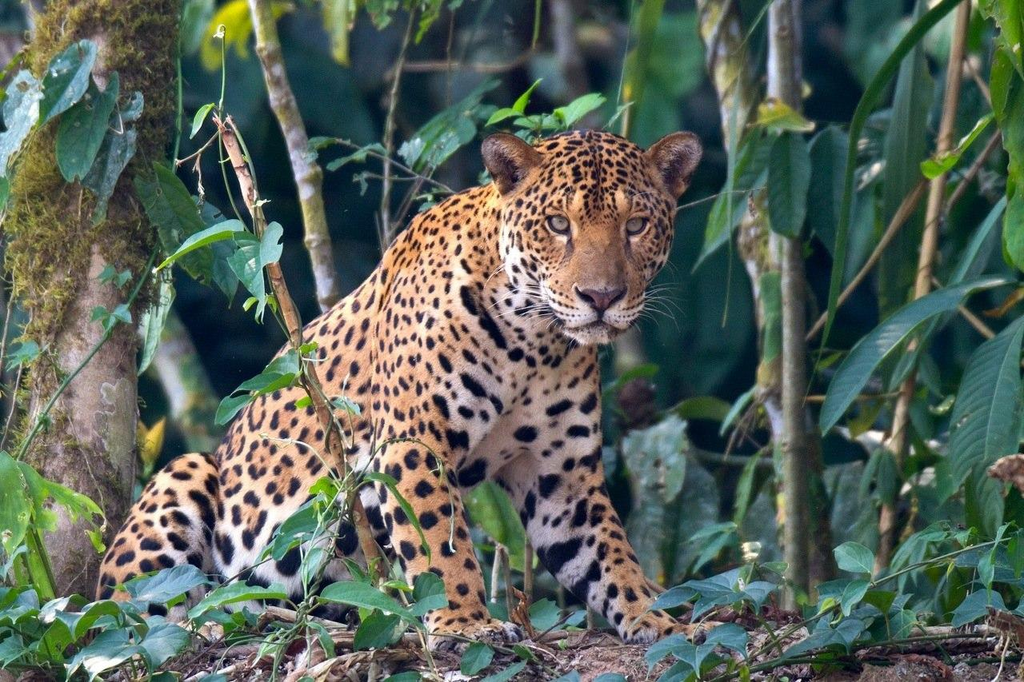
Few animals represent the Amazon as strongly as the jaguar.
The jaguar is the largest cat in the Americas and the third-largest cat species in the world. Its muscular body, powerful jaws and distinctive rosette-patterned coat make it one of the rainforest’s most impressive predators.
But the jaguar has another unusual ability: it is an excellent swimmer.
Many people imagine big cats avoiding water, but jaguars are comfortable around rivers, wetlands and flooded forests. They can hunt a remarkably wide variety of prey, including fish, turtles, peccaries, capybaras and other animals.
Their powerful bite is another important advantage. Jaguars can use their strong jaws to penetrate the tough defenses of some prey.
But their importance goes beyond hunting.
As top predators, jaguars help maintain ecological balance by influencing populations of other animals. Protecting jaguar habitat can therefore benefit many other species sharing the same landscape.
Unfortunately, habitat loss and fragmentation remain major threats. When forests become separated into smaller patches, jaguars can have greater difficulty finding prey, mates and sufficiently large territories.
📸 Picture 1 — Jaguar
Alt text: Powerful jaguar walking through the Amazon rainforest near a river
2. Green Anaconda — The Giant Hunter of Amazon Waters
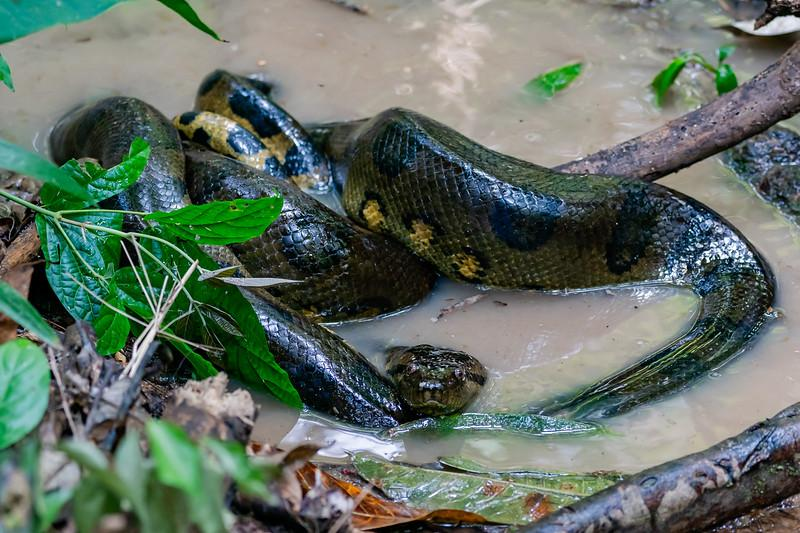
If the jaguar dominates parts of the forest, the green anaconda is one of the Amazon’s most impressive predators in wetlands and slow-moving waterways.
Green anacondas are enormous nonvenomous snakes belonging to the boa family. They are especially well adapted to life in water and are found in swamps, marshes and slow-moving streams across the Amazon and Orinoco basins.
Their bodies may look cumbersome on land, but underwater they become surprisingly stealthy.
Anacondas can remain submerged while waiting for prey to approach. Their diet can include birds, turtles, fish and mammals, including capybaras. They use powerful muscles to constrict captured prey rather than relying on venom.
Another fascinating adaptation is their ability to detect information about their surroundings in several ways. They can use their tongues to collect scent information, sense heat through specialized pits and detect vibrations.
The result is a predator perfectly suited to a watery environment where patience can be more useful than speed.
📸 Picture 2 — Green Anaconda
Alt text: Large green anaconda swimming through Amazon rainforest wetlands
3. Capybara — The World’s Largest Rodent

The capybara may look friendly and relaxed, but this enormous rodent has an important place in Amazonian wetlands.
Capybaras are the largest rodents in the world, with adults averaging around 108 pounds according to WWF. They are closely associated with water and can be found around marshes, ponds, flooded grasslands and other wet habitats.
Their diet consists mainly of grasses and aquatic vegetation.
Water is also extremely important for their survival. Capybaras are strong swimmers and can use water as a refuge when predators are nearby.
And they have plenty of predators to worry about.
Jaguars and other large predators may hunt capybaras, making alertness essential even when these animals appear to be calmly resting near the water.
Capybaras also demonstrate how important wetlands are to Amazon wildlife. When forests and wetlands are converted for agriculture or ranching, the animals that depend on those habitats can lose important feeding and shelter areas.
📸 Picture 3 — Capybara
Alt text: Capybara resting beside a freshwater wetland in the Amazon rainforest
4. Amazon River Dolphin — The Pink Swimmer
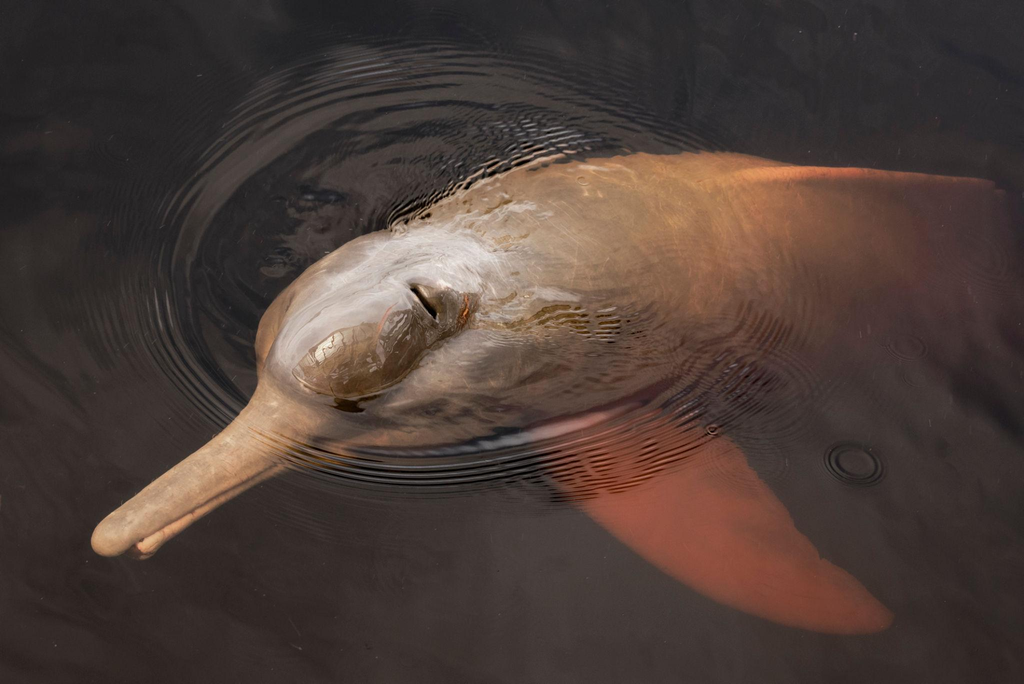
Deep in the Amazon’s enormous freshwater network lives one of its most famous aquatic mammals: the Amazon river dolphin, also known as the boto or pink river dolphin.
Unlike ocean dolphins, this species lives in freshwater. It occurs throughout much of the Amazon and Orinoco river basins.
One of its most recognizable characteristics is its pink coloration, although the exact color can vary between individuals.
The river environment changes dramatically throughout the year. During seasonal flooding, water can spread into forests, lagoons and other areas beyond the main river channels. River dolphins can move between these habitats as water levels and food availability change.
This connection between dolphins and the wider river system is one reason freshwater conservation is so important.
Dams, pollution and other human activities can affect river connectivity and habitat. Conservation programs are using tools such as satellite tagging, river surveys and drones to better understand where these dolphins travel and how their populations are changing.
📸 Picture 4 — Amazon River Dolphin
Alt text: Pink Amazon river dolphin swimming through freshwater rainforest
5. Harpy Eagle — The Powerful Hunter Above the Canopy
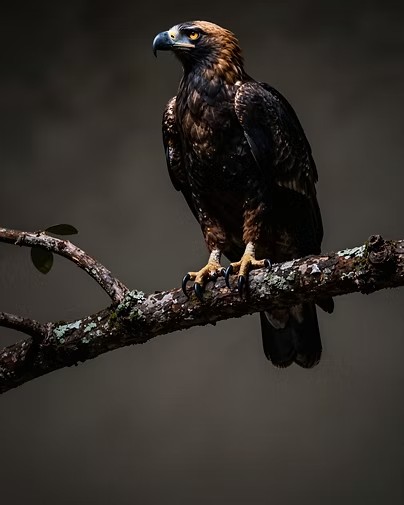
High above the forest floor, another Amazon icon rules the canopy.
The harpy eagle is one of the largest and most powerful eagles in the world. It is especially associated with mature tropical forests and is famous for its enormous talons and powerful build.
Unlike animals that search for food along the forest floor, the harpy eagle uses the rainforest canopy as its hunting environment.
Its strength allows it to capture relatively large tree-dwelling prey. This makes it an important predator in the complex food web of the Amazon.
The species also highlights why protecting mature forests matters. Large birds of prey need suitable nesting and hunting habitat, and changes to forest structure can affect the ecological conditions they depend upon.
The Amazon is one of Earth’s important remaining strongholds for harpy eagles, alongside jaguars and pink river dolphins.
Imagine looking upward through thousands of leaves and suddenly seeing this enormous eagle gliding between the trees. It is one of the rainforest’s most spectacular sights.
📸 Picture 5 — Harpy Eagle
Alt text: Harpy eagle perched high in the Amazon rainforest canopy
6. Toucan — The Colorful Voice of the Forest

Not every famous Amazon animal is a powerful predator.
Toucans bring an entirely different kind of beauty to the rainforest.
With their enormous colorful bills, bright plumage and distinctive calls, toucans are among the easiest Amazon birds to recognize.
The bill may look oversized, but it is surprisingly useful. Toucans use it to reach food and manipulate objects while moving through the forest.
They are closely associated with fruit and play an important ecological role in rainforest ecosystems. Birds that consume fruit can help move seeds from one location to another, contributing to forest regeneration.
The Amazon is home to more than a thousand bird species, including several types of toucans, along with macaws, hoatzins and many other remarkable birds.
A toucan calling from a tree can therefore be more than a beautiful sight. It is part of a much larger ecological system in which plants and animals constantly interact.
📸 Picture 6 — Toucan
Alt text: Colorful toucan perched on a branch in the Amazon rainforest canopy
Six Animals, One Extraordinary Ecosystem
At first glance, these six animals appear completely different.
The jaguar is a powerful land predator.
The green anaconda is a giant aquatic hunter.
The capybara is a water-loving herbivore.
The Amazon river dolphin spends its life navigating freshwater.
The harpy eagle hunts high above the ground.
The toucan moves through the canopy searching for food and helping distribute seeds.
Yet they are all connected.
The health of the forest influences rivers. Rivers influence fish and aquatic mammals. Trees provide food and shelter for birds and mammals. Predators depend on healthy prey populations.
This is why conservation cannot focus on only one species.
A recent WWF-led study mapped areas where jaguars and migratory freshwater species overlap. Researchers identified high-value areas covering about 17% of the Amazon basin, with roughly one-third of those areas still unprotected. The study illustrates how protecting connected land and freshwater habitats can benefit multiple species simultaneously.
Why Protecting These Animals Matters
The Amazon faces multiple pressures, including deforestation, habitat fragmentation, pollution, infrastructure development and climate change.
For animals with large territories, fragmented forests can make movement more difficult.
For river dolphins, changes to freshwater systems can affect migration and habitat.
For birds such as toucans and harpy eagles, the loss of mature forest can remove feeding and nesting opportunities.
And for animals such as capybaras and anacondas, destruction of wetlands can reduce important water-based habitat.
Protecting the Amazon therefore means protecting a network of habitats rather than simply saving individual animals.
Final Thoughts
The jaguar, green anaconda, capybara, Amazon river dolphin, harpy eagle and toucan each represent a different side of Amazon wildlife.
One rules the forest floor.
Another hides beneath the water.
One grazes peacefully beside wetlands.
Another swims through flooded forests.
One dominates the canopy.
And another fills the trees with color and sound.
Together, they reveal why the Amazon is so extraordinary.
The rainforest is not simply a collection of beautiful animals. It is a connected living system in which every species has a role.
Protecting that system means giving these remarkable animals a future—and ensuring that generations to come can still look into the Amazon forest and discover something truly wild.
The Amazon is full of extraordinary animals, but its greatest wonder may be the connections between them.
Leave a Reply