Category: Mammals
-
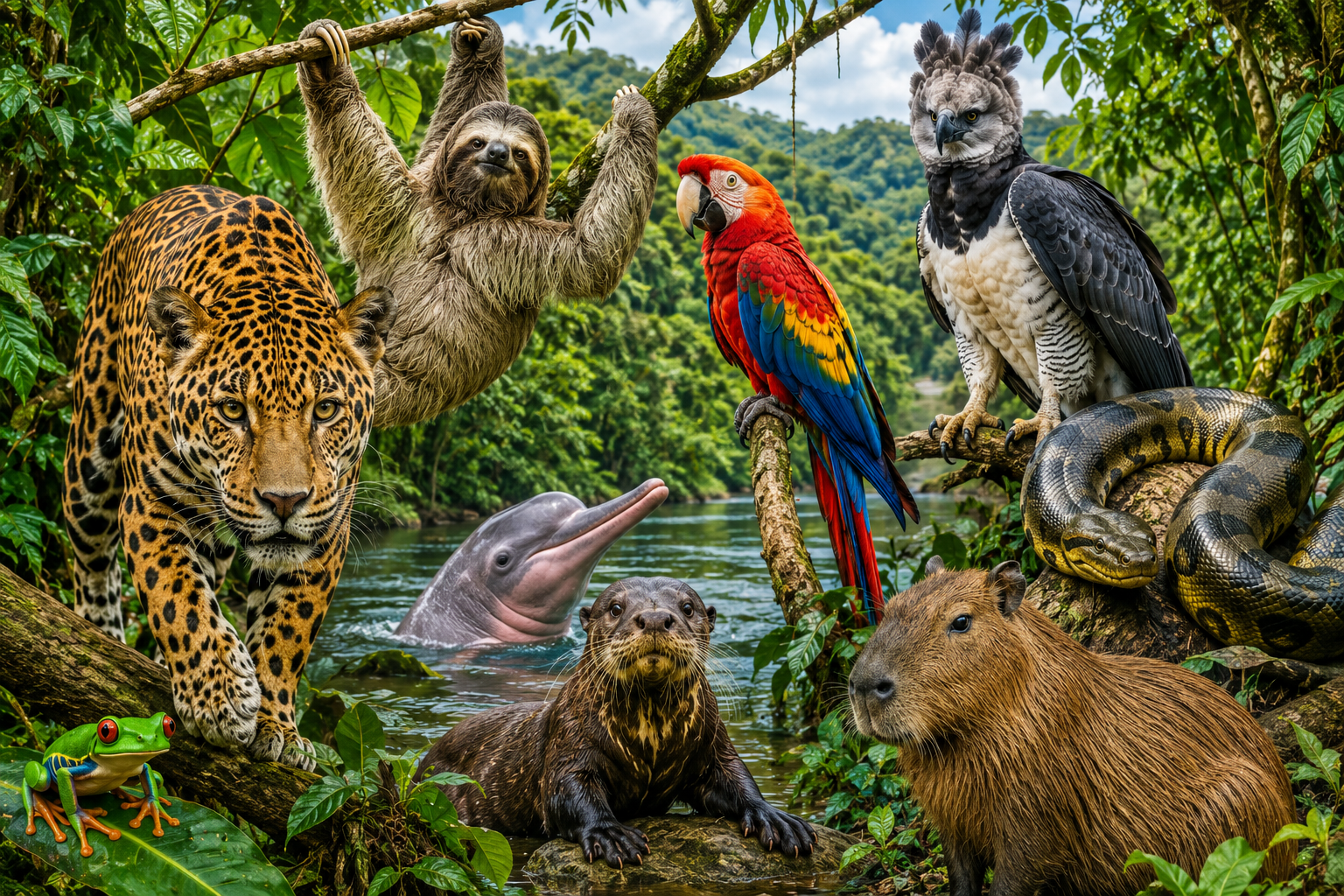
Amazon Rainforest Animals: 12 Incredible Wildlife Species
Life in the Amazon: 12 Remarkable Animals Surviving in the World’s Great Rainforest
The Amazon rainforest can seem almost endless. Beneath its enormous canopy are winding rivers, flooded forests, muddy banks, dark wetlands and thousands of trees competing for sunlight. Somewhere among all of this vegetation, animals are constantly feeding, hunting, climbing, swimming, nesting and searching for shelter.
The Amazon is the largest tropical rainforest in the world and supports an extraordinary variety of life. National Geographic describes the region as containing around 40,000 plant species, nearly 1,300 bird species, about 3,000 types of fish, more than 430 mammal species and millions of insects.
But the most interesting part of Amazon wildlife is not simply the number of species. It is how differently these animals live.
Some spend almost their entire lives in trees. Others are specialists of rivers and wetlands. Large predators patrol the forest floor while tiny frogs hide among damp leaves. Above them, powerful birds hunt from the highest branches.
Here are 12 remarkable animals that show just how diverse life in the Amazon can be.
1. Jaguar — The Forest’s Powerful Predator
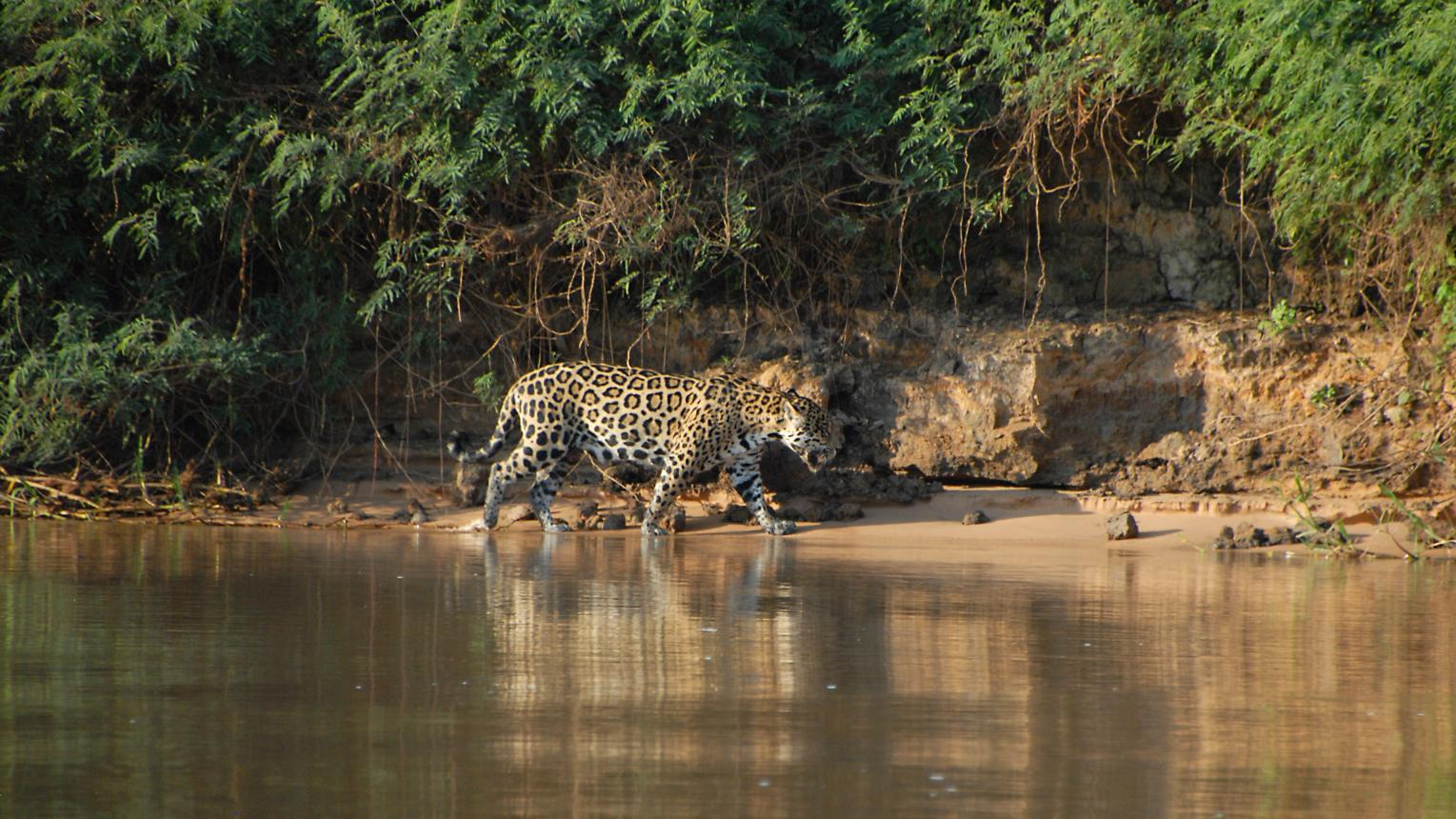
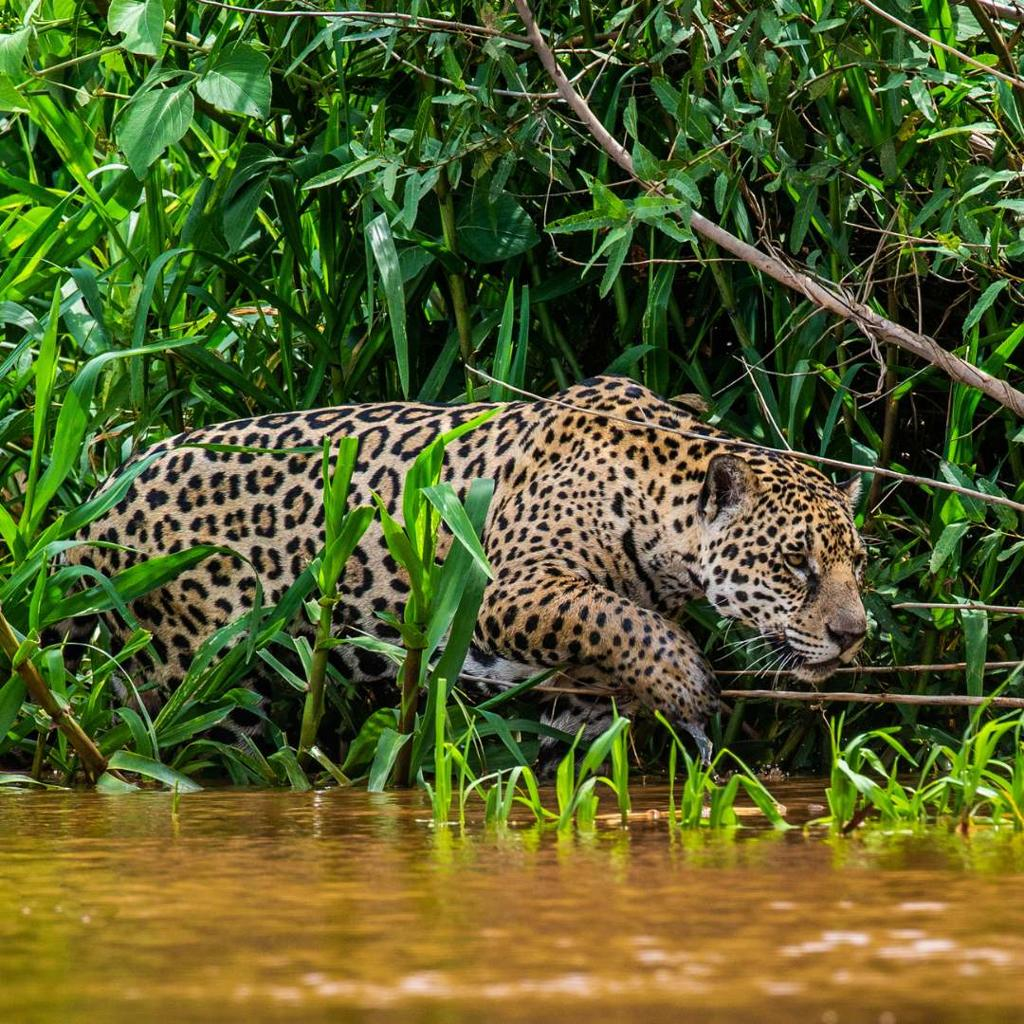
The jaguar is one of the most famous predators of the Amazon.
Its muscular body, large head and distinctive rosette markings make it easy to recognize. Unlike many big cats, jaguars are strongly associated with water and are capable swimmers.
This is useful in the Amazon, where rivers, streams and flooded forests create a complicated landscape.
Jaguars are powerful hunters capable of taking a variety of prey. They are also important to the wider ecosystem because predators can influence the populations and behavior of other animals.
Wild jaguars are notoriously difficult to observe. Dense vegetation gives them plenty of places to disappear, and many are most active when human activity is low.
A real wild jaguar photograph from Brazil’s Three Brothers River is available through Wikimedia Commons.

A real wild jaguar photograph from Brazil’s Three Brothers River is available through Wikimedia Commons.
2. Sloth — An Expert at Conserving Energy
6
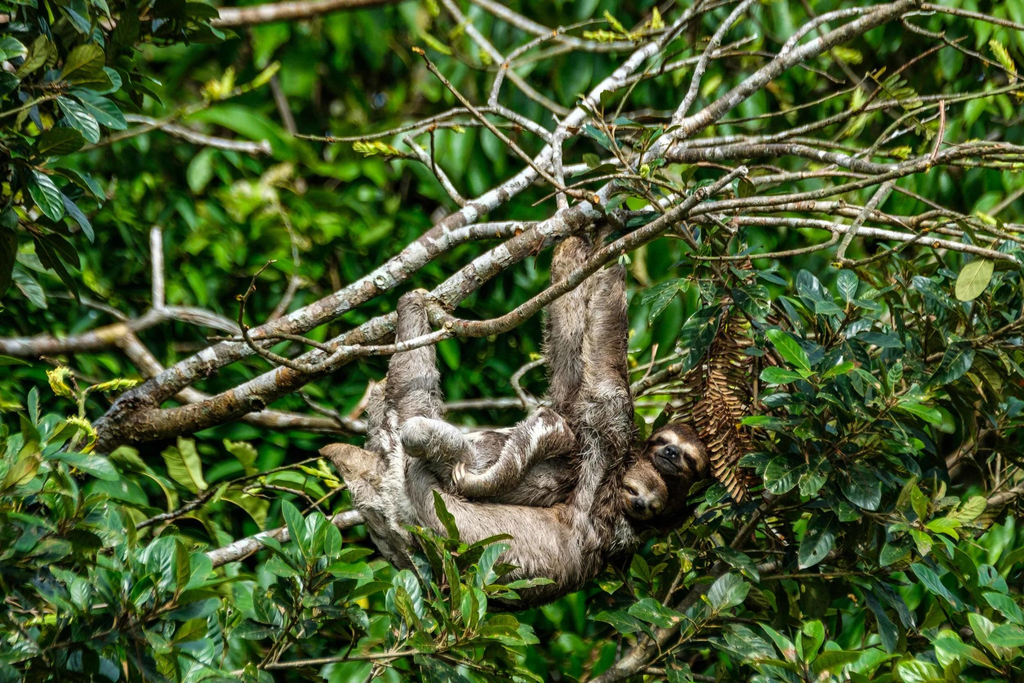
High above the ground, sloths have adopted a completely different approach to survival.
Instead of moving rapidly through the forest, they spend much of their time hanging from branches. Their long claws allow them to maintain a secure grip while feeding and resting.
A leaf-based diet provides relatively little energy, so moving slowly can be an advantage. Sloths have evolved a lifestyle centered around conserving energy rather than constantly searching for new food.
Their fur can also provide a home for algae and tiny organisms, giving some sloths a greenish appearance that can help them blend into their surroundings.
A genuine photograph of a sloth living in the Amazon rainforest near Peru’s Río Marañón is available on Wikimedia Commons.

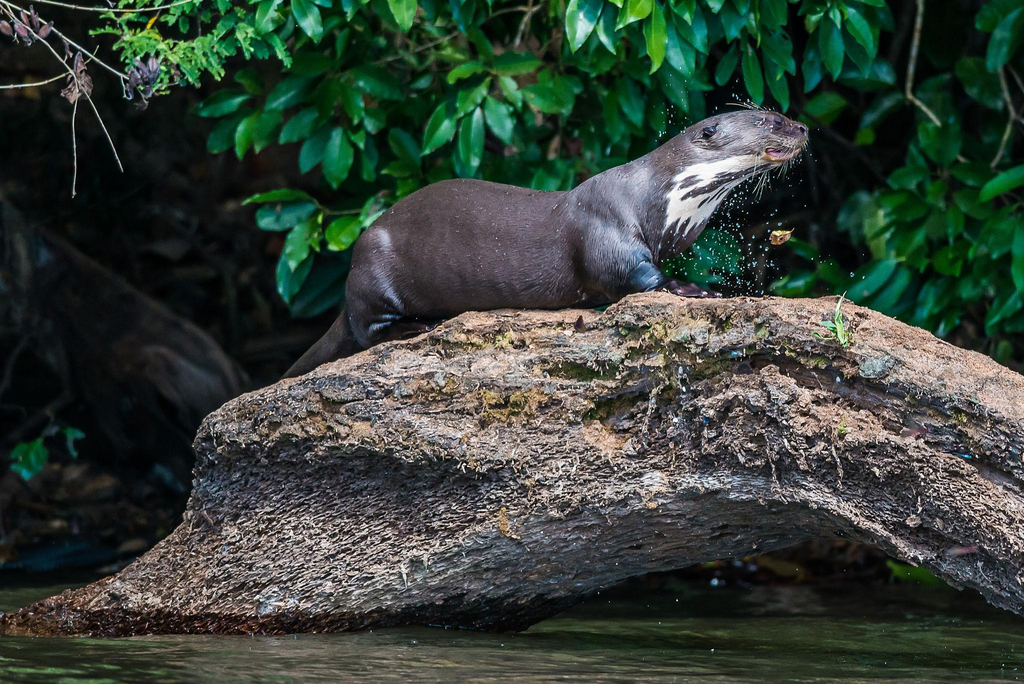
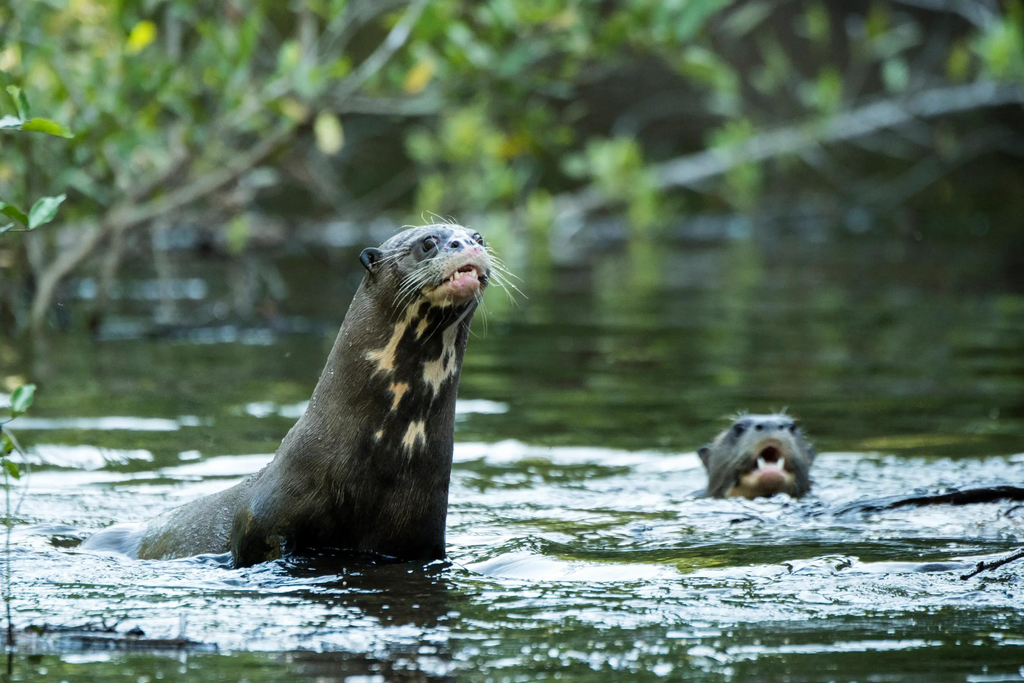
3. Giant River Otter — Life in Amazonian Waterways
8
The giant river otter is one of the Amazon’s most impressive aquatic mammals.
It has a long body, powerful tail and webbed feet that make it an excellent swimmer. Unlike solitary predators, giant river otters are highly social and can live in family groups.
Their lives are closely connected to freshwater environments. They hunt fish and other aquatic prey and communicate with members of their group through calls and other behaviors.
This makes clean, functioning rivers extremely important to them.
A particularly useful real photograph is a giant river otter photographed in Amazonia, Peru,
4. Green Anaconda — A Giant of the Wetlands
7
The green anaconda is one of the animals most strongly associated with Amazonian wetlands.
This enormous constrictor is adapted to spending substantial time in and around water. Its eyes and nostrils are positioned high on its head, allowing it to remain partly submerged while observing its surroundings.
Rather than using venom, anacondas overpower prey with muscular strength.
Although stories about enormous snakes are common, wild encounters are relatively unusual. These animals are much more likely to remain hidden in vegetation and waterways than to seek contact with humans.
A high-resolution green anaconda photograph is available from Wikimedia Commons.
5. Scarlet Macaw — A Flash of Color Above the Trees
6
The scarlet macaw brings brilliant color to the Amazon canopy.
Its combination of red, yellow and blue feathers makes it one of the rainforest’s most recognizable birds. Macaws also have strong, curved beaks that allow them to handle hard seeds and nuts.
Their importance goes beyond appearance. Birds that eat fruits and seeds can help move plant material around the forest, connecting different parts of the ecosystem.
Their loud calls can also travel through the forest, making a flock easier to notice before it becomes visible.
There is a real photograph specifically documented as a scarlet macaw in the Amazon jungle on Wikimedia Commons. It is listed under a Creative Commons Attribution license.
6. Harpy Eagle — Hunter of the Upper Canopy
7
Far above the forest floor lives one of the Amazon’s most impressive birds of prey: the harpy eagle.
Harpy eagles have broad wings and exceptionally powerful talons. They are associated with mature tropical forests and can hunt animals that live among the branches.
Their existence illustrates an important point about rainforest conservation. Large predators need more than a few isolated trees. They depend on extensive habitat, suitable nesting locations and enough prey.
National Geographic identifies large raptors such as harpy eagles as top predators of the rainforest’s upper layers.
A real harpy eagle photograph is available through Wikimedia Commons.
7. Pink River Dolphin — A Mammal of the Amazon Rivers
The Amazon is not only a forest of trees. Its enormous river system contains its own wildlife community.
The Amazon river dolphin is one of the most unusual mammals living in these freshwater environments. Unlike marine dolphins, it has adapted to life in rivers and flooded forest areas.
Changing water levels are an important part of the Amazon environment. During periods of high water, rivers can expand into areas that are normally forest floor.
River dolphins must therefore navigate an environment that can change dramatically through the year.
WWF identifies pink river dolphins among the characteristic wildlife of the Amazon and notes that river development can threaten their habitat.
8. Capybara — The Social Giant Rodent
Capybaras are the world’s largest living rodents and are closely associated with South American wetlands.
They are strong swimmers and often stay near water, where they can feed on vegetation and escape danger when necessary.
Their social behavior is another important feature. Capybaras commonly live in groups, providing opportunities for communication and collective vigilance.
Near Amazonian rivers and wetlands, their presence demonstrates how closely some rainforest animals depend on the boundary between land and water.
9. Poison Dart Frogs — Small but Remarkable
Not every Amazonian animal needs to be large to be fascinating.
Poison dart frogs are tiny amphibians famous for their striking colors. Depending on the species, they can display combinations of blue, yellow, orange, black or red.
Those vivid colors can act as warning signals to predators.
Their small size also makes them easy to miss. A person walking through the rainforest may pass close to one without ever noticing it.
Amphibians are particularly connected to moisture and environmental conditions, making them interesting indicators of changes within tropical ecosystems.
10. Spider Monkeys — Life in the Canopy
Spider monkeys are specialists of the treetops.
Their long limbs and prehensile tails allow them to move through the canopy with impressive agility. Instead of spending most of their time on the ground, they use the interconnected branches as highways through the forest.
They also participate in the movement of seeds after eating fruit.
This illustrates a larger truth about Amazon wildlife: an animal does not need to be a predator to have a major ecological influence.
11. Black Caiman — A Predator of the Water
Black caimans inhabit Amazonian rivers, lakes and flooded forests.
As large aquatic predators, they occupy an important position within freshwater food webs. Their dark coloration and ability to remain partly hidden can make them difficult to spot from the surface.
Young caimans face different dangers from adults, and survival depends on finding suitable habitat while avoiding predators.
The Amazon’s waterways therefore support multiple generations of reptiles, fish, mammals and birds at the same time.
12. Amazonian Fish — A Hidden World Beneath the Surface
Some of the Amazon’s most interesting wildlife never climbs a tree.
Thousands of fish species inhabit the basin, including piranhas, arapaima and many smaller species. National Geographic estimates that the Amazon rainforest is associated with roughly 3,000 types of fish.
During seasonal flooding, fish can move into areas of forest that are temporarily underwater. This creates unusual relationships between aquatic animals and plants.
The result is an ecosystem that changes with the water level rather than remaining the same throughout the year.
Why Amazon Animals Need a Healthy Forest
The Amazon works as a connected system.
A jaguar needs prey. Prey animals need vegetation. Plants depend on soil, water, pollinators and seed dispersers. River animals depend on healthy waterways. Birds depend on nesting trees and food sources.
When one part of the system is damaged, other species can eventually feel the effects.
Deforestation and habitat fragmentation can remove food, shelter and nesting sites. National Geographic notes that removing large trees can eliminate important canopy habitat and contribute to the fragmentation of wildlife populations.
Wildlife trafficking and other environmental crimes are another concern. A major multinational enforcement operation conducted across five Amazon countries , targeted illegal logging, wildlife trafficking, illegal mining and other environmental crimes. Authorities reported rescuing more than 3,000 live animals during the operation.
These events demonstrate that protecting Amazon wildlife requires cooperation across national borders.
The Amazon Is More Than a Jungle
The Amazon rainforest is sometimes described simply as a jungle filled with exotic animals. In reality, it is far more complicated.
It is a collection of habitats stacked vertically and connected by rivers.
At ground level, jaguars, peccaries and other animals move through vegetation. Higher up, sloths and monkeys travel among branches. Birds occupy the canopy, while powerful eagles hunt from above. Beneath the water, fish, caimans, dolphins and otters create another world almost completely hidden from view.
That variety is what makes Amazon rainforest animals so extraordinary.
Protecting them means protecting the forests, rivers and ecological connections that allow them to survive.
The future of the Amazon will not be determined by one species alone. Jaguars, sloths, macaws, otters, frogs, reptiles, fish and countless smaller organisms are all pieces of the same living system.
The Amazon’s greatest story is not about one spectacular animal. It is about millions of living things sharing one remarkable forest.
📸 6 Real Image Plan for Your Website
For your website, I recommend 6 real wildlife photographs rather than AI-generated animal pictures.
# Image Recommended Alt Text Suggested Caption 1 Jaguar Wild jaguar walking beside vegetation in the Amazon region A powerful jaguar moves quietly through its rainforest habitat. 2 Sloth Sloth hanging from a tree in the Amazon rainforest Sloths spend much of their lives high in the rainforest canopy. 3 Giant River Otter Giant river otter in an Amazonian river in Peru Giant river otters depend on healthy freshwater habitats. 4 Green Anaconda Green anaconda in a South American wetland The green anaconda is highly adapted to life around water. 5 Scarlet Macaw Scarlet macaw in the Amazon jungle Scarlet macaws add brilliant color to the rainforest canopy. 6 Harpy Eagle Harpy eagle flying through a tropical forest Harpy eagles are powerful predators of the upper forest. SEO INFORMATION
Article Title:
Life in the Amazon: 12 Remarkable Animals Surviving in the World’s Great Rainforest
SEO Title:
Amazon Rainforest Animals: 12 Incredible Wildlife SpeciesFocus Keyword:
Amazon rainforest animalsSecondary Keywords:
- Amazon rainforest wildlife
- animals of the Amazon
- Amazon jungle animals
- rainforest animals
- Amazon wildlife
- animals in the Amazon forest
- South American wildlife
- Amazon River animals
- tropical rainforest wildlife
- endangered Amazon animals
Category:
WildlifeSubcategories:
Rainforest Animals, Wild Animals, South American Wildlife, NatureTags:
Amazon rainforest, Amazon animals, rainforest wildlife, jungle animals, jaguar, sloth, anaconda, macaw, giant river otter, harpy eagle, Amazon River, wildlife, tropical rainforest, South America, animal conservationMeta Description:
Discover 12 fascinating Amazon rainforest animals, including jaguars, sloths, giant river otters, anacondas, macaws and harpy eagles, and learn how they survive.Suggested URL Slug:
amazon-rainforest-animals-wildlifeSuggested Excerpt:
The Amazon rainforest is a world of extraordinary wildlife. Discover how jaguars, sloths, anacondas, macaws, giant river otters and other animals survive in one of Earth’s richest ecosystems. -

Explore Amazon Animals
Exploring Endangered Species in the Amazon Rainforest

Category: Amazon Wildlife & Conservation
Tags: Amazon rainforest, endangered species, Amazon wildlife, wildlife conservation, rainforest animals, endangered animals, Amazon biodiversity, jaguar, giant armadillo, tapir, harpy eagle, spider monkey
Focus Keyphrase: Endangered species in the Amazon rainforest
Suggested URL Slug:endangered-species-amazon-rainforest
Meta Description: Explore endangered and threatened wildlife in the Amazon rainforest and discover how habitat loss, hunting, climate change and conservation efforts are shaping their future.
Exploring Endangered Species in the Amazon Rainforest: Wildlife Fighting to Survive
The Amazon rainforest is one of the greatest wildlife habitats on Earth.
Behind its walls of green vegetation are rivers, wetlands, forests and enormous tree canopies supporting thousands of species. Some are familiar to people around the world, while others are so secretive that scientists rarely see them.
But the Amazon’s incredible biodiversity is facing growing pressure.
Deforestation, habitat fragmentation, illegal hunting, pollution, fires and climate change can make survival increasingly difficult for wildlife.
The International Union for Conservation of Nature, or IUCN, uses categories such as Vulnerable, Endangered and Critically Endangered to describe different levels of extinction risk.
In this article, we explore several remarkable Amazon species and the challenges they face.
1. The Jaguar: The Ghost of the Amazon
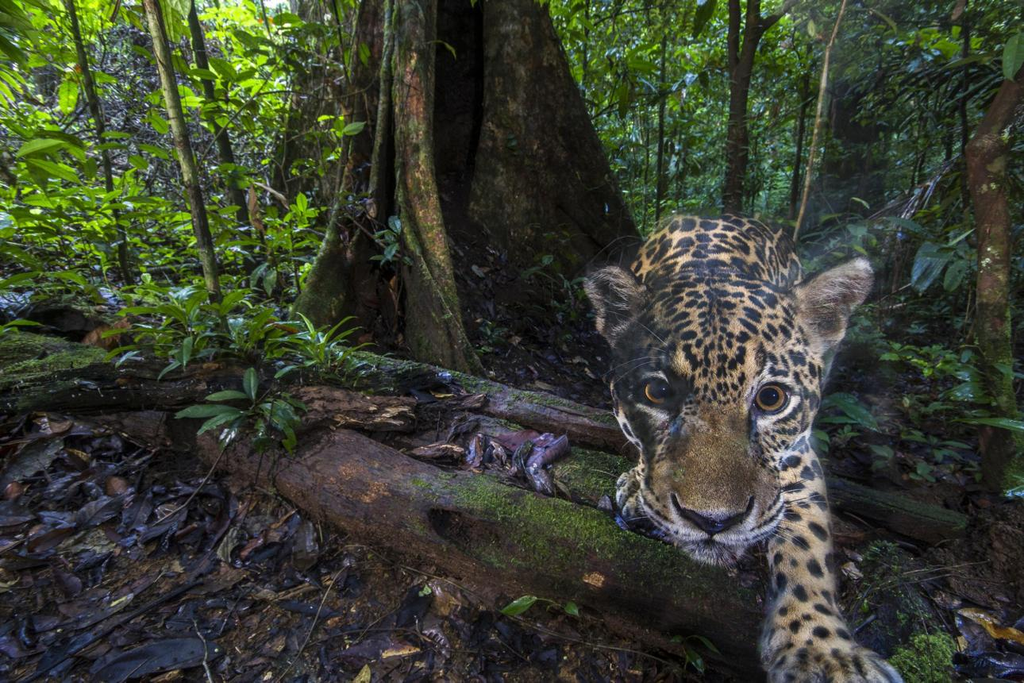
Few animals represent the Amazon more powerfully than the jaguar.
With its golden coat and dark rosettes, this large cat is one of the rainforest’s top predators. Jaguars need extensive territories where they can find prey, water and places to reproduce.
The problem is that forests are increasingly divided by roads, agriculture, mining and other human activities.
A jaguar may survive in one isolated patch of forest, but fragmented habitat can make movement and reproduction more difficult.
Protecting connected forests is therefore essential.
Camera traps have become an important conservation tool because they allow researchers to document jaguars without constantly disturbing them. Amazon Conservation says its monitoring programs have captured thousands of wildlife images and documented threatened and vulnerable species across the western Amazon.
Picture 1 — Alt Text: “Jaguar walking through dense Amazon rainforest habitat”
2. The Giant Armadillo: A Rare Forest Engineer

The giant armadillo is one of the Amazon’s most unusual mammals.
It is enormous compared with other armadillo species and possesses powerful claws designed for digging.
Yet despite its size, it is difficult to see.
Giant armadillos are generally solitary and can spend much of their time away from human observers.
Their digging behavior also gives them an ecological role beyond their own survival. Burrows can provide shelter for other animals, meaning one armadillo can indirectly create habitat for several other species.
Habitat destruction is a major concern because these animals need large areas of suitable forest.
Protecting remote forest landscapes can therefore benefit the giant armadillo and many other species living alongside it.
Picture 2 — Alt Text: “Giant armadillo searching for food on the Amazon rainforest floor”
3. The Lowland Tapir: A Giant Seed Disperser
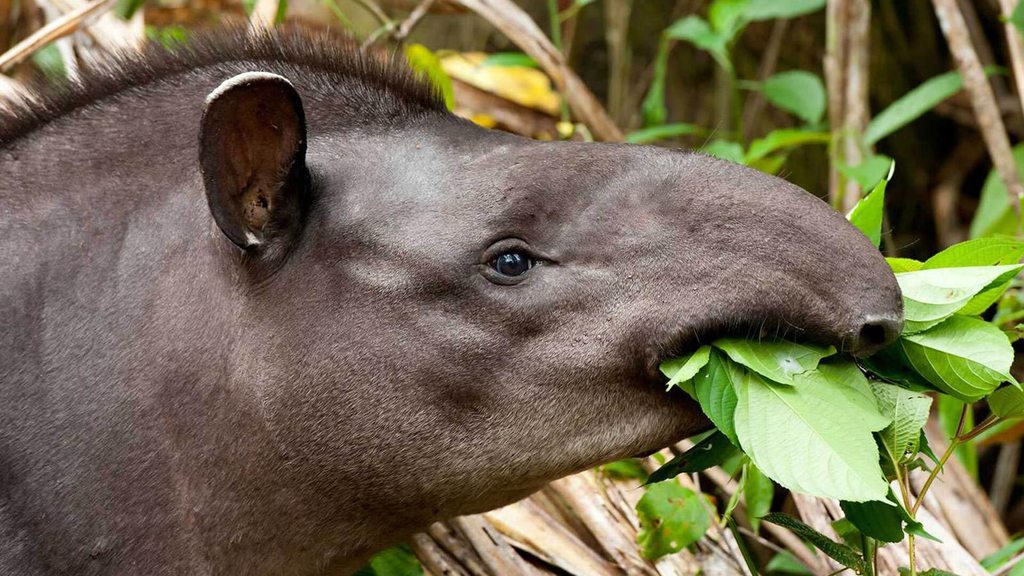
The lowland tapir may look slow and peaceful, but it plays an important role in the Amazon ecosystem.
Sometimes described as a forest gardener, the tapir eats large quantities of vegetation and fruit.
As it travels through the forest, it can transport seeds from one location to another.
This makes the animal part of the rainforest’s natural regeneration system.
Tapirs also use rivers and other water sources, making healthy forest and freshwater environments important to their survival.
When forests become fragmented or heavily disturbed, tapirs can lose access to important feeding and shelter areas.
Protecting large connected habitats is therefore one of the most important ways to help them.
Picture 3 — Alt Text: “Lowland tapir foraging beside a river in the Amazon rainforest”
4. The Harpy Eagle: A Predator of the Canopy

Far above the forest floor, another threatened Amazon icon watches from the trees.
The harpy eagle is among the largest and most powerful eagles in the Americas.
Its enormous talons are adapted for catching prey in the forest canopy.
But an animal at the top of the food chain needs a healthy ecosystem beneath it.
Large predators require suitable habitat and enough prey to survive.
When forests are cleared, the problem does not stop with the trees. The loss of vegetation can reduce prey populations and eliminate nesting areas.
The harpy eagle therefore represents an important conservation principle: protecting predators often means protecting the entire ecosystem supporting them.
Picture 4 — Alt Text: “Harpy eagle perched high in an Amazon rainforest tree”
5. The Black Spider Monkey and the Importance of the Canopy

The Amazon canopy is a world of its own.
Among its residents are spider monkeys, agile primates that move through branches searching for fruit and other foods.
Their long limbs and gripping tails help them travel through the treetops.
But canopy animals can be particularly vulnerable when forests are fragmented.
A road or cleared area may create a gap that is difficult or dangerous to cross.
When populations become isolated, animals may have fewer opportunities to interact with other groups.
This is why wildlife corridors are so important.
Keeping forest patches connected gives animals a better chance to move, find food and maintain healthy populations.
Picture 5 — Alt Text: “Black spider monkey moving through the Amazon rainforest canopy”
6. River Wildlife Faces a Different Kind of Threat

Not every endangered Amazon animal lives among trees.
The rivers are home to their own remarkable wildlife.
Fish, turtles, river dolphins and other aquatic species depend on healthy freshwater systems.
Pollution from mining and other activities can introduce contaminants into waterways. Changes to rivers can also affect breeding grounds and food supplies.
The Amazon Assessment Report highlights how deforestation, fires and mining can threaten biodiversity and damage ecosystem services across the basin.
This means rainforest conservation must include both land and water.
Protecting a forest while allowing its rivers to become heavily polluted would leave an important part of the ecosystem unprotected.
Picture 6 — Alt Text: “Amazon River wildlife living in a healthy freshwater ecosystem”

7. Why Camera Traps Are Changing Wildlife Conservation
One of the most exciting developments in Amazon conservation is the use of technology.
Camera traps can remain in forests for long periods and photograph animals automatically when they pass.
This allows researchers to study species that are difficult to observe directly.
Amazon Conservation reports deploying more than 100 camera traps and collecting more than 10,000 photographs and videos of mammals and birds in the western Amazon.
These images can reveal where animals live, how frequently they appear and how wildlife communities change over time.
For rare species, even one photograph can be valuable.
A single image may confirm that an animal is still using a particular forest.
Picture 7 — Alt Text: “Wildlife camera trap monitoring endangered animals in the Amazon rainforest”
What Is Putting Amazon Wildlife at Risk?
The threats facing Amazon animals are interconnected.
Habitat loss
When forests are cleared, animals lose feeding areas, nesting sites and shelter.
Fragmentation
A forest can remain on a map while being divided into isolated pieces. This can make movement and reproduction more difficult.
Hunting
Illegal hunting can reduce populations of large mammals and birds, particularly where wildlife is already under pressure.
Mining and pollution
Mining can damage forests and affect rivers, creating problems for both terrestrial and aquatic animals.
Climate change
Changing temperatures, rainfall patterns, drought and wildfire can alter habitats and food availability.
Amazon Conservation warns that continued deforestation is pushing the rainforest toward a potential ecological tipping point.
There Is Still Hope
The story of endangered Amazon wildlife is not only a story of decline.
Conservation projects are producing important results.
Protected areas can preserve large blocks of habitat.
Wildlife corridors can reconnect fragmented forests.
Indigenous communities play important roles in protecting Amazon landscapes.
Scientists are using camera traps, satellite monitoring and other technologies to understand changes in wildlife populations.
Perhaps most importantly, researchers continue discovering new information about the Amazon.
The more we understand these ecosystems, the better we can design conservation strategies.
What Can We Do?
Protecting Amazon wildlife requires action at many levels.
Governments can strengthen protected areas and environmental enforcement.
Scientists can continue monitoring threatened species.
Local communities can participate in sustainable conservation programs.
Consumers can also make choices that reduce pressure on forests, including supporting products and organizations committed to responsible sourcing and conservation.
There is no single solution.
The Amazon is too large and complicated for that.
But thousands of individual conservation efforts can combine to create meaningful protection.
Final Thoughts
The Amazon rainforest is not simply a collection of beautiful animals.
It is a living network.
Jaguars depend on prey.
Tapirs help distribute seeds.
Spider monkeys move through the canopy.
Harpy eagles depend on healthy forests.
Giant armadillos create shelter through their digging.
River animals depend on clean and functioning waterways.
When one part of the ecosystem is damaged, other species can feel the effects.
That is why protecting endangered species means protecting their habitats too.
The Amazon still contains some of the planet’s most extraordinary wildlife, and there is reason to hope.
But hope needs action.
Every protected forest, every wildlife corridor, every successful conservation project and every new scientific discovery can give Amazon animals another chance to survive.
The future of these species is still being written—and the decisions made today will help determine what that future looks like.
Amazing Facts About the Amazon’s Unique Wildlife
Category: Amazon Wildlife
Tags: Amazon Rainforest, Amazon Animals, Wildlife Facts, Rainforest Wildlife, Jaguar, River Dolphin, Electric Eel, Glass Frog, Hoatzin, Giant River Otter, Wildlife Conservation
Focus Keyphrase: Amazing facts about Amazon wildlife
SEO Title: Amazing Facts About the Amazon’s Unique Wildlife: 7 Amazing Animals
Meta Description: Discover amazing facts about Amazon wildlife, including jaguars, river dolphins, electric eels, glass frogs, hoatzins and giant river otters.
URL Slug: amazing-facts-amazon-unique-wildlife
Amazing Facts About the Amazon’s Unique Wildlife
Imagine walking beneath a wall of green so enormous that the sky almost disappears. Somewhere above you, a colorful bird calls from the canopy. Beneath the water, an electric eel is moving silently through the darkness. A jaguar may be resting several hundred meters away, while a tiny frog clings to a leaf almost impossible to see.
This is the Amazon Rainforest—a place where survival has produced some of the most remarkable animals on Earth.
The Amazon is considered one of the world’s richest ecosystems. The western Amazon alone is home to hundreds of mammal species, about 1,300 bird species, hundreds of reptiles and more than 400 amphibian species. Scientists are still discovering species and documenting wildlife in areas that remain difficult to explore.
Here are seven amazing facts that reveal why Amazon wildlife is so special.
1. Jaguars Are Surprisingly Comfortable Around Water

The jaguar is one of the Amazon’s most powerful predators, but its strength is not its only advantage.
Unlike many cats, jaguars are excellent swimmers. Rivers, streams and flooded forests do not necessarily form barriers for these animals. Instead, water can become part of their hunting environment.
Their muscular bodies, strong jaws and powerful limbs allow them to tackle prey that would be difficult for many other predators.
Jaguars also need large areas of connected habitat. Conservation organizations use camera traps to monitor them because their presence can provide valuable information about the condition of the surrounding ecosystem.
📸 Picture 1: Jaguar walking through dense Amazon rainforest near a river.
Alt text: Jaguar walking through the Amazon rainforest beside a river
2. Pink River Dolphins Live in a Completely Different World

The Amazon river dolphin is one of the most recognizable animals of South American rivers.
Its pinkish color is one of its most famous characteristics, although individuals can vary in appearance. More importantly, the dolphin is specially adapted to freshwater environments.
During periods of flooding, Amazon rivers can expand into surrounding forests. Trees that normally stand on dry ground may become surrounded by water, creating an enormous temporary underwater landscape.
River dolphins can move through these changing environments while searching for food. Their flexible bodies and necks help them maneuver through complicated waterways.
The seasonal transformation of the Amazon demonstrates something important: the lives of many animals are closely connected to the rhythm of rising and falling water.
📸 Picture 2: Pink river dolphin swimming through Amazonian freshwater.
Alt text: Pink Amazon river dolphin swimming through freshwater rainforest habitat
3. Electric Eels Have Their Own Biological Power System
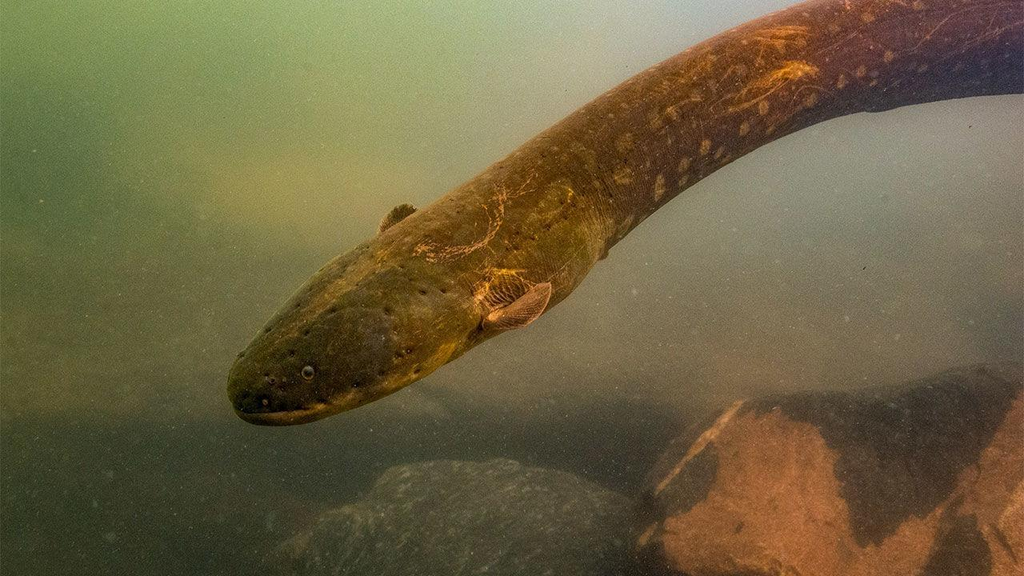
Few Amazon animals sound as extraordinary as the electric eel.
Electric eels can produce electrical discharges using specialized organs in their bodies. Electricity can help them hunt, defend themselves and sense their surroundings.
This ability becomes particularly useful in dark or muddy water where visibility is limited.
Instead of relying entirely on eyesight, an electric eel can interact with its environment using electrical signals. It is an incredible example of evolution producing a highly specialized survival strategy.
The animal’s name can also be misleading: despite being called an eel, electric eels are actually knifefish rather than true eels.
📸 Picture 3: Electric eel moving through dark Amazon river water.
Alt text: Electric eel swimming through dark Amazon freshwater
4. Glass Frogs Can Make Themselves Difficult to See

Deep in the rainforest, survival sometimes means becoming almost invisible.
Glass frogs are famous for their translucent bodies. In several species, parts of the underside can appear remarkably transparent, making these tiny amphibians difficult to detect against leaves and vegetation.
Their unusual appearance isn’t just beautiful—it can provide camouflage.
Many glass frogs are associated with vegetation near streams. Their small size and ability to blend into their surroundings demonstrate how even tiny rainforest animals can possess highly specialized adaptations.
When you look at a green leaf in the Amazon, there may be far more life on it than your eyes can detect.
📸 Picture 4: Tiny glass frog resting on a rainforest leaf.
Alt text: Transparent glass frog resting on a green Amazon rainforest leaf
5. The Hoatzin Looks Like a Bird From Another Era
The hoatzin is one of the strangest-looking birds in the Amazon.
It has a distinctive crest, unusual coloration and a digestive system adapted for a leaf-heavy diet. But the most fascinating feature appears when the birds are young.
Hoatzin chicks have claws on their wings. These claws can help young birds climb through vegetation when they are too small or vulnerable to fly effectively.
As the birds grow, the wing claws disappear.
The hoatzin is therefore a wonderful example of how an animal’s body can change as it moves through different stages of life.
Its unusual biology has fascinated scientists for generations and has helped make it one of the Amazon’s most memorable birds.
📸 Picture 5: Hoatzin perched among Amazon rainforest vegetation.
Alt text: Hoatzin bird perched on vegetation in the Amazon rainforest
6. Giant River Otters Have Strong Family Bonds
The giant river otter is another Amazon animal whose life is closely connected to freshwater.
These large otters are highly social and can live in family groups. They communicate with one another using different vocalizations and spend much of their time swimming, hunting and exploring waterways.
Their streamlined bodies and webbed feet make them excellent swimmers.
Healthy rivers and wetlands are particularly important for these animals. At the Los Amigos conservation area in southeastern Peru, researchers have documented thousands of species across a mosaic of forests, wetlands, oxbow lakes and waterways, including giant river otters.
Seeing a group of giant river otters moving together is a reminder that Amazon wildlife isn’t always about solitary survival. Cooperation can be just as important.
📸 Picture 6: Giant river otters swimming together in an Amazon river.
Alt text: Giant river otter family swimming together in an Amazonian river
7. Scientists Are Still Discovering Amazon Wildlife
Perhaps the most exciting fact about the Amazon is that the wildlife story is far from complete.
New species continue to be discovered, while modern technology is helping scientists find animals that are difficult to observe directly.
Camera traps are particularly valuable. They can operate day and night without requiring researchers to remain in the forest. Amazon Conservation reports that its camera-trap programs have produced more than 10,000 photographs and videos of dozens of mammal and bird species.
Some conservation areas have revealed an astonishing diversity. At the Los Amigos Biological Station in Peru, researchers have recorded more than 4,300 species across numerous taxonomic groups.
That means every expedition into the rainforest can potentially add another piece to our understanding of Amazon biodiversity.
📸 Picture 7: Wide Amazon rainforest scene showing forest canopy, river and wildlife.
Alt text: Amazon rainforest ecosystem with wildlife, river and dense tropical forest
Why Amazon Wildlife Is So Important
The animals of the Amazon are not isolated from one another.
Predators help regulate prey populations. Birds and mammals can spread seeds. Insects pollinate plants. Amphibians respond to changes in environmental conditions. Aquatic animals are connected to the health of rivers and wetlands.
Together, these relationships create a huge ecological network.
That is why protecting individual animals is only part of conservation. Protecting their habitats is equally important.
Conservation organizations are using protected areas, wildlife corridors, scientific research, camera traps and satellite monitoring to help maintain connected habitats. Corridors are particularly valuable because they allow animals to move between areas of suitable forest rather than becoming trapped in isolated patches.
A Rainforest Full of Secrets
The Amazon is often described as a rainforest, but that simple word hides an incredibly complicated world.
It is a place of towering trees, flooded forests, rivers, wetlands, caves, streams and countless smaller habitats. Each environment provides opportunities for different animals to survive.
A jaguar may dominate the forest floor. A hoatzin may occupy the branches. A glass frog may hide on a leaf. An electric eel may patrol the river below.
And somewhere in the enormous forest, there may be species that scientists have not yet documented.
That is what makes the Amazon so fascinating.
Its wildlife isn’t extraordinary because every animal is large or dangerous. It is extraordinary because evolution has produced countless different solutions to the challenge of staying alive.
From electricity and camouflage to swimming, climbing and social cooperation, Amazon animals have developed abilities that seem almost impossible.
Final Thoughts
The Amazon Rainforest remains one of the greatest wildlife treasures on Earth.
Its animals show us that nature does not follow a single formula for survival. Some species use strength. Others use intelligence, camouflage, cooperation or highly specialized biological abilities.
And the story continues.
As scientists explore more of the rainforest and use better technologies to monitor its wildlife, new discoveries are likely to change our understanding of this remarkable ecosystem.
The Amazon still has many secrets hidden beneath its leaves, within its rivers and high above its canopy—and every discovery gives us another reason to protect it.
Documentary Highlights: Conservation Efforts in the Amazon
Category: Amazon Conservation
Tags: Amazon Rainforest, Amazon Conservation, Wildlife Conservation, Rainforest Protection, Indigenous Communities, Wildlife Corridors, Environmental Protection, Amazon Animals, Deforestation, Conservation TechnologyFocus Keyphrase: Conservation efforts in the Amazon
SEO Title: Conservation Efforts in the Amazon: How People Are Protecting the Rainforest
Meta Description: Discover how conservation efforts in the Amazon are protecting wildlife through Indigenous leadership, technology, wildlife corridors, canopy bridges and scientific research.
URL Slug: conservation-efforts-in-the-amazon
A New Story Is Being Written in the Amazon
When people imagine the Amazon Rainforest, they often picture endless green trees, colorful birds, jaguars moving silently through the forest and rivers filled with wildlife.
But behind those beautiful images is another story—one about people working every day to protect this extraordinary ecosystem.
Conservation in the Amazon is no longer based on a single solution. Scientists are using camera traps and satellites. Indigenous communities are protecting their territories. Governments are creating wildlife corridors. Researchers are building bridges that allow animals to cross roads safely.
Together, these efforts are creating a new kind of conservation story—one that combines traditional knowledge, modern technology and practical action.
Here are some of the most interesting conservation developments helping protect the Amazon.
1. Protecting the Amazon Means Connecting Forests

One of the biggest problems facing rainforest wildlife is fragmentation.
A forest may remain standing in one location while roads, farms and other development divide surrounding habitat into smaller pieces. For animals that need large territories, these isolated patches can become difficult or dangerous to navigate.
In July 2026, Ecuador officially recognized the Yasuní–Limoncocha–Cuyabeno Conservation Corridor, connecting more than 173,000 hectares of Amazon rainforest.
The corridor links three important protected areas: Yasuní National Park, Limoncocha Biological Reserve and Cuyabeno Wildlife Reserve. It also includes territories connected with Kichwa, Siona and Siekopai communities.
This approach is important because wildlife does not recognize human boundaries.
A jaguar does not know where one protected area ends. A monkey does not understand a political border. Animals need connected habitats where they can find food, mates and shelter.
📸 Picture 1: Aerial view of Amazon rainforest stretching between protected areas.
Alt text: Connected Amazon rainforest landscape protected for wildlife and local communities
2. Indigenous Communities Are Central to Conservation
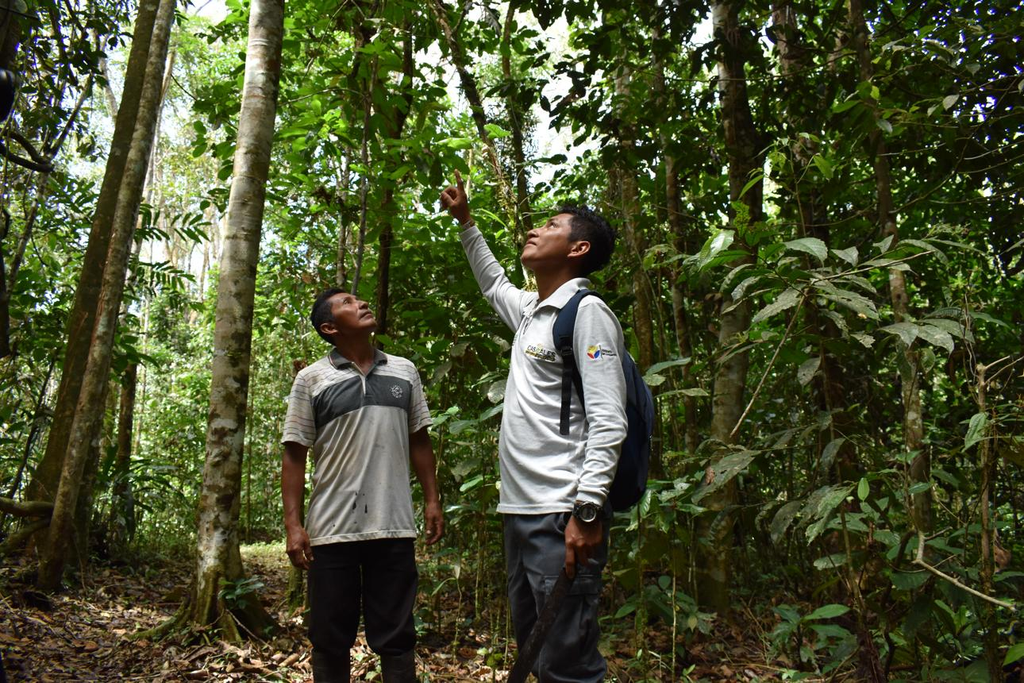
One of the most important parts of modern Amazon conservation is the role of Indigenous communities.
For generations, Indigenous peoples have developed detailed knowledge of their forests, rivers, plants and wildlife. Today, conservation programs increasingly combine this knowledge with scientific tools.
In Ecuador’s new corridor, Indigenous territories and communities are part of the broader conservation landscape. The corridor’s development involved consultations with local communities and includes participatory governance.
Elsewhere in the Amazon, Indigenous leaders are also being trained to use drones and other technologies to monitor their territories.
This creates an important shift.
Instead of conservation being something done only by outside researchers, local communities can become active participants in monitoring and protecting their own forests.
The result can be stronger local knowledge, faster responses to threats and greater community involvement.
📸 Picture 2: Indigenous community members walking through Amazon rainforest.
Alt text: Indigenous community members participating in Amazon rainforest conservation
3. Tiny Camera Traps Are Watching the Forest
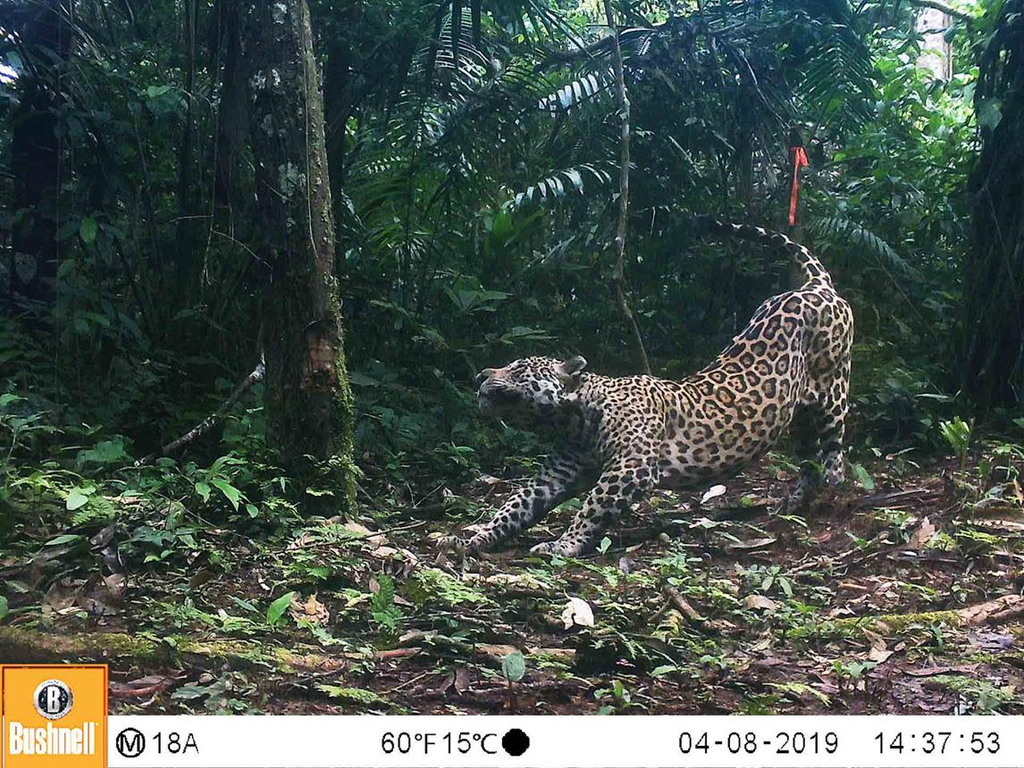
You cannot protect what you cannot understand.
That is why wildlife monitoring has become such an important part of conservation.
Camera traps are small motion-activated cameras that can remain in the forest for long periods. When an animal passes in front of the camera, the device records an image or video.
This allows scientists to study animals without constantly following them through the forest.
Amazon Conservation reports that more than 100 camera traps have been deployed across parts of the western Amazon, producing more than 10,000 photographs and videos involving more than 40 species of mammals and birds.
The images can reveal where animals are living, how frequently they appear and how wildlife populations respond to changes in their habitat.
Sometimes, one photograph can provide valuable evidence that a species is still using an area.
📸 Picture 3: Wildlife camera trap positioned beside an Amazon forest trail.
Alt text: Camera trap monitoring wildlife in the Amazon rainforest
4. Technology Is Giving Conservationists a New Set of Eyes

The Amazon is enormous, and protecting such a huge landscape from the ground alone is extremely difficult.
That is where drones, satellites and remote sensing technology are becoming increasingly useful.
Conservation organizations are using satellite monitoring to identify deforestation and other changes in forest cover. Drones can also help local communities inspect large areas that would otherwise take much longer to survey on foot.
Amazon Conservation’s technology programs combine satellite analysis, drones, camera traps and other tools to improve monitoring and help communities and authorities respond to threats.
The technology itself is not the solution. Its real value comes when people can turn the information into action.
A satellite image can reveal forest loss. A drone can help investigate a location. Local people can then use that information to understand what is happening on the ground.
📸 Picture 4: Conservation worker operating a drone above Amazon rainforest.
Alt text: Conservation worker using a drone to monitor the Amazon rainforest
5. Wildlife Bridges Are Giving Animals a Safer Way Across Roads
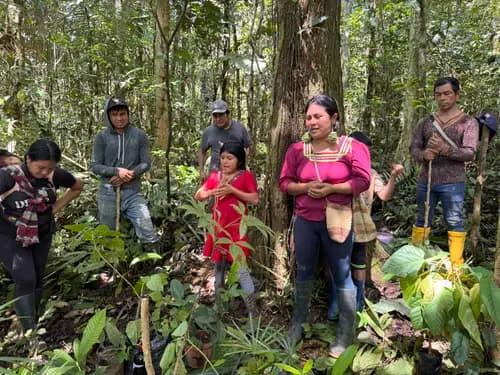
Sometimes conservation does not require protecting an enormous new area of forest.
Sometimes it means building a bridge.
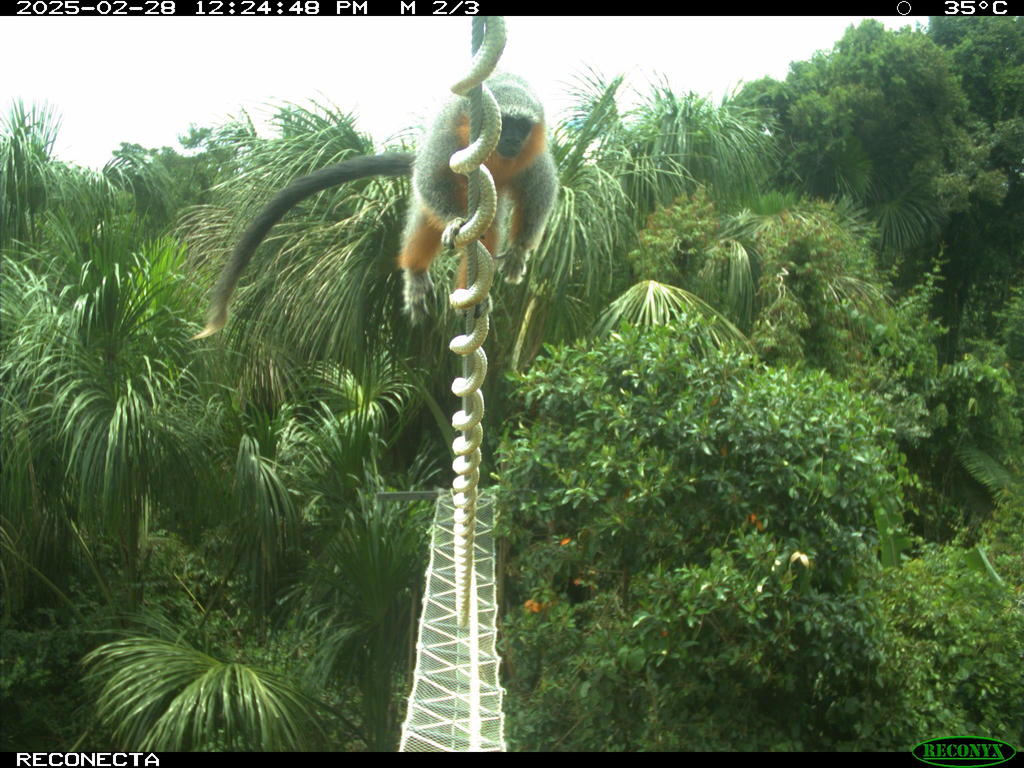
In Brazil’s Mato Grosso state, researchers have been testing canopy bridges that allow animals living in trees to cross roads without descending to the ground.
Eight bridges were installed near Alta Floresta in 2024. During the following 15 months, camera traps recorded around 15,000 wildlife crossings, including use by six primate species. No roadkill was recorded at the monitored sites during the study period.
The idea is simple but powerful.
Instead of forcing monkeys and other tree-dwelling animals onto the road, the bridges create a safe route through the canopy.
It demonstrates how relatively small conservation projects can solve very specific problems.
📸 Picture 5: Monkey crossing a rope bridge above a Brazilian Amazon road.
Alt text: Amazon monkey using a wildlife canopy bridge above a road
6. Conservation Is Also About Teaching the Next Generation

Protecting the Amazon cannot depend only on today’s scientists and conservation workers.
Children living in and around the rainforest will eventually become the people making decisions about these landscapes.
That is why environmental education has become part of many conservation programs.
In Ecuador, conservation activities have brought children from Amazonian communities into educational programs focused on understanding local wildlife and the connection between animals, forests and their territories.
One recent program involved children learning about species such as jaguars, harpy eagles, tapirs and other animals associated with Amazon conservation corridors.
These experiences can transform conservation from an abstract environmental topic into something personal.
When a child understands that a forest provides habitat for animals and also supports the community, protecting it can become part of everyday life.
📸 Picture 6: Children learning about Amazon wildlife during an environmental education activity.
Alt text: Children learning about Amazon rainforest wildlife and conservation
7. The Future Depends on Cooperation
Perhaps the most important lesson from current conservation work is that no single organization can save the Amazon alone.
Governments control laws and protected areas. Scientists provide research. Conservation organizations develop projects and technology. Indigenous communities contribute territorial knowledge and leadership. Local residents depend on forests and rivers for their livelihoods.
Successful conservation requires these groups to work together.
Amazon Conservation says its approach combines science, technology, local partnerships and Indigenous leadership. Its alliance across Amazonian countries reports having helped protect more than 14.6 million acres of forest through long-term conservation partnerships.
The challenges remain enormous, but these projects show that conservation is not simply about stopping destruction.
It is also about building better systems for the future.
What a Conservation Documentary Really Shows
A powerful Amazon documentary should not show only beautiful wildlife.
It should show the people behind the protection.
It should show a scientist checking a camera trap before sunrise. A community member examining a drone image. Children learning the names of animals in their forest. A monkey crossing a bridge above a busy road.
These scenes tell a different story about the Amazon.
They show that conservation is not one dramatic event. It is thousands of small decisions repeated over many years.
A protected corridor.
A camera recording a jaguar.
A community monitoring its territory.
A bridge helping a monkey cross a road.
A child discovering why the forest matters.
Each action may seem small on its own, but together they can create something much bigger.
Final Thoughts
The Amazon remains one of the most important wildlife landscapes on Earth, but protecting it requires more than simply declaring forests protected.
The conservation efforts developing across the region show a more connected approach—one that combines science, technology, Indigenous knowledge, education and cooperation.
New corridors can reconnect fragmented habitats. Camera traps can reveal hidden wildlife. Drones and satellites can help detect threats. Canopy bridges can give animals safer routes across roads.
Most importantly, local communities are increasingly becoming part of the conservation story rather than simply observers of it.
The Amazon’s future is still uncertain, but these efforts provide reasons for hope.
The rainforest may be enormous, but its protection begins with individual people, individual communities and individual actions.
And perhaps the most powerful conservation story is not about what we have already saved—it is about what we can still protect.
Image SEO Summary
Image Suggested File Name Alt Text 1 amazon-conservation-corridor.jpgConnected Amazon rainforest landscape protected for wildlife and local communities 2 indigenous-amazon-conservation.jpgIndigenous community members participating in Amazon rainforest conservation 3 amazon-wildlife-camera-trap.jpgCamera trap monitoring wildlife in the Amazon rainforest 4 amazon-conservation-drone.jpgConservation worker using a drone to monitor the Amazon rainforest 5 amazon-wildlife-canopy-bridge.jpgAmazon monkey using a wildlife canopy bridge above a road 6 amazon-environmental-education.jpgChildren learning about Amazon rainforest wildlife and conservation 7 amazon-rainforest-protection.jpgConservation landscape protecting Amazon rainforest habitat and wildlife Strong Alternative Headline
Saving the Amazon: 7 Powerful Conservation Efforts Giving Rainforest Wildlife a Future
Suggested Featured Image Alt Text
Conservation workers protecting Amazon rainforest habitat and wildlife
-

Six Incredible Amazon Animals: Meet the Jaguar, Green Anaconda, Capybara, River Dolphin, Harpy Eagle and Toucan
Six Incredible Amazon Animals: Meet the Jaguar, Green Anaconda, Capybara, River Dolphin, Harpy Eagle and Toucan
Category: Amazon Wildlife
Tags: Amazon Rainforest, Amazon Animals, Jaguar, Green Anaconda, Capybara, Amazon River Dolphin, Harpy Eagle, Toucan, Wildlife Facts, Rainforest Animals, South American Wildlife, Wildlife Conservation
Focus Keyword: Amazon wildlife animals
SEO Title: 6 Amazing Amazon Wildlife Animals You Should Know
Meta Description: Discover six incredible Amazon wildlife animals, including the jaguar, green anaconda, capybara, river dolphin, harpy eagle and toucan.
URL Slug: amazing-amazon-wildlife-jaguar-anaconda-capybara-dolphin-eagle-toucan
Six Incredible Animals That Show the Amazing Diversity of the Amazon
The Amazon Rainforest is more than a vast sea of green trees. It is a living world filled with animals that have evolved extraordinary ways to survive.
From powerful predators moving silently through the forest to giant snakes hiding beneath the water, the Amazon contains wildlife that can seem almost unbelievable.
The region is home to millions of species, including some of the world’s most recognizable animals. Jaguars, harpy eagles and pink river dolphins are among the iconic species associated with this remarkable ecosystem. The Amazon also contains thousands of bird species, hundreds of reptiles and an extraordinary variety of freshwater animals.
In this article, we take a closer look at six fascinating Amazon animals: the jaguar, green anaconda, capybara, Amazon river dolphin, harpy eagle and toucan.
Each one has a different role in the rainforest—and each has a story worth discovering.
1. Jaguar — The Powerful Predator of the Rainforest
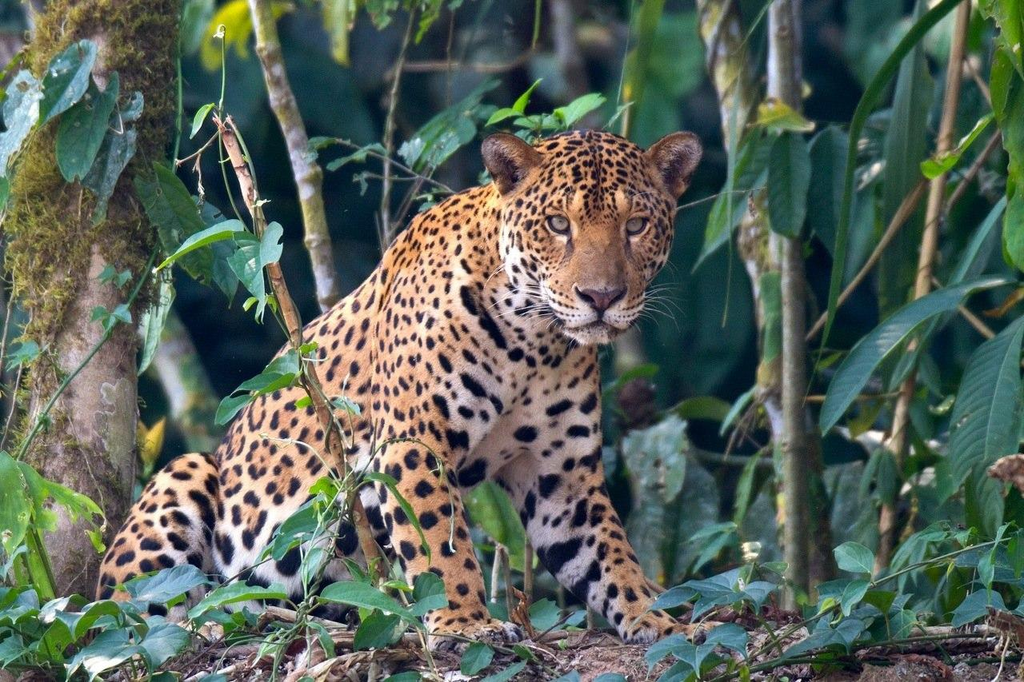
Few animals represent the Amazon as strongly as the jaguar.
The jaguar is the largest cat in the Americas and the third-largest cat species in the world. Its muscular body, powerful jaws and distinctive rosette-patterned coat make it one of the rainforest’s most impressive predators.
But the jaguar has another unusual ability: it is an excellent swimmer.
Many people imagine big cats avoiding water, but jaguars are comfortable around rivers, wetlands and flooded forests. They can hunt a remarkably wide variety of prey, including fish, turtles, peccaries, capybaras and other animals.
Their powerful bite is another important advantage. Jaguars can use their strong jaws to penetrate the tough defenses of some prey.
But their importance goes beyond hunting.
As top predators, jaguars help maintain ecological balance by influencing populations of other animals. Protecting jaguar habitat can therefore benefit many other species sharing the same landscape.
Unfortunately, habitat loss and fragmentation remain major threats. When forests become separated into smaller patches, jaguars can have greater difficulty finding prey, mates and sufficiently large territories.
📸 Picture 1 — Jaguar
Alt text: Powerful jaguar walking through the Amazon rainforest near a river
2. Green Anaconda — The Giant Hunter of Amazon Waters
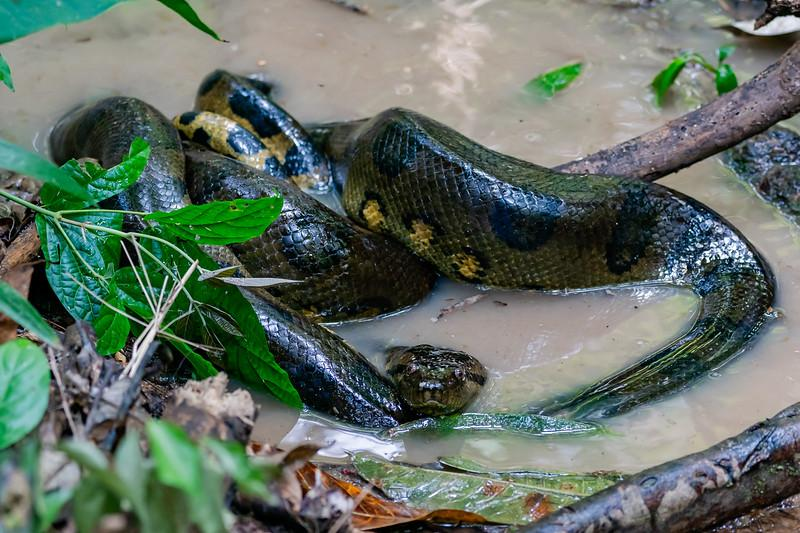
If the jaguar dominates parts of the forest, the green anaconda is one of the Amazon’s most impressive predators in wetlands and slow-moving waterways.
Green anacondas are enormous nonvenomous snakes belonging to the boa family. They are especially well adapted to life in water and are found in swamps, marshes and slow-moving streams across the Amazon and Orinoco basins.
Their bodies may look cumbersome on land, but underwater they become surprisingly stealthy.
Anacondas can remain submerged while waiting for prey to approach. Their diet can include birds, turtles, fish and mammals, including capybaras. They use powerful muscles to constrict captured prey rather than relying on venom.
Another fascinating adaptation is their ability to detect information about their surroundings in several ways. They can use their tongues to collect scent information, sense heat through specialized pits and detect vibrations.
The result is a predator perfectly suited to a watery environment where patience can be more useful than speed.
📸 Picture 2 — Green Anaconda
Alt text: Large green anaconda swimming through Amazon rainforest wetlands
3. Capybara — The World’s Largest Rodent

The capybara may look friendly and relaxed, but this enormous rodent has an important place in Amazonian wetlands.
Capybaras are the largest rodents in the world, with adults averaging around 108 pounds according to WWF. They are closely associated with water and can be found around marshes, ponds, flooded grasslands and other wet habitats.
Their diet consists mainly of grasses and aquatic vegetation.
Water is also extremely important for their survival. Capybaras are strong swimmers and can use water as a refuge when predators are nearby.
And they have plenty of predators to worry about.
Jaguars and other large predators may hunt capybaras, making alertness essential even when these animals appear to be calmly resting near the water.
Capybaras also demonstrate how important wetlands are to Amazon wildlife. When forests and wetlands are converted for agriculture or ranching, the animals that depend on those habitats can lose important feeding and shelter areas.
📸 Picture 3 — Capybara
Alt text: Capybara resting beside a freshwater wetland in the Amazon rainforest
4. Amazon River Dolphin — The Pink Swimmer
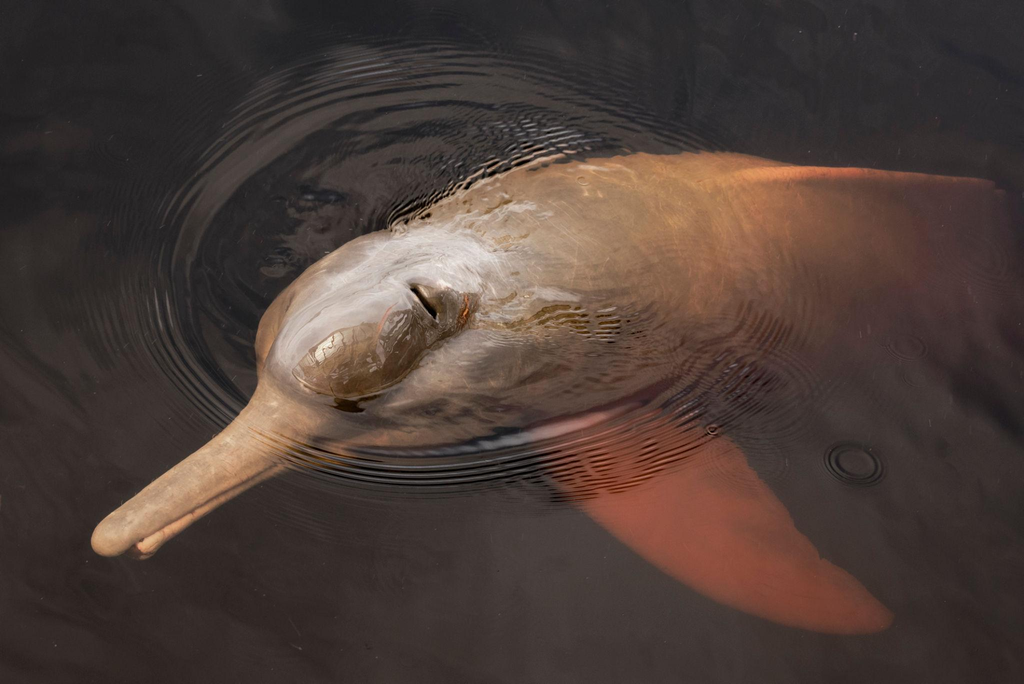
Deep in the Amazon’s enormous freshwater network lives one of its most famous aquatic mammals: the Amazon river dolphin, also known as the boto or pink river dolphin.
Unlike ocean dolphins, this species lives in freshwater. It occurs throughout much of the Amazon and Orinoco river basins.
One of its most recognizable characteristics is its pink coloration, although the exact color can vary between individuals.
The river environment changes dramatically throughout the year. During seasonal flooding, water can spread into forests, lagoons and other areas beyond the main river channels. River dolphins can move between these habitats as water levels and food availability change.
This connection between dolphins and the wider river system is one reason freshwater conservation is so important.
Dams, pollution and other human activities can affect river connectivity and habitat. Conservation programs are using tools such as satellite tagging, river surveys and drones to better understand where these dolphins travel and how their populations are changing.
📸 Picture 4 — Amazon River Dolphin
Alt text: Pink Amazon river dolphin swimming through freshwater rainforest
5. Harpy Eagle — The Powerful Hunter Above the Canopy
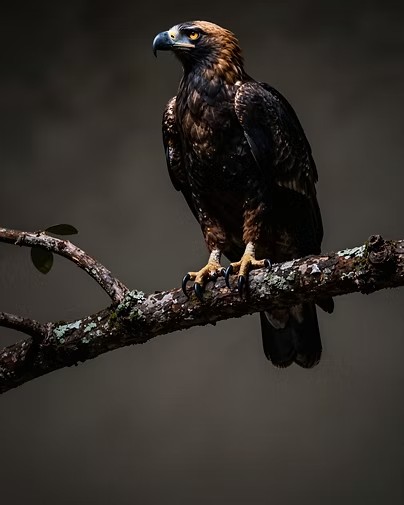
High above the forest floor, another Amazon icon rules the canopy.
The harpy eagle is one of the largest and most powerful eagles in the world. It is especially associated with mature tropical forests and is famous for its enormous talons and powerful build.
Unlike animals that search for food along the forest floor, the harpy eagle uses the rainforest canopy as its hunting environment.
Its strength allows it to capture relatively large tree-dwelling prey. This makes it an important predator in the complex food web of the Amazon.
The species also highlights why protecting mature forests matters. Large birds of prey need suitable nesting and hunting habitat, and changes to forest structure can affect the ecological conditions they depend upon.
The Amazon is one of Earth’s important remaining strongholds for harpy eagles, alongside jaguars and pink river dolphins.
Imagine looking upward through thousands of leaves and suddenly seeing this enormous eagle gliding between the trees. It is one of the rainforest’s most spectacular sights.
📸 Picture 5 — Harpy Eagle
Alt text: Harpy eagle perched high in the Amazon rainforest canopy
6. Toucan — The Colorful Voice of the Forest

Not every famous Amazon animal is a powerful predator.
Toucans bring an entirely different kind of beauty to the rainforest.
With their enormous colorful bills, bright plumage and distinctive calls, toucans are among the easiest Amazon birds to recognize.
The bill may look oversized, but it is surprisingly useful. Toucans use it to reach food and manipulate objects while moving through the forest.
They are closely associated with fruit and play an important ecological role in rainforest ecosystems. Birds that consume fruit can help move seeds from one location to another, contributing to forest regeneration.
The Amazon is home to more than a thousand bird species, including several types of toucans, along with macaws, hoatzins and many other remarkable birds.
A toucan calling from a tree can therefore be more than a beautiful sight. It is part of a much larger ecological system in which plants and animals constantly interact.
📸 Picture 6 — Toucan
Alt text: Colorful toucan perched on a branch in the Amazon rainforest canopy
Six Animals, One Extraordinary Ecosystem
At first glance, these six animals appear completely different.
The jaguar is a powerful land predator.
The green anaconda is a giant aquatic hunter.
The capybara is a water-loving herbivore.
The Amazon river dolphin spends its life navigating freshwater.
The harpy eagle hunts high above the ground.
The toucan moves through the canopy searching for food and helping distribute seeds.
Yet they are all connected.
The health of the forest influences rivers. Rivers influence fish and aquatic mammals. Trees provide food and shelter for birds and mammals. Predators depend on healthy prey populations.
This is why conservation cannot focus on only one species.
A recent WWF-led study mapped areas where jaguars and migratory freshwater species overlap. Researchers identified high-value areas covering about 17% of the Amazon basin, with roughly one-third of those areas still unprotected. The study illustrates how protecting connected land and freshwater habitats can benefit multiple species simultaneously.
Why Protecting These Animals Matters
The Amazon faces multiple pressures, including deforestation, habitat fragmentation, pollution, infrastructure development and climate change.
For animals with large territories, fragmented forests can make movement more difficult.
For river dolphins, changes to freshwater systems can affect migration and habitat.
For birds such as toucans and harpy eagles, the loss of mature forest can remove feeding and nesting opportunities.
And for animals such as capybaras and anacondas, destruction of wetlands can reduce important water-based habitat.
Protecting the Amazon therefore means protecting a network of habitats rather than simply saving individual animals.
Final Thoughts
The jaguar, green anaconda, capybara, Amazon river dolphin, harpy eagle and toucan each represent a different side of Amazon wildlife.
One rules the forest floor.
Another hides beneath the water.
One grazes peacefully beside wetlands.
Another swims through flooded forests.
One dominates the canopy.
And another fills the trees with color and sound.
Together, they reveal why the Amazon is so extraordinary.
The rainforest is not simply a collection of beautiful animals. It is a connected living system in which every species has a role.
Protecting that system means giving these remarkable animals a future—and ensuring that generations to come can still look into the Amazon forest and discover something truly wild.
The Amazon is full of extraordinary animals, but its greatest wonder may be the connections between them.
-
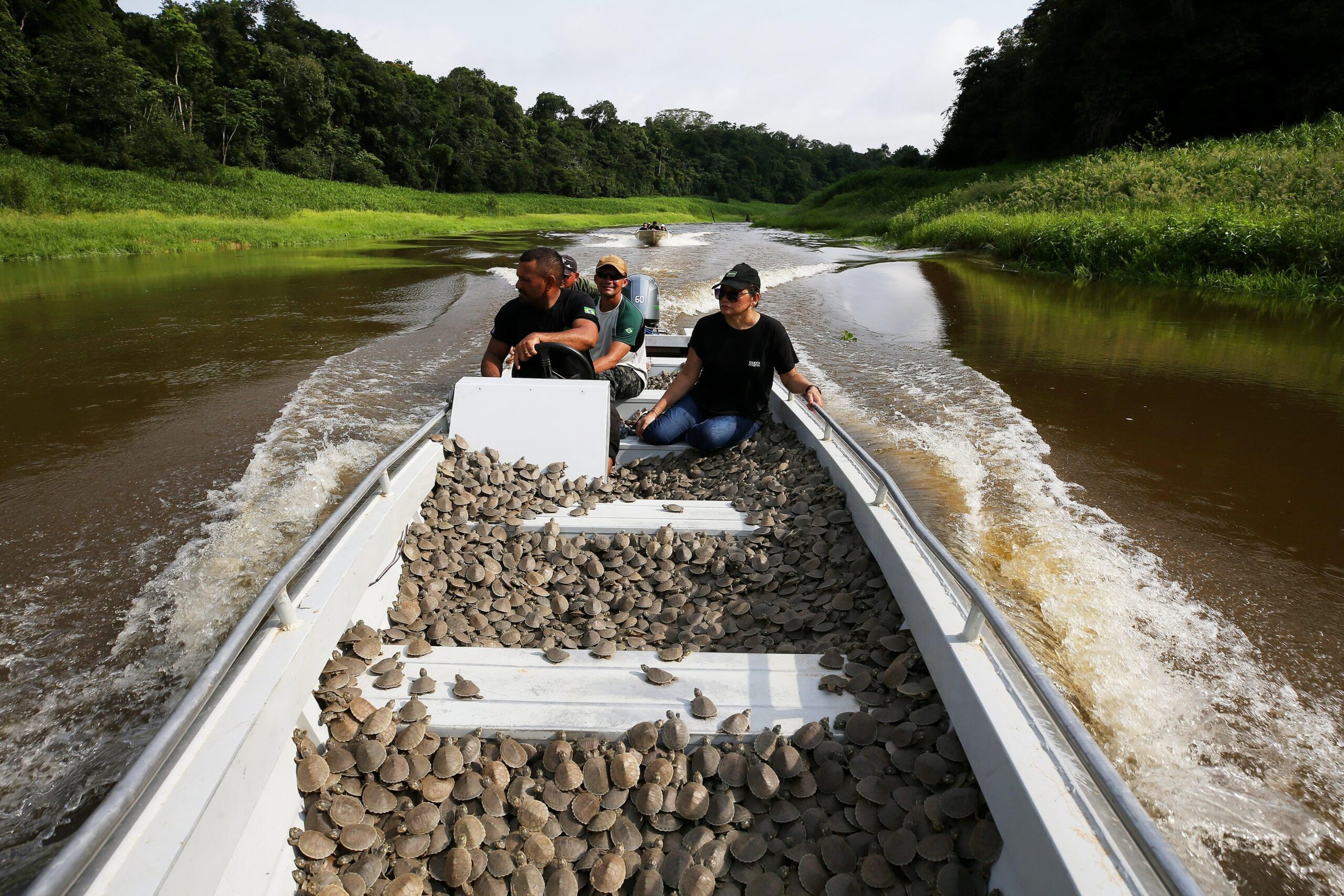
Amazon River Turtle Listed as Endangered: A Warning for One of the Rainforest’s Most Important Reptiles
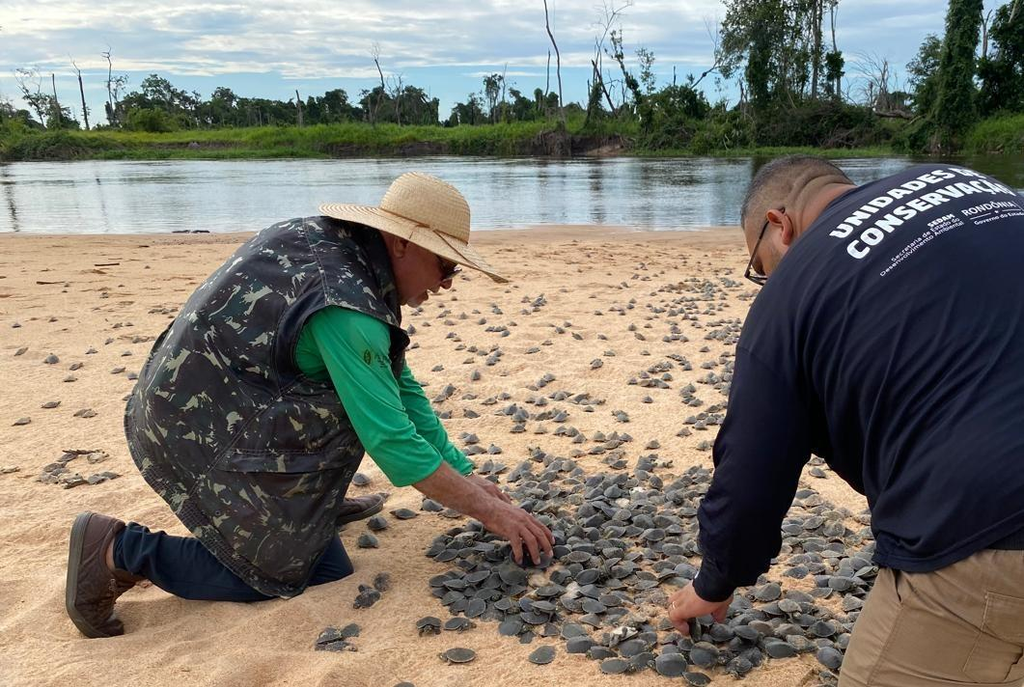
Amazon River Turtle Listed as Endangered: A Warning for One of the Rainforest’s Most Important Reptiles
Category: Amazon Wildlife News
Tags: Amazon wildlife news, Amazon rainforest 2026, July 2026 news, Amazon river turtle, endangered animals, turtle conservation, Brazil wildlife, Amazon River, rainforest conservation, wildlife protection
Focus Keyphrase: Amazon river turtle endangered 2026
Suggested URL Slug:amazon-river-turtle-endangered-2026
Meta Description: Brazil has listed the Amazon river turtle as endangered for the first time in July 2026. Discover why its population is declining and what conservationists are doing to protect it.
A New Warning From the Amazon
Deep in the rivers and floodplains of the Amazon lives a reptile that has quietly played an important role in the rainforest ecosystem for generations.
The Amazon river turtle, also known as the six-tubercled Amazon River turtle, has long been part of life along the region’s waterways.
But in July 2026, its situation received a major warning.
Brazil officially listed the species as endangered for the first time, following evidence that its population has fallen by roughly half.
The decision is more than a change in conservation status.
It is a signal that one of the Amazon’s freshwater animals is facing increasing pressure from human activity.
And because the turtle depends on healthy rivers, beaches and floodplain forests, protecting it means protecting an entire river ecosystem.

1. Meet the Amazon River Turtle
The six-tubercled Amazon River turtle is a freshwater species found in parts of the Amazon basin.
It spends much of its life associated with rivers and surrounding wetlands.
Like many Amazon turtles, it is closely connected to the seasonal rhythm of the river.
When water levels change, sandbanks and river beaches can become important places for nesting.
This relationship with the river makes the turtle particularly vulnerable to changes in its environment.
A healthy river is not simply a place where the turtle swims.
It is also where the animal feeds, moves, reproduces and raises the next generation.
Picture 1 — Alt Text: “Six-tubercled Amazon River turtle swimming in a freshwater river”
2. Why the Population Decline Is So Serious
According to recent reporting, the turtle’s population has been reduced by approximately half.
That is a major decline for a species that was once much more common in parts of its range.
Population declines can happen for several reasons.
One important problem is the collection of turtles and their eggs.
Because turtle eggs are concentrated in nesting areas, they can be especially vulnerable during the breeding season.
Adult turtles may also be captured for food.
When too many eggs and adults are removed, fewer young turtles survive to adulthood.
The result can be a slow population decline that may not be obvious until the damage has become serious.

Picture 2 — Alt Text: “Amazon river turtle resting near a sandy riverbank”
3. The Amazon Riverbank Can Become a Nursery
One of the most fascinating parts of the turtle’s life occurs on Amazon riverbanks.
During the appropriate seasonal conditions, females come onto sandy areas to lay eggs.
These nesting sites may look simple.
A stretch of sand beside a huge river might appear almost empty.
But beneath the surface, it can contain the future of an entire turtle population.
After the eggs hatch, tiny turtles must make their way toward the water.
This is a dangerous stage of life.
Predators can eat young turtles, while human activity can disturb nesting beaches.
Protecting these seemingly ordinary riverbanks can therefore be extremely important.
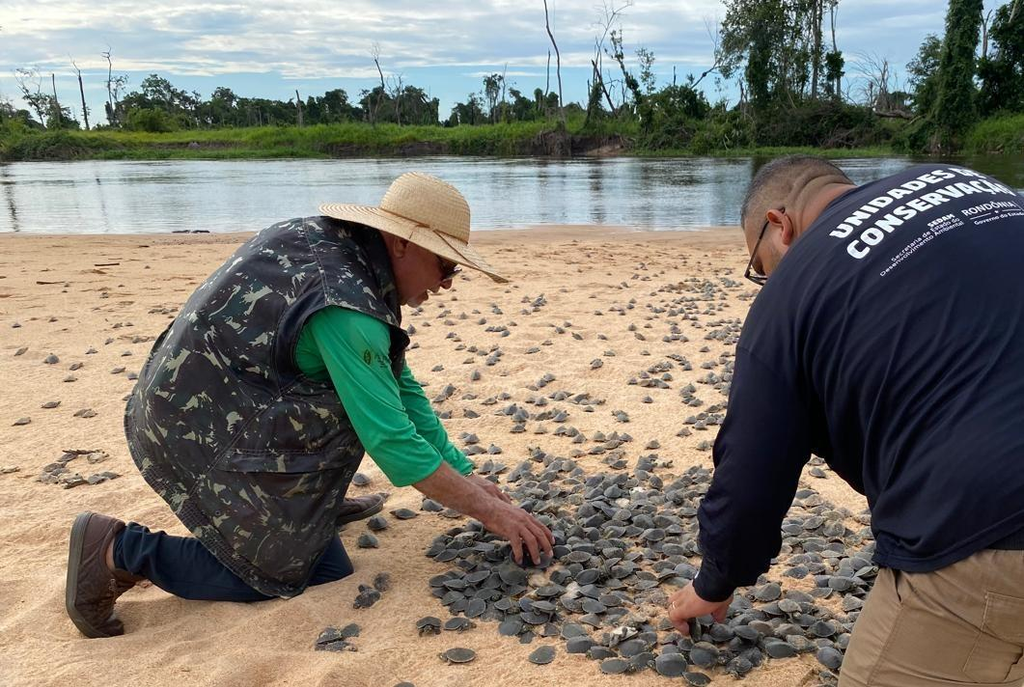
Picture 3 — Alt Text: “Amazon river turtle nesting on a sandy riverbank during breeding season”
4. Young Turtles Face a Dangerous Journey
For a hatchling, reaching the river is only the beginning.
A young turtle is small and vulnerable.
It must find food, avoid predators and survive changing river conditions.
Only a fraction of hatchlings will eventually become adults.
This is normal in many wildlife populations.
But when humans also collect eggs or capture turtles, the pressure can become much greater.
That is why conservationists often focus heavily on nesting beaches.
If more hatchlings survive their earliest stages, the population has a better chance of recovering over time.
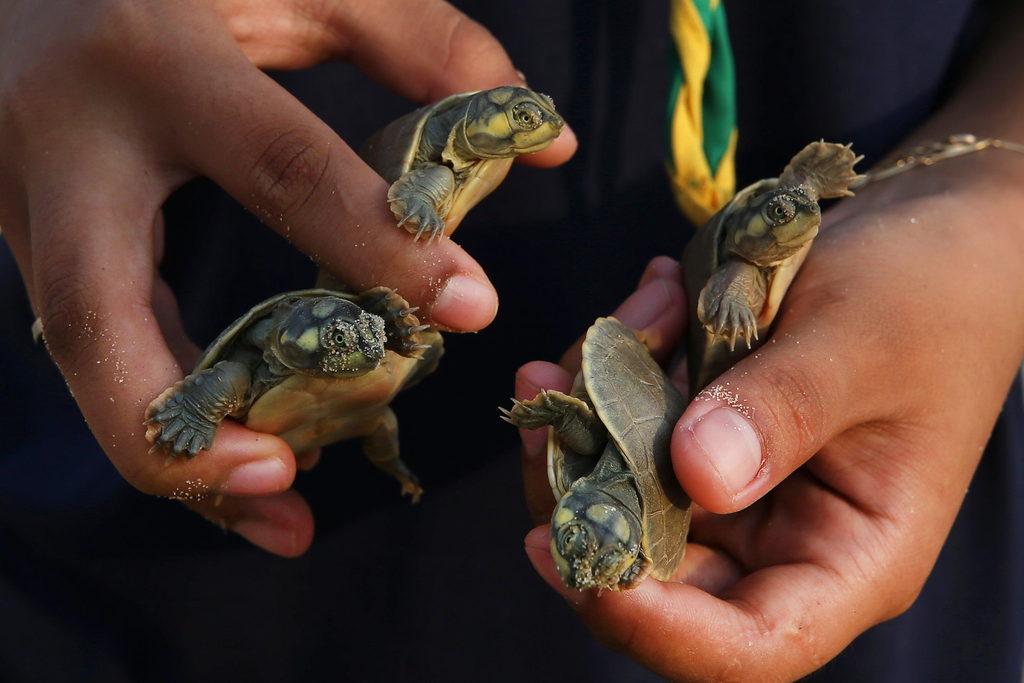
Picture 4 — Alt Text: “Young Amazon river turtle hatchling moving toward the river”
5. Why Local Communities Matter
The Amazon is not an empty wilderness.
Millions of people live throughout the wider Amazon region, including Indigenous peoples and river communities whose lives are closely connected to the rivers.
For generations, turtles have been part of local food traditions and river life.
That means successful conservation cannot simply be about creating rules from far away.
Local communities need to be part of the solution.
Community monitoring, protection of nesting beaches and sustainable fishing and harvesting practices can help wildlife while respecting people’s livelihoods.
When local residents become guardians of nesting areas, they can notice changes that outside researchers might never see.
Picture 5 — Alt Text: “Amazon river community monitoring turtle nesting habitat”
6. Protecting the Turtle Means Protecting the River
The new endangered status also highlights a bigger environmental issue.
The turtle is not isolated from its ecosystem.
It depends on rivers, sandbanks, wetlands and surrounding forests.
When these habitats are damaged, the turtle can suffer.
Pollution can affect aquatic environments.
Changes to river systems can alter nesting areas.
Human activity can disturb beaches where turtles reproduce.
And the loss of surrounding forest can change the ecological conditions of the entire landscape.
Protecting the turtle therefore requires more than saving individual animals.
It requires protecting the places where they live.
Picture 6 — Alt Text: “Healthy Amazon rainforest river providing habitat for freshwater turtles”
7. An Endangered Listing Can Change the Future
Being officially recognized as endangered can strengthen conservation attention.
It can encourage authorities and conservation organizations to monitor populations more carefully, protect important habitat and address threats.
For a species that has experienced such a significant decline, that attention is urgently needed.
The July 2026 announcement does not mean the Amazon river turtle is doomed.
Quite the opposite.
It provides an opportunity to increase protection before the population falls even further.
Many conservation success stories begin with a similar moment: scientists identify a serious decline, governments respond, and communities become part of the recovery effort.
Picture 7 — Alt Text: “Amazon river turtle conservation project protecting endangered freshwater turtles”
Why This Turtle Matters to the Amazon
It is easy to overlook freshwater turtles.
They do not receive the same attention as jaguars, giant eagles or river dolphins.
But turtles are part of the ecological machinery of the Amazon.
They interact with aquatic environments and food webs and contribute to the movement of nutrients and seeds.
Their presence also tells us something about the health of the rivers they depend on.
When a common river animal begins disappearing, it can be a warning that larger environmental changes are taking place.
The turtle’s decline should therefore concern more than turtle lovers.
It should concern anyone interested in the future of the Amazon.
A Larger Warning for Amazon Wildlife
The Amazon is experiencing many environmental changes at once.
Recent July 2026 reporting has highlighted declining wildlife populations, habitat fragmentation, drought concerns and increasing pressure on Amazon rivers.
At the same time, there are encouraging conservation developments.
In July, Ecuador announced a new conservation corridor linking more than 173,000 hectares of Amazon rainforest and connecting Yasuní National Park, Limoncocha Biological Reserve and Cuyabeno Wildlife Reserve.
These developments show that conservation can move in both directions.
Some species are becoming more threatened.
At the same time, governments and conservation groups are creating new ways to protect habitat.
The future depends on which trend becomes stronger.
What Can Be Done?
Protecting the Amazon river turtle will require several actions working together.
Protect nesting beaches
Important nesting areas need protection during the breeding season.
Reduce illegal collection
Removing excessive numbers of adults and eggs can seriously damage populations.
Monitor populations
Scientists and local communities need reliable information about turtle numbers and nesting success.
Protect rivers
Clean water and healthy river ecosystems are essential.
Support local communities
Conservation programs are more likely to succeed when local people benefit from and participate in protecting wildlife.
Final Thoughts
The July 2026 decision to recognize the Amazon river turtle as endangered is a serious warning.
A creature that has lived alongside Amazon rivers for generations is now facing a future that is far less certain.
But the story does not have to end with decline.
The turtle still has nesting beaches.
The rivers still flow.
The rainforest still provides habitat.
And people are beginning to pay greater attention to what is happening.
The biggest lesson may be that wildlife conservation often begins with noticing the animals that are easiest to overlook.
The Amazon river turtle may not be the rainforest’s most famous animal.
But its survival is connected to the health of the rivers, wetlands and forests that support countless other species.
Saving the Amazon’s quiet creatures may be one of the best ways to protect the entire ecosystem they call home.
-

15,000 Safe Crossings: How Tiny Bridges Are Changing the Future of Amazon Wildlife
5
15,000 Safe Crossings: How Tiny Bridges Are Changing the Future of Amazon Wildlife
Category: Amazon Wildlife News
Tags: Amazon wildlife news, Amazon rainforest 2026, August 2026 news, wildlife bridges, canopy bridges, animal conservation, Amazon animals, Brazil rainforest, wildlife crossings, rainforest conservation
Focus Keyphrase: Amazon wildlife news August 2026
Suggested URL Slug:amazon-wildlife-canopy-bridges-august-2026
Meta Description: New August 2026 Amazon wildlife news reveals how canopy bridges have helped animals make 15,000 safe road crossings without a recorded roadkill at monitored sites.
15,000 Safe Crossings: How Tiny Bridges Are Changing the Future of Amazon Wildlife
There is a remarkable new conservation story coming from the Amazon in August 2026.
Instead of building enormous highways, fences or expensive concrete structures, conservationists are using something surprisingly simple: rope bridges suspended high above roads.
The idea sounds almost too simple.
But new monitoring results from Brazil suggest that these bridges can make a major difference. Camera traps recorded approximately 15,000 crossings by tree-dwelling wildlife over 15 months, with no roadkill recorded at the monitored bridge locations.
For animals that normally spend their lives in the forest canopy, the bridges provide a safe way to cross roads without coming down to ground level.
It could become an important new tool for protecting Amazon wildlife.
1. A Road Can Become a Wall for a Tree-Dwelling Animal
Imagine living your entire life in the treetops.
Your home is connected by branches. You travel from tree to tree. You search for fruit, leaves and insects above the ground.
Then suddenly, a road cuts through the forest.
For a human, crossing the road may seem easy.
For a monkey or another canopy animal, however, the road can create a dangerous gap.
Many tree-dwelling animals are reluctant to descend to the ground, where they may encounter vehicles, predators or unfamiliar habitat.
This is where canopy bridges come in.
The bridges recreate a connection between trees, allowing animals to remain above the traffic.
Picture 1 — Alt Text: “Rope canopy bridge connecting Amazon rainforest trees above a road”
2. Thousands of Animals Have Already Used the Bridges
Researchers installed a series of rope canopy bridges near Alta Floresta in northern Mato Grosso, Brazil.
Camera traps were then used to record wildlife activity around the structures.
The results were remarkable.
Over approximately 15 months, cameras recorded 15,000 wildlife crossings by arboreal animals. Most importantly, researchers reported no roadkill at the monitored bridge locations.
That number changes the way we should think about wildlife crossings.
A bridge does not have to be enormous to be useful.
Sometimes a few ropes between two trees can reconnect a broken piece of forest.
Picture 2 — Alt Text: “Amazon monkey crossing a rope canopy bridge above a forest road”
3. Monkeys Are Among the Main Beneficiaries
Several species of primates have been observed using canopy bridges.
This is particularly important because monkeys can depend heavily on continuous tree cover.
A road can divide their habitat into separate pieces.
If animals are unable to cross safely, groups can become isolated from one another and from important feeding areas.
The bridges provide an alternative route.
Instead of climbing down and attempting to cross the road, an animal can move upward, step onto the bridge and continue through the canopy.
For a monkey, the solution may feel completely natural once it becomes familiar.
Picture 3 — Alt Text: “Amazon monkey safely crossing a wildlife canopy bridge between trees”
4. Some Animals Need Time to Trust a New Bridge
One of the fascinating discoveries from canopy-bridge research is that animals do not necessarily use a new bridge immediately.
Some species can be extremely cautious.
Researchers have observed animals examining new bridges before deciding whether they are safe.
This makes sense.
A rope structure hanging between trees is not something an animal has encountered throughout its evolutionary history.
The first reaction may be uncertainty.
But once animals learn that the bridge provides a safe route, they can begin using it repeatedly.
Different animals may also prefer different bridge designs.
Some primates may feel more comfortable with additional support, while other tree-dwelling mammals may use simpler structures.
Picture 4 — Alt Text: “Wild Amazon animal approaching a newly installed canopy bridge”
5. The Bridges Can Protect More Than One Species
The greatest value of a canopy bridge is that it does not necessarily help only one species.
Several kinds of arboreal mammals can potentially use the same connection.
Monkeys, opossums, kinkajous and other tree-dwelling animals have been recorded using canopy crossings in Amazon conservation projects.
This makes the bridges particularly interesting from an ecological perspective.
A single structure can become a small highway through the treetops.
Instead of one animal making one journey, many animals can use the same route repeatedly.
In this sense, the bridge becomes part of the forest’s infrastructure.
Picture 5 — Alt Text: “Multiple Amazon rainforest animals using canopy bridges to cross roads safely”
6. Why This Matters as Roads Expand
Roads are important for people.
They connect communities, transport food and goods, and support economic activity.
But roads can also divide wildlife habitat.
This creates one of the difficult challenges of modern conservation: how can humans continue using landscapes while reducing the danger to wildlife?
Canopy bridges offer one possible answer.
Instead of removing roads completely, conservationists can create safe crossing points where they are most needed.
That approach could become increasingly important as roads and other infrastructure fragment forest landscapes.
The August 2026 findings provide encouraging evidence that relatively simple structures can make a measurable difference.
Picture 6 — Alt Text: “Amazon forest road with wildlife canopy bridge connecting both sides”

7. A Small Bridge Can Become a Lifeline
The most powerful part of this story is not the number 15,000.
It is what the number represents.
Every recorded crossing means an animal successfully moved from one side of a road to another.
That could mean reaching food.
It could mean returning to a sleeping area.
It could mean finding another group of its species.
It could mean avoiding a dangerous encounter with traffic.
For wildlife, a connection that looks tiny to humans can be enormously important.
The forest may appear continuous from above, but roads can create invisible barriers for animals living among the trees.
A rope bridge can remove part of that barrier.
A New Idea for Amazon Conservation
The Amazon faces enormous conservation challenges.
Deforestation, climate change, illegal mining, pollution and habitat fragmentation all create pressure on wildlife.
No single solution can solve these problems.
But canopy bridges demonstrate an important principle: conservation does not always require enormous projects.
Sometimes a carefully designed intervention in exactly the right location can help thousands of animals.
Research from other Amazon conservation projects has similarly shown that canopy bridges can reconnect habitats for tree-living animals such as monkeys, sloths, porcupines and kinkajous.
The new 2026 results add another encouraging example.
What Could Happen Next?
Researchers will need to continue monitoring the bridges to determine how different species use them over longer periods.
Questions remain.
Which animals use the bridges most frequently?
Do young animals learn to use them from adults?
Which bridge designs work best?
How many bridges are needed along a road?
And can the approach be expanded to other parts of the Amazon?
Answering these questions could help conservationists decide where similar structures would provide the greatest benefit.
If the method continues to prove effective, canopy bridges could become an increasingly common part of road planning in rainforest regions.
The Bigger Amazon Story
The August 2026 canopy-bridge news arrives at an important time.
Scientists are warning that Amazon forests are facing increasing pressure from deforestation and warming, while other research shows that portions of the forest can recover when given the opportunity.
At the same time, conservationists are working to reconnect fragmented habitats.
In Ecuador, for example, a new conservation corridor is being developed to reconnect important Amazon rainforest areas that have been divided by deforestation.
These projects share the same basic idea:
Wildlife needs connected habitat.
Whether the connection is a huge conservation corridor or a small rope bridge above a road, maintaining movement between forest areas can be critical.
Final Thoughts
The Amazon is often associated with enormous trees, powerful rivers and spectacular animals.
But sometimes the most hopeful wildlife stories are surprisingly small.
A few ropes.
Two trees.
One road.
And thousands of animals finding a safe way across.
The latest August 2026 results showing around 15,000 recorded crossings without a roadkill at the monitored sites demonstrate how creative conservation can help wildlife adapt to a landscape increasingly shaped by people.
The Amazon still faces enormous challenges.
But this story offers an important reminder: protecting wildlife is not always about choosing between people and nature.
Sometimes, with the right design, we can build a way for both to share the same landscape.
And high above an Amazon road, a simple rope bridge may be giving thousands of animals exactly that chance.
-
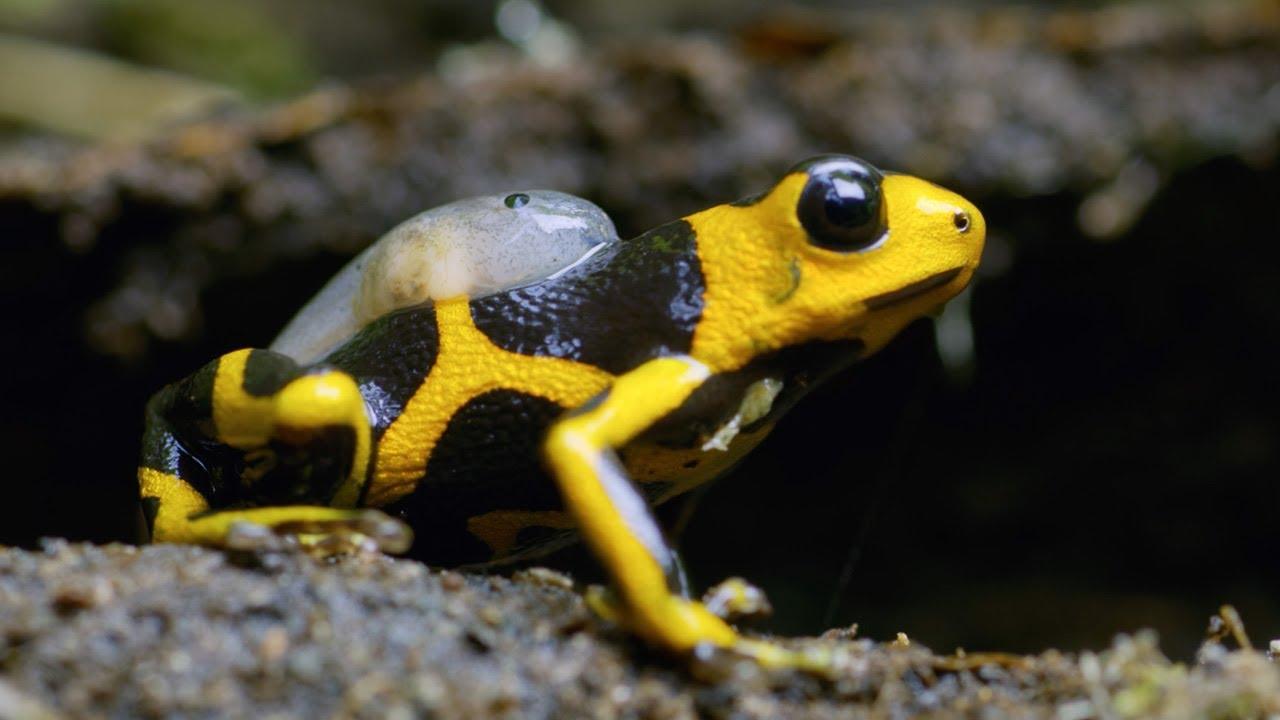
🌿 7 Strange Amazon Animal Stories That Reveal the Hidden Side of the Rainforest
🌿 7 Strange Amazon Animal Stories That Reveal the Hidden Side of the Rainforest
Category: Wildlife | Nature | Amazon Rainforest
Tags: Amazon Rainforest, Amazon animals, strange animal stories, rainforest wildlife, wildlife facts, jungle animals, South America, exotic wildlife, animal behavior, biodiversity, nature stories, conservation
Meta Description:
Discover seven fascinating Amazon animal stories, from giant anteaters and pink river dolphins to poison frogs, capybaras, caimans, and remarkable rainforest survival strategies.
7 Strange Amazon Animal Stories That Reveal the Hidden Side of the Rainforest
The Amazon Rainforest is one of the most extraordinary wildlife environments on Earth. Beneath its enormous canopy, along its winding rivers, and inside its flooded forests, animals have developed remarkable ways to survive.
Some species have unusual diets. Others communicate through sounds, depend on family groups, or use the changing river levels to their advantage.
The most interesting stories are often not about the largest predators. They are about animals quietly doing extraordinary things every day.
Here are seven new Amazon wildlife stories worth discovering.
1. The Anteater With a Surprisingly Powerful Defense
Alt Text: Giant anteater walking through Amazon rainforest vegetation.
The giant anteater has no teeth, but that does not mean it is defenseless.
Its enormous claws are powerful enough to discourage predators when the animal feels threatened.
The giant anteater normally uses those claws to open termite mounds and ant nests. After breaking into the colony, it uses an extremely long, sticky tongue to collect insects.
It can flick its tongue in and out hundreds of times during a feeding session.
Despite its unusual appearance, the giant anteater is perfectly designed for its specialized diet.
2. The Bird That Smells Different From Most Birds
Alt Text: Hoatzin perched on a branch above an Amazon wetland.
The hoatzin has another unusual feature besides its leaf-eating lifestyle.
Because its digestive system ferments vegetation, it can produce a distinctive odor.
This has earned the species the informal nickname “stinkbird.”
The smell is connected to the fermentation process that helps the bird digest its leafy diet.
The hoatzin is therefore unusual not only in appearance and behavior but also in the way it processes food.
3. The Predator That Watches From Beneath the Water
Alt Text: Black caiman partially submerged in an Amazon river.
The black caiman is one of the Amazon’s largest reptiles.
It can remain mostly submerged while waiting for prey.
Only its eyes and nostrils may appear above the surface, allowing it to observe the river without revealing much of its body.
Young caimans feed on smaller aquatic animals, while adults can tackle much larger prey.
Its ability to disappear into dark water makes it an exceptionally effective ambush predator.
4. The Frog That Becomes a Living Taxi
Alt Text: Poison frog carrying a tiny tadpole on its back through the Amazon rainforest.
Some poison frogs provide extraordinary care for their offspring.
After tadpoles hatch, an adult frog may carry them individually on its back.
The tiny tadpole clings to the parent’s skin while the adult travels through the forest searching for a suitable place to release it.
Often, the destination is a small water-filled plant high above the forest floor.
For such a tiny animal, this is an incredible journey.
5. The Dolphin That Can Be Bright Pink
Alt Text: Amazon river dolphin swimming near the surface of a rainforest river.
The Amazon river dolphin, commonly called the pink river dolphin or boto, can develop a striking pink coloration.
Young dolphins are generally darker or grayish, while some adults become increasingly pink as they mature.
They live in complex river systems where water levels can change dramatically during the year.
During floods, dolphins may travel among trees in flooded forests searching for fish.
Their flexible necks help them maneuver through areas where ordinary marine dolphins would struggle.
6. The Giant Rodent That Lives Beside the River
Alt Text: Capybara family resting beside an Amazon river.
The capybara is the world’s largest living rodent.
It is strongly connected to water and can remain submerged when threatened.
Capybaras commonly live in groups and communicate through a surprisingly varied collection of whistles, squeals, barks, and other sounds.
Young animals remain close to adults, giving the group additional protection against predators.
Their ability to combine land and water habitats makes them exceptionally well adapted to the Amazon environment.
7. When the Rainforest Disappears Underwater
Alt Text: Amazon flooded forest with trees standing in river water during the rainy season.
For part of the year, sections of the Amazon literally become underwater forests.
Seasonal floods can cover enormous areas, creating temporary aquatic highways between rivers and trees.
Fish swim beneath branches.
Birds feed from flooded vegetation.
Dolphins navigate between tree trunks.
Fruit that falls from the canopy becomes food for aquatic animals.
When the water eventually retreats, the forest returns to dry land.
This extraordinary seasonal transformation is one of the defining features of the Amazon ecosystem.
A World Built Around Water
Many Amazon animals cannot be separated from the river system.
Water provides food, transportation, nesting opportunities, and protection.
For some species, seasonal flooding is not a disaster—it is an essential part of life.
This is why protecting Amazon rivers is just as important as protecting the forest itself.
The Amazon Still Holds Countless Secrets
Scientists continue studying remote parts of the Amazon where wildlife remains poorly documented.
New species are regularly described, while familiar animals continue to reveal surprising behaviors.
Technology such as camera traps, acoustic monitoring, satellite imagery, and environmental DNA is helping researchers understand this enormous ecosystem.
Why Conservation Is So Important
Every species is connected to others.
Anteaters control insect populations.
Dolphins influence aquatic food webs.
Caimans are important river predators.
Capybaras transfer nutrients between land and water.
Frogs help control insects.
Protecting biodiversity protects the entire network.
Final Thoughts
The Amazon Rainforest is full of strange and wonderful stories.
A toothless mammal can defend itself with enormous claws. A bird can digest leaves through fermentation. A frog can carry its baby through the canopy. A dolphin can turn pink. And an entire forest can temporarily become an underwater world.
These remarkable adaptations remind us that the Amazon is still one of Earth’s greatest natural mysteries—and there are undoubtedly many more stories waiting to be discovered.
📸 WordPress Image SEO
# File Name Alt Text 1 giant-anteater-amazon.jpg Giant anteater walking through Amazon rainforest vegetation 2 amazon-hoatzin-bird.jpg Hoatzin perched on a branch above an Amazon wetland 3 black-caiman-amazon-river.jpg Black caiman partially submerged in an Amazon river 4 poison-frog-tadpole.jpg Poison frog carrying a tiny tadpole through the Amazon rainforest 5 pink-amazon-river-dolphin.jpg Amazon river dolphin swimming near the surface of a rainforest river 6 capybara-family-amazon.jpg Capybara family resting beside an Amazon river 7 flooded-amazon-forest.jpg Amazon rainforest flooded during the seasonal rainy season -
The Biggest Animals Ever Filmed in the Deep Wilderness
7 Mysterious Giant Creatures Caught on Camera Deep in the Wilderness
7 Giant Wild Animals Captured Deep in the Forest
The world’s remote forests remain among the least explored places on Earth. Dense vegetation, rugged terrain, and vast wilderness areas make it difficult for humans to observe what truly lives within these hidden ecosystems.
Fortunately, modern technology, wildlife photographers, hikers, and conservation researchers have helped reveal some of nature’s most incredible secrets.
Over the years, camera traps and lucky encounters have captured images of unusually large animals roaming deep forests around the world. In many cases, these creatures appeared so enormous that viewers initially suspected the photographs had been altered.
However, the animals were real.
From gigantic bears and towering moose to massive wild boars and giant bison, these extraordinary encounters remind us that nature can still surprise even experienced wildlife experts.
Let’s explore some of the most impressive giant animals ever photographed in remote wilderness areas.
1. The Giant Moose That Looked Like a Walking Dinosaur
Among all deer species, moose are already famous for their enormous size.
Adult bull moose can stand over 2 meters (6.5 feet) at the shoulder and weigh more than 700 kilograms (1,500 pounds).
Yet wildlife photographers occasionally encounter individuals that appear even larger than average.
One famous photograph taken in a northern forest showed a giant bull moose standing beside trees. Its enormous antlers stretched wider than many people are tall.
The image quickly spread online because the animal looked almost prehistoric.
Scientists explain that exceptional genetics, abundant food, and favorable habitat conditions can occasionally produce unusually large individuals.
2. The Giant Grizzly Bear Caught by a Camera Trap
Large bears often seem intimidating in photographs, but some individuals reach truly extraordinary sizes.
Wildlife researchers using camera traps in remote regions have documented exceptionally large grizzly bears wandering through forests.
These massive predators can weigh hundreds of kilograms and stand well over 8 feet tall when upright.
Many conservationists describe their first encounter with a giant bear as both awe-inspiring and humbling.
Although bears possess incredible strength, most prefer avoiding human contact whenever possible.
3. The Massive Forest Bison
The forest bison is one of the largest land mammals in North America.
Some mature males can weigh more than a small automobile.
Wildlife photographers occasionally capture images of enormous bulls moving through remote forests.
With their thick shoulders, muscular frames, and towering presence, these animals appear almost unstoppable.
Despite their size, bison are surprisingly agile and can run much faster than many people expect.
Researchers consider them a critical part of healthy grassland and forest ecosystems.
4. The Giant Wild Boar That Astonished Hunters
Wild boars are found across many regions of the world, but some individuals grow far larger than average.
Several famous photographs taken by hunters and wildlife observers show boars with enormous bodies and impressive tusks.
These giant boars often thrive in areas with abundant food resources and limited hunting pressure.
While exaggerated stories about monster-sized boars occasionally circulate online, verified examples of exceptionally large individuals do exist.
Their powerful bodies and sharp tusks make them among the most formidable animals in many forest ecosystems.
5. The Huge Gorilla of Central Africa
The forests of Central Africa are home to some of the largest primates on Earth.
Male gorillas, especially silverbacks, can develop immense muscle mass and impressive body size.
Wildlife photographers who spend years studying gorillas sometimes encounter exceptionally large individuals that dominate their groups.
These powerful animals can weigh more than 400 pounds and possess tremendous strength.
Despite their intimidating appearance, gorillas are generally peaceful and spend much of their time feeding, resting, and caring for family members.
Their intelligence and social behavior continue to fascinate researchers worldwide.
6. The Giant Crocodile Hidden Along Forest Rivers
Deep tropical forests often contain rivers where massive crocodiles remain hidden from view.
Camera traps and wildlife expeditions have occasionally documented enormous crocodiles resting along riverbanks.
Some of these reptiles exceed 5 meters (16 feet) in length.
Their ancient appearance has changed very little over millions of years.
Because they spend much of their time submerged, exceptionally large crocodiles can remain unnoticed for years before being photographed.
These reptiles represent some of the largest predators inhabiting freshwater ecosystems.
7. The Enormous Elk Captured by Wildlife Photographers
Elk are among the most iconic animals found in forests and mountainous regions.
Adult males are already impressive, but occasionally photographers capture images of exceptionally large bulls carrying gigantic antlers.
During the breeding season, these animals become even more impressive as they compete for mates and defend territories.
Their size, strength, and majestic appearance make them favorites among wildlife enthusiasts.
Photographs of giant elk often go viral because they highlight the incredible scale that nature can achieve under ideal conditions.
Why Do Some Animals Grow So Large?
Scientists believe several factors contribute to unusually large individuals.
Genetics
Some animals inherit traits that allow them to grow larger than average.
Abundant Food
Access to high-quality nutrition supports growth and development.
Healthy Habitat
Protected environments with minimal disturbance often produce healthier wildlife populations.
Age
Many animals continue growing throughout much of their lives. Older individuals may therefore become exceptionally large.
Limited Competition
Animals living in favorable conditions may dedicate more energy to growth rather than survival.
The Importance of Wildlife Photography
Wildlife photographers and conservation researchers play a crucial role in documenting these extraordinary animals.
Their work helps:
- Monitor wildlife populations.
- Identify rare individuals.
- Raise awareness about conservation.
- Educate the public about biodiversity.
- Support habitat protection efforts.
Modern camera traps have become especially valuable because they allow researchers to observe animals without disturbing them.
Some of the most remarkable wildlife discoveries in recent years were made using these automated cameras.
Conclusion
Deep forests continue to hide some of the most extraordinary animals on Earth. From gigantic moose and massive bears to enormous crocodiles and towering gorillas, these creatures remind us that nature remains full of surprises.
Many of these giant animals were only documented because hikers, wildlife photographers, and conservation researchers spent countless hours exploring remote wilderness areas.
Their photographs provide rare glimpses into a world that most people will never see firsthand—a world where some animals grow to sizes so impressive that they seem almost mythical.
As technology improves and conservation efforts continue, we may discover even more remarkable giants hidden within Earth’s remaining wild places. 🌲📷🦍🐻🦌
-
Nature’s Giants: The Biggest Creepy Crawlers and Amphibians on Earth
The World’s Biggest Gecko, Centipede, and Frog: Giant Creatures That Seem Too Strange to Be Real
The Largest Gecko, Centipede, and Frog Ever Discovered
The natural world is filled with extraordinary creatures, but every so often scientists discover animals that seem to break the normal rules of size.
Most geckos are small enough to fit comfortably in the palm of your hand. Most frogs can sit on a leaf, and most centipedes are creatures people barely notice as they crawl through the soil.
However, some species have evolved into giants compared to their relatives. These animals are so large that they often surprise even experienced wildlife researchers.
Today, we’ll explore three record-breaking creatures that hold the title of being among the largest members of their groups: the giant gecko, the giant centipede, and the enormous Goliath frog.
These remarkable animals prove that nature still has the power to amaze us.
1. The Giant Gecko of New Caledonia
When most people think of geckos, they imagine small lizards running across walls or hiding in gardens.
However, the largest gecko species in the world is a completely different story.
Known scientifically as Leach’s Gecko, this giant reptile lives in the forests of New Caledonia, a group of islands in the South Pacific.
Unlike common house geckos, Leach’s Gecko can grow up to 17 inches (43 centimeters) long and weigh more than 300 grams.
Its thick body, powerful jaws, and impressive size make it look more like a miniature dragon than a typical gecko.
A Strange Appearance
The giant gecko has rough, bark-like skin that helps it blend perfectly into tree trunks.
During the day, it hides among branches and tree cavities. At night, it becomes active and searches for food.
Its diet includes:
- Fruits
- Nectar
- Insects
- Small animals
A Powerful Bite
One surprising fact about Leach’s Gecko is the strength of its bite.
Many reptile enthusiasts report that this species has one of the strongest bites among geckos.
Although it is not dangerous to humans, it can certainly deliver a painful bite when threatened.
2. The Giant Centipede: A Predator With Hundreds of Legs
Among all centipede species, one stands above the rest in terms of size and reputation.
The giant Amazonian centipede, known scientifically as Amazonian Giant Centipede, is considered one of the largest centipedes on Earth.
This incredible arthropod can grow up to 30 centimeters (12 inches) long.
For comparison, many ordinary centipedes are only a few centimeters long.
Built for Hunting
Unlike insects that feed on plants, giant centipedes are predators.
They use specialized venomous claws to capture prey.
Their diet may include:
- Insects
- Spiders
- Small reptiles
- Frogs
- Rodents
- Small birds
Scientists have even observed giant centipedes catching bats inside caves.
Surprisingly Fast
Despite having dozens of legs, giant centipedes can move with incredible speed.
This allows them to surprise prey before it has a chance to escape.
Although their appearance may seem frightening, giant centipedes play an important role in maintaining ecological balance by controlling populations of smaller animals.
3. The Goliath Frog: The Largest Frog in the World
If you think all frogs are small creatures that sit beside ponds and croak at night, think again.
The world’s largest frog is truly enormous.
Known as the Goliath Frog, this giant amphibian lives in parts of Cameroon and Equatorial Guinea in Africa.
How Big Is It?
A fully grown Goliath frog can reach:
- Length: Up to 34 centimeters (13 inches)
- Weight: Over 3 kilograms (7 pounds)
That’s heavier than many domestic cats.
When people see photographs of a Goliath frog being held by researchers, they often assume the images have been edited.
The frog’s size is genuinely astonishing.
Life Near Fast Rivers
Unlike many frog species, Goliath frogs prefer fast-flowing rivers and waterfalls.
These powerful amphibians use their muscular legs to navigate strong currents.
Researchers have even discovered that Goliath frogs move rocks to help create safe nesting areas for their young.
This behavior demonstrates a level of environmental interaction rarely seen among amphibians.
Why Do Some Animals Become Giants?
Scientists believe several factors can contribute to unusually large sizes in animals.
1. Genetics
Inherited traits play a major role in determining how large an animal can grow.
2. Food Availability
Animals living in environments with abundant food resources may grow larger over time.
3. Evolutionary Advantages
Being larger can help with:
- Defending territory
- Avoiding predators
- Capturing prey
- Reproduction
4. Habitat Conditions
Stable environments sometimes allow species to evolve larger body sizes across generations.
Amazing Facts About These Giant Creatures
Here are some fascinating facts:
Giant Gecko
- Largest living gecko species.
- Can produce surprisingly loud vocalizations.
- Uses camouflage to hide in trees.
Giant Centipede
- One of the largest centipedes ever discovered.
- Can hunt animals larger than many people expect.
- Possesses venom used to subdue prey.
Goliath Frog
- Largest frog species on Earth.
- Can weigh more than 7 pounds.
- Lives only in limited regions of Africa.
Conservation Challenges
Unfortunately, all three of these remarkable animals face threats in the modern world.
These challenges include:
- Habitat destruction
- Deforestation
- Pollution
- Illegal wildlife trade
- Climate change
As natural habitats continue to shrink, protecting biodiversity becomes increasingly important.
Many scientists believe preserving these species is essential because they represent unique branches of Earth’s evolutionary history.
Conclusion
The giant gecko, Amazonian giant centipede, and Goliath frog demonstrate that nature is capable of producing creatures far larger than most people imagine.
From the tree-dwelling giant gecko of New Caledonia to the fearsome centipede of South America and the enormous frog of Africa, these animals challenge our assumptions about what reptiles, arthropods, and amphibians should look like.
Their incredible size, unique adaptations, and fascinating behaviors continue to inspire scientists and wildlife enthusiasts around the world.
The next time you see a small gecko, frog, or centipede, remember that somewhere on Earth, there may be a giant relative that looks like it belongs in a prehistoric world rather than the modern one. 🦎🐸🪱🌍
-
Giants in Tiny Mouths: Incredible Animals That Swallow Prey Larger Than Themselves
Giants in Tiny Mouths: Incredible Animals That Swallow Prey Larger Than Themselves
Introduction
Nature is full of surprising feats, but few are as astonishing as watching an animal consume something that appears far too large to fit inside its body. In the animal kingdom, size does not always determine what can become a meal. Some predators possess flexible jaws, expandable stomachs, stretchy skin, and specialized hunting techniques that allow them to swallow prey that seems impossibly oversized.
From giant snakes engulfing mammals to deep-sea fish capable of swallowing animals larger than their own bodies, evolution has produced remarkable adaptations that challenge our understanding of physical limits. These extraordinary feeding strategies help animals survive in environments where food may be scarce, competition is intense, or opportunities for hunting are unpredictable.
This article explores some of the most fascinating creatures known for eating prey much larger than themselves and reveals the biological secrets that make these astonishing meals possible.
1. Pythons: Masters of Extreme Eating
When people think about animals swallowing oversized meals, pythons often come to mind first.
Unlike mammals, snakes do not chew their food. Instead, they swallow prey whole. What makes pythons extraordinary is their ability to consume animals weighing nearly as much as they do.
Their jaws are not fused together like human jaws. Instead, multiple flexible ligaments connect the bones, allowing the mouth to stretch around enormous prey. During feeding, the snake alternates the movement of each side of its jaw, gradually pulling the prey inward.
Researchers have documented large pythons swallowing:
- Deer
- Wild pigs
- Antelope
- Monkeys
- Crocodiles
After such a massive meal, a python may not need to eat again for weeks or even months. Its metabolism dramatically increases during digestion, helping break down bones, muscle, and organs.
One of the most remarkable aspects is that the snake’s internal organs temporarily adjust to accommodate the huge meal, making pythons among nature’s most impressive eating machines.
2. Gulper Eels: Deep-Sea Creatures With Expandable Mouths
Far below the ocean’s surface lives one of the strangest predators on Earth—the gulper eel.
Its body is relatively thin, but its mouth is enormous. The eel’s jaw can expand into a gigantic pouch resembling a pelican’s throat sac.
In the deep ocean, food is scarce. A meal may not appear for days or weeks. Because opportunities are rare, gulper eels evolved the ability to swallow prey larger than themselves whenever the chance arises.
Their mouths open incredibly wide, while their stomachs stretch dramatically after feeding. Scientists believe this adaptation increases survival in one of the harshest environments on the planet.
The sight of a gulper eel with its giant mouth fully extended is so unusual that it resembles a creature from science fiction rather than a real animal.
3. Frog Versus Snake: Unexpected Predator Success
Frogs are often viewed as prey animals, yet some species can be surprisingly aggressive hunters.
Large frogs, especially bullfrogs, have been observed swallowing snakes, birds, rodents, and even other frogs. In many cases, the prey appears far too large to fit inside the frog’s mouth.
The secret lies in their flexible jaws and powerful swallowing muscles. Once prey is captured, frogs use their eyes to assist in pushing food toward the throat. Their eyeballs actually retract downward into the skull during swallowing, helping force food into the digestive tract.
This unusual adaptation allows certain frogs to tackle prey far larger than most people would imagine.
Wildlife photographers occasionally capture astonishing scenes of frogs slowly swallowing snakes almost equal to their own body length, creating some of nature’s most surprising feeding encounters.
4. Pelicans: More Than Just Fish Catchers
Most people recognize pelicans by the huge pouch hanging beneath their beaks. While they commonly eat fish, their feeding behavior can be much more dramatic.
A pelican’s pouch can expand enormously, allowing it to scoop large volumes of water and prey simultaneously. Sometimes pelicans attempt to swallow surprisingly large fish that barely fit inside their throats.
There have even been reports of pelicans consuming:
- Ducks
- Pigeons
- Small seabirds
- Large fish nearly half their body size
The pouch functions like a giant net. Once prey is trapped, water drains away while the animal remains inside.
Their expandable throat and highly flexible neck allow pelicans to process meals that appear impossible when compared to the size of their heads.
5. Goliath Groupers: Ocean Ambush Giants
The goliath grouper is one of the largest reef fish in the world. Despite its already impressive size, it is famous for swallowing prey astonishingly quickly.
Groupers use a feeding method called suction feeding. When attacking, they rapidly open their mouths, creating a powerful vacuum that pulls prey inward.
This strategy allows them to consume:
- Large fish
- Stingrays
- Crustaceans
- Small sharks
The entire event often lasts less than a second.
Divers frequently describe watching a grouper inhale a large fish as though it vanished into thin air. The predator’s huge mouth and expandable stomach make these oversized meals possible.
6. African Rock Pythons and Their Record-Breaking Meals
While all large pythons are impressive eaters, African rock pythons have earned particular attention for their extraordinary appetite.
These snakes have been documented consuming prey that includes:
- Antelope
- Warthogs
- Large birds
- Young crocodiles
The process may take hours. During feeding, the snake slowly works its jaws around the prey while maintaining its grip using backward-pointing teeth.
After swallowing a very large meal, the snake’s body may become dramatically enlarged. Digestion can continue for several weeks as powerful stomach acids dissolve even hard skeletal material.
This ability enables the python to survive long periods without another successful hunt.
7. The Black Swallower: A Tiny Fish With Giant Ambitions
Perhaps no animal better represents extreme feeding than the black swallower.
This deep-sea fish measures only a few inches long, yet it can consume prey several times its own size.
Scientists have recovered black swallowers containing fish so large that the prey extended far beyond the predator’s body.
How is this possible?
The fish possesses:
- Highly flexible jaws
- Expandable stomach walls
- Stretchable skin
- Loosely connected bones
When food opportunities arise in the deep ocean, the black swallower takes full advantage, even if the prey appears impossibly oversized.
Occasionally, the meal is so large that the predator cannot digest it fast enough, illustrating the extreme risks associated with this feeding strategy.
Why Evolution Favors Oversized Meals
At first glance, swallowing enormous prey seems dangerous. However, there are significant advantages.
Energy Efficiency
Capturing one large meal may provide more energy than hunting many small prey items.
Scarce Food Environments
Deep-sea animals often encounter food rarely. Eating a massive meal whenever possible improves survival.
Reduced Competition
Animals capable of consuming oversized prey can exploit food sources unavailable to smaller competitors.
Longer Survival Between Hunts
Large meals provide energy reserves that may last for weeks or months.
These benefits help explain why oversized feeding strategies evolved independently in many unrelated animal groups.
The Risks of Eating Too Much
While impressive, swallowing huge prey carries serious dangers.
Some risks include:
- Choking
- Digestive failure
- Increased vulnerability to predators
- Reduced mobility
- Internal injuries
A snake with a giant meal inside may move very slowly. A deep-sea fish that swallows excessive prey may be unable to digest it before decomposition begins.
Nature rewards bold feeding behavior, but it also imposes strict limits.
Conclusion
The ability to swallow prey larger than oneself ranks among the most extraordinary adaptations in the animal kingdom. Whether it is a python engulfing a deer, a frog consuming a snake, a pelican swallowing an oversized fish, or a deep-sea black swallower attempting a meal several times its own size, these animals demonstrate how evolution can produce seemingly impossible solutions to survival challenges.
Their remarkable jaws, expandable stomachs, and specialized feeding strategies remind us that nature often operates beyond human expectations. Every oversized meal represents millions of years of evolutionary refinement, transforming ordinary predators into some of the most astonishing hunters on Earth.
The next time you encounter wildlife footage of a snake, fish, or bird swallowing an enormous meal, remember that what appears impossible is simply another example of nature’s endless creativity.


